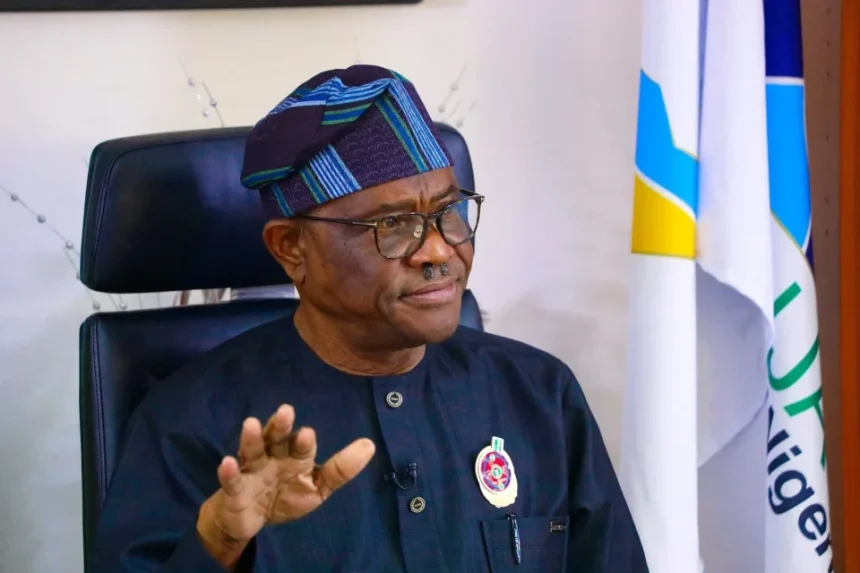
The Minister of the Federal Capital Territory, Nyesom Wike, has ordered the immediate demolition of about 30 buildings blocking the Right of Way of Abuja’s Ring Road 3.
Wike gave the order on Thursday during an inspection of road projects linking Karsana District, Gwarinpa and the Kubwa axis.
The affected buildings sit within the corridor reserved for Ring Road 3 and its planned interchange. The area forms part of the infrastructure network covered by the Abuja Master Plan.
Wike Orders Immediate Action
The Acting Executive Secretary of the Federal Capital Development Authority (FCDA), Richard Dauda, drew Wike’s attention to the structures during the inspection.
Dauda told the minister that the buildings occupy land reserved for the Ring Road 3 project. Wike then called officials of the Department of Development Control to the site.
The minister ordered the officials to remove the structures without delay. He also questioned how developers had managed to build within a major road and interchange corridor.
Wike said the government could not allow private buildings to obstruct important public infrastructure.
Ring Road 3 Project Links Major Areas
The Ring Road 3 project forms part of Abuja’s wider road network. The route will connect Karsana District with the Kubwa Road corridor, also known as the Outer Northern Expressway (ONEX).
According to Dauda, the road will also extend towards Airport Road. A planned flyover will connect with the Ring Road 3 alignment as part of the project.
Dauda said construction of the second bridge on the corridor has also moved forward. He noted that workers had started the foundation despite the rocky terrain at the site.
The project team expects bridge construction to continue while work progresses on the wider road corridor.
Development Control Concerns
The discovery of buildings along the road corridor has raised fresh concerns about development control in the Federal Capital Territory.
Abuja relies on planned land use to protect space for roads, public facilities and other infrastructure. When private developments enter these areas, they can create problems for transport projects and urban planning.
The situation also carries risks for property buyers and developers. Investors who purchase or develop land without checking approved land use may face disputes, demolition or financial losses.
For this reason, property developers need to confirm land titles, planning approvals and Right of Way restrictions before starting construction.
Protecting the Abuja Master Plan
The FCT Administration has continued to stress the importance of enforcing the Abuja Master Plan. The plan provides a framework for land use and infrastructure development across the capital.
Wike’s directive shows that the administration intends to prevent buildings from blocking planned road projects. It also places renewed attention on the role of development control officials in monitoring construction.
The immediate removal of the affected buildings will clear the Ring Road 3 corridor for ongoing construction and interchange works.
The development highlights a wider issue facing fast-growing cities: the need to balance private property development with long-term infrastructure planning. Stronger land checks and effective development control can help reduce conflicts between property owners and major public projects.