


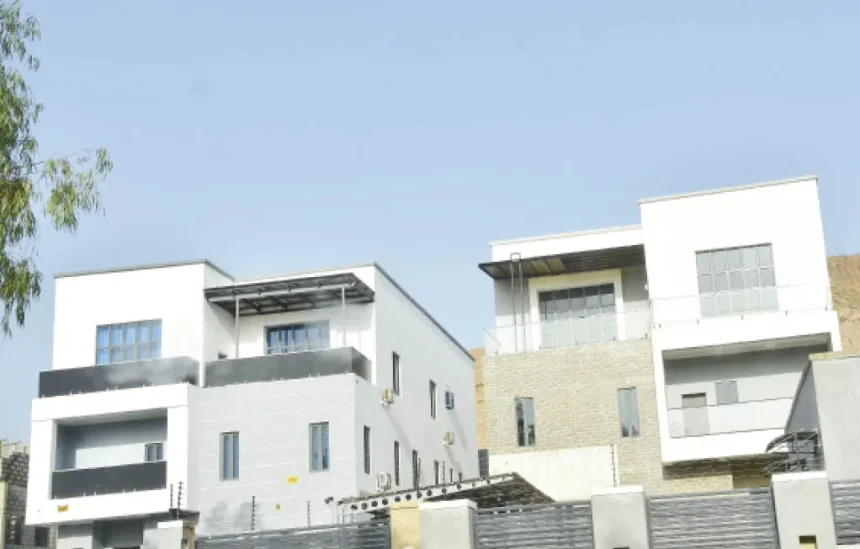
Real Estate Contributes 12.71% to Nigeria’s GDP in Q2 2026
Nigeria’s real estate sector contributed 12.71 per cent to the country’s real Gross Domestic Product in the second quarter of 2026, ranking third among the major economic activities as the overall economy recorded 4.43 per cent growth.
The latest Gross Domestic Product report from the National Bureau of Statistics showed that real estate remained one of the major contributors to Nigeria’s economic activity during the quarter.
The sector ranked behind trade and crop production, which contributed 17.93 per cent and 17.66 per cent respectively to real GDP.
Despite remaining among the leading economic activities, real estate’s share of GDP declined from 13.10 per cent recorded in the first quarter of 2026.
Real estate records 3.76% growth
The sector recorded real growth of 3.76 per cent in the second quarter of 2026.
Although the performance was slightly lower than the growth recorded during the corresponding quarter of 2025, it represented an improvement of 1.47 percentage points compared with the first quarter of 2026.
The figures underline the continued contribution of real estate-related activities to Nigeria’s economy through housing, property transactions, land-related activities and the rental market.
The sector is also closely connected to several other areas of economic activity, including construction, financial services, building materials, professional services, property management and infrastructure development.
Consequently, changes in activity within the property market can have implications beyond the real estate sector itself.
Services remain dominant
Nigeria’s real GDP grew by 4.43 per cent year-on-year in the second quarter of 2026, with agriculture, industry and services all contributing to the expansion.
The services sector remained the largest contributor to aggregate GDP, accounting for 56.62 per cent of real GDP during the quarter.
This was slightly higher than the 56.53 per cent contribution recorded in the second quarter of 2025.
Agriculture recorded stronger growth during the period, rising to 4.39 per cent compared with 2.82 per cent in the corresponding quarter of the previous year.
The industries sector grew by 3.96 per cent, while the services sector expanded by 4.60 per cent.
Construction sector posts stronger growth
The construction sector also recorded increased activity during the second quarter.
Construction contributed 3.68 per cent to Nigeria’s real GDP and recorded real growth of 6.75 per cent year-on-year.
On a quarter-on-quarter basis, the sector grew by 20.73 per cent in real terms, reflecting increased activity in building and infrastructure projects.
The performance of construction is particularly relevant to the property sector because the two industries are closely linked through housing development, infrastructure provision and the delivery of residential and commercial buildings.
As Nigeria continues to face significant housing demand, stronger construction activity could support increased housing supply if challenges around financing, land and affordability can be addressed.
Housing demand continues to drive the property market
The real estate sector’s economic contribution comes at a time when demand for housing and property remains significant across Nigeria’s major urban centres.
Population growth and urbanisation continue to create demand for residential and commercial properties, providing opportunities for developers, investors, landlords and other participants in the property market.
Real estate activity also generates economic value through the development, purchase, sale and rental of land and buildings.
The sector’s links with construction, banking and other financial services, building-material suppliers, professional consultants, property managers and infrastructure providers further broaden its economic impact.
High costs remain a challenge
Despite the continued importance of real estate to the economy, industry players continue to operate in a challenging environment.
High construction costs, rising land prices, limited access to financing, infrastructure gaps and affordability pressures remain major issues affecting property development.
These factors could constrain the ability of developers to increase supply and sustain stronger growth, even as demand for housing remains high.
For prospective homeowners, the cost of financing and the rising cost of construction can also affect the affordability of newly developed properties.
The combination of high demand and supply-side constraints therefore remains an important issue for Nigeria’s housing and property market.
What the figures mean for real estate
The latest GDP figures highlight the significant economic weight of Nigeria’s real estate industry.
The sector remains an important source of economic activity and is connected to investment, employment and several other industries within the broader economy.
For investors, the figures reinforce the size of the property sector within Nigeria’s non-oil economy. However, investment performance remains dependent on factors including location, demand, financing costs, infrastructure and consumers’ purchasing power.
The sector’s performance is also relevant to policymakers as Nigeria seeks to strengthen non-oil sectors and diversify economic activity.
For the housing industry, the figures provide another indication of the role real estate plays in the national economy.
As housing and property demand continues to change, addressing affordability, access to finance, infrastructure and development costs will remain important to expanding housing supply and increasing the economic value generated by Nigeria’s real estate sector.
