


FG Says Nigeria Lost ₦17 Trillion to Abandoned Projects
The Federal Government has disclosed that Nigeria has lost an estimated ₦17 trillion to abandoned and uncompleted projects across the country.
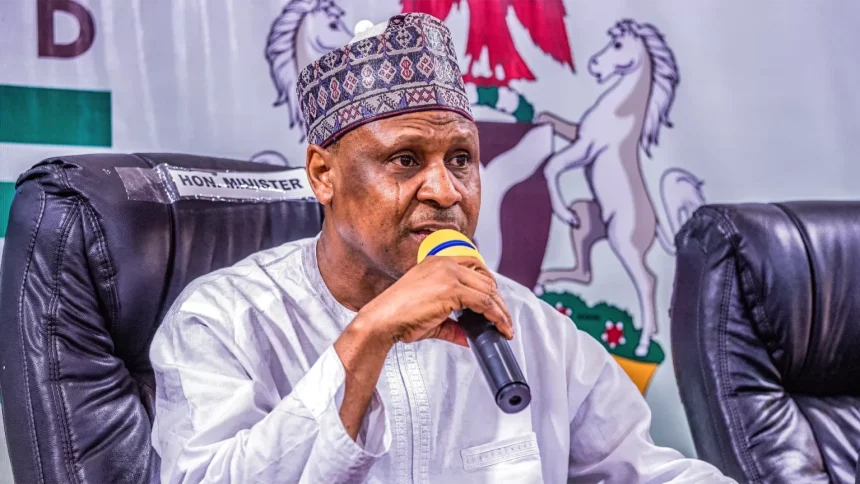
The Minister of State for Industry, Trade and Investment, John Owan Enoh, made this known through the ministry’s Permanent Secretary, Dr Chris Osa Isokpunwu, at the 8th annual induction and conference of the Chartered Institute of Project Managers of Nigeria (CIPMN).
He explained that abandoned projects continue to lock up public funds that could have been used for infrastructure development, industrial growth, job creation and essential social services.
According to him, the impact goes beyond financial losses, as incomplete projects affect communities and limit access to important public services.
He highlighted examples of hospitals that remain unopened, schools that cannot accommodate students, roads that fail to connect communities and electricity projects that have not delivered their intended benefits.
The Registrar-General and Chief Executive Officer of CIPMN, Henry Ifeanyi Mbadiwe, also identified poor project management as a major challenge affecting development in Nigeria.
He disclosed that the institute had developed a project management curriculum for Nigerian universities, which has received approval from the National Universities Commission (NUC). The programme is expected to enable universities to offer project management as a bachelor’s degree.
Mbadiwe further referenced findings by the Presidential Projects Assessment Committee, which identified 11,886 ongoing federal capital projects in 2011, with an estimated financial commitment of ₦7.78 trillion.
He noted that inadequate planning, supervision, accountability and implementation were among the factors contributing to the abandonment of projects across the country.
The Permanent Secretary called for stronger project management structures across ministries, departments and agencies to improve planning, monitoring and evaluation.
He added that the Federal Ministry of Industry, Trade and Investment had introduced a 90-day implementation reporting cycle to strengthen transparency and monitor the progress of government programmes.
The government also called on CIPMN to promote professional standards and accountability in project execution across both the public and private sectors.