


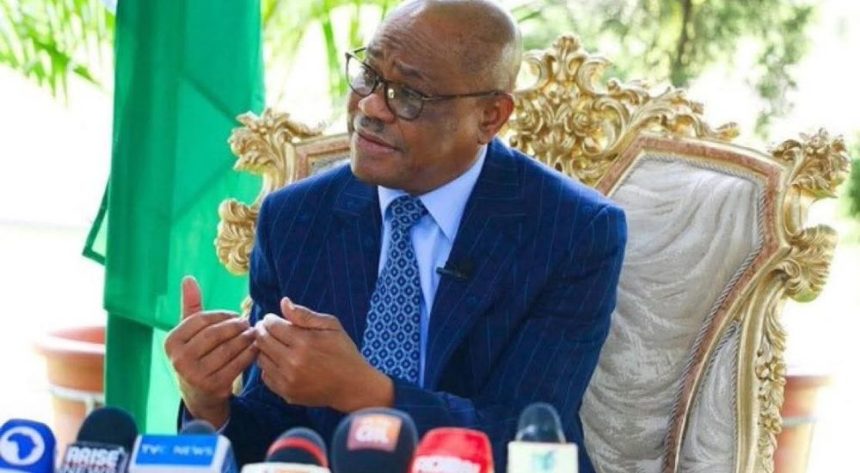
UniAbuja Unions Challenge Wike to Produce Signed Report on Disputed University Land
Unions at the University of Abuja have challenged the Minister of the Federal Capital Territory (FCT), Nyesom Wike, to produce a copy of the report allegedly recommending the reduction of the institution’s land allocation, bearing the signatures of the university’s representatives.
The Joint Action Committee (JAC), comprising staff unions, student leaders and other stakeholders, said the Federal Capital Territory Administration (FCTA) had failed to provide evidence that the university endorsed the recommendations contained in the disputed report.
In a statement issued on Tuesday, November 17, 2026, the unions questioned the authenticity of the report being cited by the FCTA to justify the reduction of the university’s land from 11,824.04 hectares to 4,519.80 hectares.
The committee maintained that the university’s representatives did not participate in the preparation of the report and had rejected its recommendations when they were presented to them.
The unions specifically challenged the FCTA to make available a copy of the report signed by the university’s representatives rather than relying on a list of individuals allegedly appointed to the committee.
Unions Dispute FCTA’s Explanation
The dispute follows the FCTA’s defence of Wike’s decision to reduce the university’s original land allocation.
The administration said the decision was based on recommendations made by a 12-member joint committee established on November 10, 2016, under former FCT Minister Mohammed Musa Bello.
According to the FCTA, the committee recommended that the university’s main campus land, which covered more than 11,000 hectares, be reduced to 100 hectares in line with the National Universities Commission’s recommended land size.
The administration further stated that the previous minister approved the recommendation, while Wike subsequently approved 4,519.80 hectares for the institution.
However, the university unions disputed the account, arguing that the committee established in December 2020 to address land encroachment and other related issues did not include the reduction of the university’s land allocation in its terms of reference.
They also maintained that a technical committee presented a report at a meeting of the Federal Capital Development Authority on March 15, 2022, but the university’s representatives rejected it because they were not involved in its deliberations.
University Defends Its Land Requirements
The unions argued that the university requires its land for long-term academic expansion, research and infrastructure development.
They explained that approximately 30 per cent of the original land allocation was unsuitable for development because of geographical and infrastructure constraints, including Kuku Hills, railway corridor buffer zones and high-voltage electricity transmission lines.
The committee also dismissed allegations that the university was selling portions of its land to individuals and corporate organisations.
It explained that the establishment of the Economic and Financial Crimes Commission Academy on the university’s property was a partnership arrangement consistent with the institution’s community service responsibilities.
The unions further argued that the university’s 38 years of existence should not be used to question its need for extensive land, noting that institutional development takes place in phases and depends largely on available government funding.
Unions Seek Tinubu’s Intervention
The Joint Action Committee called on President Bola Tinubu to intervene in the dispute and direct the reversal of land allocations made from the university’s original property.
The unions also demanded the implementation of the December 2025 agreement between the Federal Government and the Academic Staff Union of Universities concerning the protection of university land and landed properties.
The committee warned that it would continue to resist what it described as attempts to take over land reserved for the institution’s future development.
The dispute has also taken a legal dimension, with the university challenging the disputed land decisions in court.