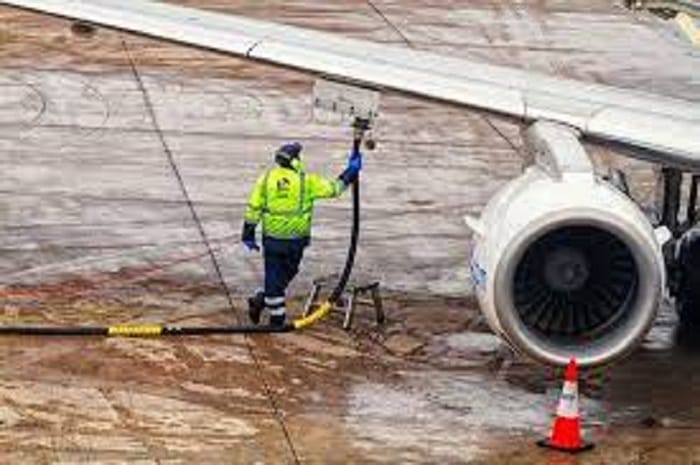
Air passengers in may soon face higher ticket prices as the cost of aviation fuel, also known as Jet A1, continues to surge across the country.
Industry data shows that Jet A1 currently sells for about ₦1,835 per litre in Kano, ₦1,820 in Abuja, ₦1,815 in Port Harcourt, and ₦1,780 in Lagos, placing significant financial pressure on airline operators.
Airlines Under Rising Cost Pressure
The spokesperson for the , , said the sharp increase in aviation fuel prices could force airlines to review ticket fares soon.
According to him, airlines must submit fare adjustments to the for approval before implementation.
Okonkwo explained that aviation fuel previously sold for around ₦1,000 per litre before the recent global crisis, but prices have nearly doubled.
He added that airlines are already facing low passenger demand outside the peak travel season, which makes the rising operational costs even more difficult to absorb.
Global Oil Tensions Affect Aviation Industry
Okonkwo linked the sudden increase in fuel prices to global geopolitical tensions, particularly developments involving , which often influence international oil prices.
He noted that the aviation industry is highly sensitive to external factors such as global conflicts, weather conditions, and currency fluctuations.
Dollar Dependence Driving Fuel Costs
Aviation analyst said Nigeria’s reliance on the United States dollar for petroleum transactions is a key factor behind the rising price of Jet A1.
According to him, even locally refined fuel must be priced based on global crude oil rates in dollars.
He noted that if fuel transactions were conducted purely in naira, aviation fuel could cost closer to ₦900 per litre.
Caulcrick explained that refiners and suppliers, including , must convert their earnings into dollars to purchase crude oil at international market prices.
CBN Interventions Supporting the Naira
The analyst also pointed out that the has been intervening in the foreign exchange market to prevent the naira from weakening further.
He warned that without such interventions, the naira could have depreciated to around ₦1,000 per dollar, which would push aviation fuel prices even higher.
Passengers Likely to Feel the Impact
Experts say the rising fuel cost will inevitably lead to higher ticket prices.
While business travellers may continue to fly despite the increase, leisure travellers could reduce their trips due to affordability concerns.
This could result in lower seat occupancy rates for airlines and further strain their revenues.