


.The Budget Office of the Federation has dismissed widespread claims that the North East Development Commission (NEDC) operates a ₦246 billion salaries budget, describing the assertion as misleading and based on a poor understanding of Nigeria’s federal budgeting framework.
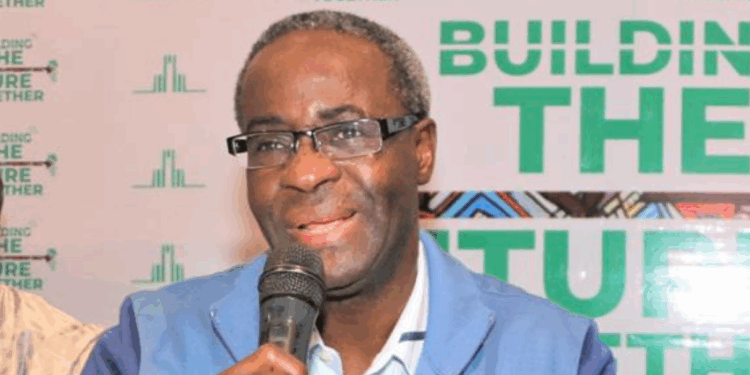
The clarification was contained in a statement issued on Thursday by the Director-General of the Budget Office, Tanimu Yakubu, following public debates around figures contained in the 2025 federal budget.
According to the Budget Office, the ₦246.77 billion allocation associated with the NEDC represents a statutory lump-sum provision, not a dedicated personnel cost as widely circulated.
What the Budget Office is saying
Yakubu explained that allocations for statutory and quasi-statutory agencies are often presented in aggregate form during the early stages of budget preparation under the Medium-Term Expenditure Framework (MTEF).
He noted that detailed breakdowns—covering personnel, overheads, and capital expenditure—are typically provided later during budget defence sessions, legislative reviews, and implementation phases.
“The claim that the NEDC exists merely to pay salaries is unfounded. It conflates technical budget presentation with actual expenditure intent, ignores legislative appropriation dynamics, and disregards project-level evidence already embedded in official documents,” Yakubu said.
He further clarified that when agencies are unable to upload complete internal economic breakdowns at the initial budget stage, allocations may temporarily appear under the Personnel Cost heading as a technical placeholder.
“This is a recognised procedural convention pending detailed submissions, legislative adjustments, and approved reallocations during budget execution. It must not be mistaken for spending intent,” he added.
Capital expenditure concerns addressed
Responding to concerns over the comparatively small ₦2.70 billion capital expenditure figure cited by commentators, Yakubu said the amount resulted from National Assembly-approved adjustments to the 2025 budget.
According to him, nearly 70 percent of the NEDC’s capital allocation was deferred to the 2026 fiscal year following legislative decisions on the sequencing and timing of appropriations.
He stressed that this adjustment does not indicate an absence of development projects, noting that official budget schedules clearly outline ongoing and planned interventions across Nigeria’s North East.
These include:
- Agricultural and food security programmes
- Reconstruction of internally displaced persons (IDP) camps
- Rehabilitation of orphanages
- Borehole and water supply projects
- Security logistics support
- Constituency-level development initiatives
“Selective reading of a single budget line while ignoring accompanying schedules is not analysis—it is distortion,” Yakubu said.
Why this matters
The clarification highlights persistent public misunderstanding around federal budget structures, especially for statutory agencies with large development mandates like the NEDC.
Yakubu emphasised that personnel costs remain a legitimate component of any development institution, covering engineers, project managers, procurement officers, monitoring and evaluation teams, and fiduciary oversight functions essential for effective project delivery.
While welcoming public scrutiny, the Budget Office warned that misinformation weakens informed debate and accountability.
What you should know
The NEDC was established to coordinate reconstruction, stabilisation, and development efforts in Nigeria’s North East after years of insurgency and humanitarian crises.
Statutory agencies often receive lump-sum budget allocations at early stages, with detailed breakdowns emerging during legislative review and budget execution.
President Bola Tinubu presented the 2026 budget to the National Assembly on December 19, 2025, with a projected ₦23.85 trillion deficit.