


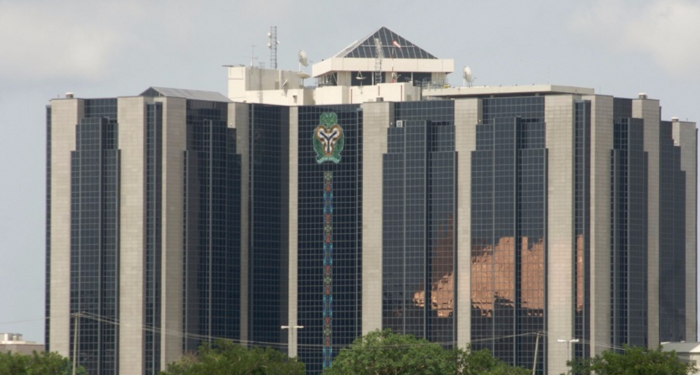
Nigeria’s financial system experienced a significant liquidity squeeze at the start of 2026 after the Central Bank of Nigeria withdrew N13.41 trillion from circulation in January, signalling a strong push to tighten monetary conditions and curb inflation.
New data released by the Financial Markets Dealers Association (FMDA) show that the volume of funds removed from the banking system was nearly five times higher than the N2.77 trillion mopped up in the same month in 2025.
The aggressive liquidity sterilisation coincided with declines in key financial indicators, including money supply, bank reserves and private sector credit, reflecting a deliberate tightening strategy by the apex bank at the start of the year.
Money Supply Records Decline
According to the January 2026 monetary statistics, Nigeria’s broad money supply (M3), which measures the total volume of money circulating within the economy, declined by 0.8 percent month-on-month.
The figure dropped to N123.36 trillion in January from N124.41 trillion recorded in December 2025.
Similarly, narrow money (M2), which represents more liquid forms of cash and deposits readily available for spending, also slipped slightly to N123.35 trillion from N124.40 trillion in the previous month.
The contraction came after a strong expansion in December 2025, when currency in circulation surged during the festive season and year-end financial activities.
Private Sector Credit Slows
The tightening liquidity environment also affected credit flow to businesses.
Data show that private sector credit moderated by 0.8 percent to N75.24 trillion in January, down from N75.83 trillion in December 2025.
Credit to government also recorded a marginal decline, easing by 0.1 percent to N34.19 trillion from N34.22 trillion.
Financial analysts say the slowdown reflects cautious lending behaviour by banks as monetary authorities attempt to stabilise inflation and manage excess liquidity within the economy.
Bank Reserves Drop Sharply
The liquidity withdrawal had a more visible impact on banking sector reserves.
Total bank reserves fell by 5.5 percent to N30.26 trillion in January, compared with N32.04 trillion in December 2025, highlighting the direct effect of the central bank’s aggressive mop-up operations.
Currency outside banks also declined by 3.7 percent to N5.21 trillion from N5.41 trillion, while currency in circulation remained largely stable at N5.73 trillion.
These trends suggest tighter interbank liquidity conditions during the month.
Foreign Assets Decline as Domestic Assets Rise
A deeper breakdown of the data shows diverging movements between foreign and domestic assets in Nigeria’s banking system.
Net foreign assets dropped by 6 percent to N29.61 trillion in January from N31.51 trillion in December 2025.
Over a six-month period, foreign assets declined significantly from N41.66 trillion recorded in September 2025.
In contrast, net domestic assets continued to expand. The figure increased by 0.9 percent to N93.76 trillion in January, compared with N92.90 trillion in the previous month.
The steady growth in domestic assets has been largely supported by continued expansion in local credit and government financial activity.
Policy Outlook Signals Possible Shift
Despite the tightening seen in January, Nigeria’s monetary policy outlook may be entering a new phase.
The Monetary Policy Committee of the Central Bank of Nigeria reduced the benchmark interest rate from 27 percent to 26.5 percent on February 24, suggesting that the peak of the tightening cycle may have passed.
Throughout 2025, the central bank maintained an aggressive policy stance, relying heavily on treasury bill issuances and open market operations to absorb excess liquidity from the banking system.
Even with these interventions, liquidity levels remained high during the final months of the year, particularly in November and December.
Economic analysts believe the sharp liquidity withdrawal recorded in January reflects the apex bank’s effort to rebalance the system before gradually easing policy conditions.
If the current trajectory continues, improved liquidity and slightly lower policy rates could begin to influence lending activity and credit expansion from the second quarter of 2026.
