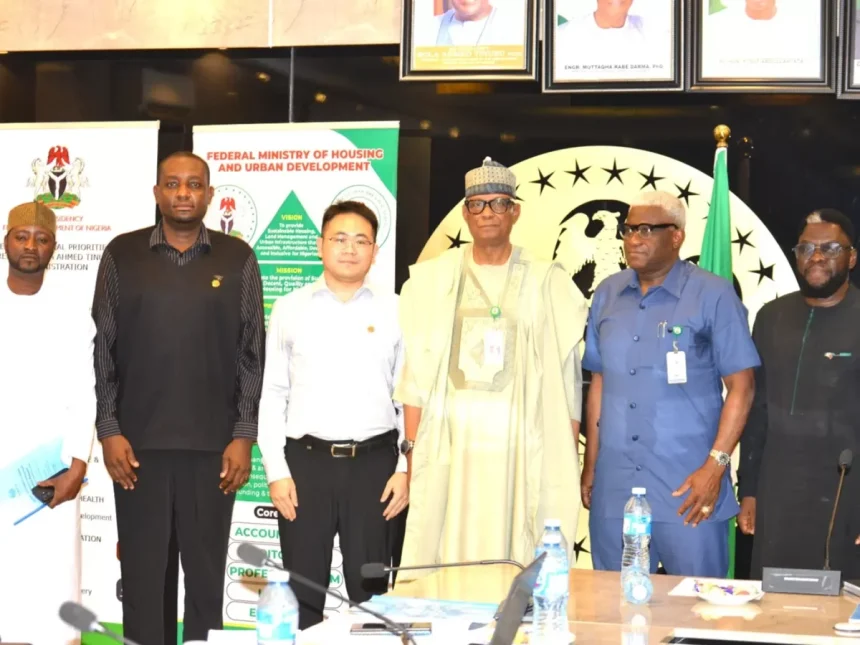
Real estate stakeholders have urged the Federal Government to structure its proposed housing partnerships with Chinese and Japanese firms in a way that strengthens indigenous developers rather than sidelines them. While welcoming foreign investment and technical expertise, industry professionals argue that long-term success will depend on ensuring Nigerian firms play a central role in project delivery.
The concerns follow separate proposals by China Hyway Group Limited and Japan’s Chodai Company Limited to collaborate with the Federal Government on large-scale housing, smart city developments, and infrastructure projects through public-private partnerships (PPPs). The initiatives are expected to support efforts to reduce Nigeria’s housing deficit and improve urban infrastructure.
Property developer Olufemi Adeleke said the biggest challenge facing Nigerian developers is not technical expertise but access to affordable financing. According to him, local firms have the capacity to deliver large-scale housing projects but are disadvantaged by high borrowing costs, while many foreign companies can access significantly cheaper capital. He suggested that foreign partners should provide financing, technology, and engineering support, with indigenous developers taking the lead in project execution.
Town planning expert Tpl. Niyi Aderohunmu stressed that the success of the proposed partnerships should not be measured solely by the number of houses built. He argued that new developments must include roads, drainage systems, schools, healthcare facilities, water supply, transport networks, and employment opportunities to create sustainable communities rather than isolated housing estates.
Real estate investment analyst Olabisi Odusanya also emphasised the need for affordability, warning that concentrating new developments in high-end locations would do little to address Nigeria’s housing deficit. She called on policymakers to prioritise low- and middle-income housing where demand is greatest, ensuring the partnerships deliver broader social and economic benefits.
Industry observers believe the proposed partnerships present an opportunity to attract foreign capital, modern construction technology, and international project management expertise into Nigeria’s housing sector. However, they caution that excluding indigenous developers could limit technology transfer, reduce local job creation, and weaken the growth of Nigeria’s construction industry.
Analysts say a balanced public-private partnership model that combines foreign investment with strong local participation would provide the greatest long-term value. They argue that such an approach would accelerate housing delivery, improve construction standards, expand homeownership opportunities, and strengthen Nigeria’s domestic real estate ecosystem while addressing the country’s significant housing deficit.