


The Federal Government of Nigeria has revised its borrowing plan for 2026 to N29.2 trillion, a significant increase from the earlier estimate of N17.89 trillion.
This revision comes after the proposed 2026 budget expanded, driving the fiscal deficit to N31.46 trillion, according to official documents reviewed by Nairametrics.
The new borrowing requirement is outlined in the 2026 Appropriation Bill, approved by the National Assembly and detailed in the House of Representatives’ Order Paper dated March 31, 2026.
Revenue vs Expenditure
Total government expenditure is projected at N68.32 trillion, while revenues are expected to reach N36.87 trillion, leaving a substantial funding gap.
- Federation revenues: N25.92 trillion
- Independent revenues: N4.31 trillion
- Government-owned enterprises: N5.85 trillion
- Grants & aid: N1.37 trillion
- Special funds: N300 billion
Despite an increase in projected revenues, spending continues to outpace income, driving a reliance on borrowing to finance the deficit.
Debt Service Pressures
Debt servicing remains a major challenge, with total obligations projected at N15.81 trillion:
- Domestic debt service: N10.16 trillion
- Foreign debt service: N5.36 trillion
- Recurrent non-debt expenditure is estimated at N15.43 trillion, while capital expenditure accounts for N32.29 trillion, reflecting a strong focus on infrastructure and development projects. Statutory transfers are set at N4.8 trillion.
Funding Measures and Sector Contributions
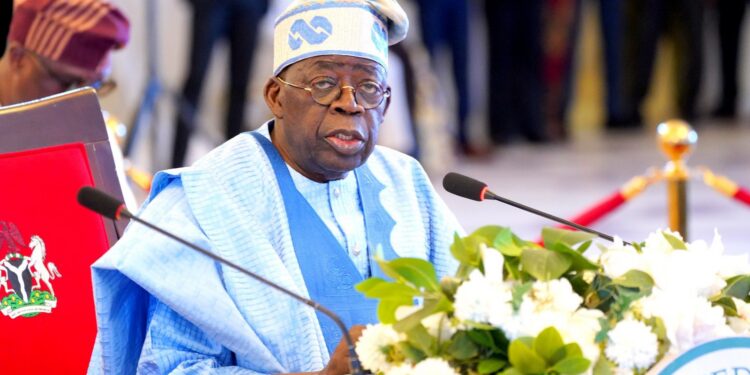
President Bola Tinubu requested the Senate’s approval to increase the 2026 budget by N9 trillion, bringing it from N58.4 trillion to N67.4 trillion. Lawmakers proposed a combination of revenue-raising measures and increased borrowing, including:
$10 per barrel increase in the oil benchmark, expected to generate N2.592 trillion.
Higher contributions from the telecommunications sector, with MTN Nigeria projected to pay N724 billion and Airtel Nigeria N150 billion in company income tax, totaling N874 billion in additional revenue.
Even with these measures, external borrowing is set to increase by N6.163 trillion to bridge the shortfall, keeping debt within manageable limits according to the government.
The revised borrowing framework signals that Nigeria’s debt will continue to rise, with borrowing accounting for the bulk of deficit financing in 2026. Observers caution that careful debt management and revenue generation will be crucial to maintain fiscal stability.
