For years, 34-year-old Tolu, a Lagos-based marketing executive, has watched her rent rise steadily while her dream of owning a modest two-bedroom apartment slipped further out of reach. With commercial bank lending rates hovering around 25 to 30 per cent and inflation eroding purchasing power, the numbers simply did not add up.
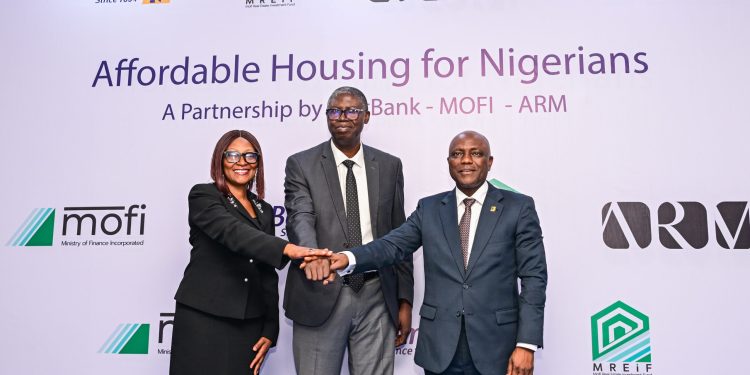
That reality mirrors the experience of millions of Nigerians. But a new mortgage initiative by FirstBank, in partnership with the Ministry of Finance Incorporated Real Estate Investment Fund (MREIF), may be shifting the equation in favour of aspiring homeowners.
A N1 Trillion Push for Affordable Housing
Backed by a Federal Government-supported N1 trillion mortgage intervention fund, the new facility is designed to expand access to long-term, affordable housing finance in Nigeria.
At the heart of the initiative is a 9.75 per cent annual interest rate — significantly lower than prevailing commercial lending rates. Eligible Nigerians can access mortgage loans of up to N100 million with repayment tenures of up to 20 years.
In practical terms, this means lower monthly repayments and a realistic pathway to homeownership for middle-income earners who were previously priced out of the property market.
Single-Digit Interest in a Double-Digit Economy
In an environment where most credit facilities come with double-digit interest rates, the 9.75 per cent mortgage stands out as a rare single-digit lending window.
Housing finance experts say the structure could help reduce Nigeria’s housing deficit by enabling more structured mortgage adoption rather than the traditional incremental building model that relies on personal savings.
For individuals like Tolu, the difference is transformative. Instead of committing over half her salary to rent and short-term obligations, she can now project a stable repayment plan over two decades, building equity rather than servicing annual lease renewals.
Inclusive Design: Salary Earners, SMEs, Diaspora
The MREIF mortgage facility is structured to accommodate a broad segment of Nigerians. It is open to salary account holders, entrepreneurs, and diaspora customers seeking to invest in property back home.
For small business owners who often struggle to access long-term credit due to irregular cash flows, the programme provides an alternative channel to secure stable housing without diverting critical working capital.
Diaspora Nigerians, who typically face documentation and trust barriers when investing remotely, also stand to benefit from a regulated, institutional framework that reduces risk and improves transparency.
Bridging Nigeria’s Housing Finance Gap
Nigeria’s housing sector has long been constrained by limited mortgage penetration and high borrowing costs. Analysts note that the country’s mortgage-to-GDP ratio remains significantly below global averages, reflecting structural challenges in housing finance.
By combining government-backed funding with private-sector execution, the FirstBank–MREIF partnership represents a hybrid financing model aimed at closing that gap.
Beyond individual beneficiaries, the initiative could stimulate broader economic activity across the construction value chain — from developers and artisans to building material suppliers.
A Shift from Aspiration to Ownership
For many Nigerians, homeownership has been an aspiration postponed by economic volatility. Rising property prices, currency pressures, and high interest rates have widened the affordability gap.
This new mortgage framework reframes the conversation. Instead of asking whether owning a home is possible, prospective buyers are increasingly evaluating when to take advantage of structured, long-term financing at below-market rates.
Industry observers say the success of the scheme will depend on efficient disbursement, strong underwriting standards, and sustained funding flows. However, the early structure signals a deliberate attempt to democratise access to housing credit.
As Nigeria continues to grapple with affordability challenges, initiatives anchored on single-digit mortgage rates and long-term repayment structures could mark a turning point in the country’s housing finance landscape.
Keywords: affordable housing Nigeria, FirstBank home loan, MREIF mortgage scheme, N1 trillion housing fund, Nigeria single-digit mortgage