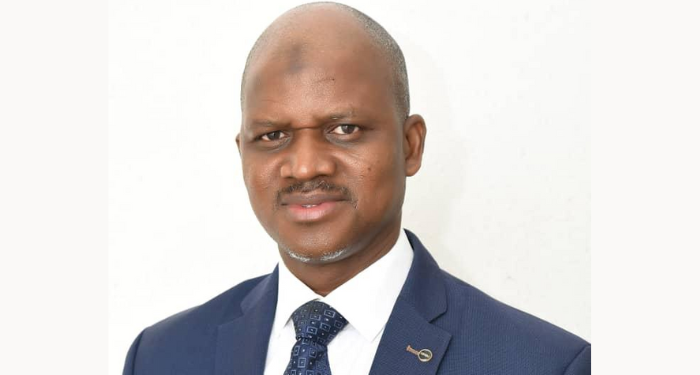
The Managing Director of the Federal Mortgage Bank of Nigeria (FMBN), Shehu Osidi, has led the bank to a historic ₦152.4 billion National Housing Fund (NHF) collection in 2025, the highest annual figure since the scheme was established.
The performance represents a 48 per cent increase over the ₦103 billion recorded in 2024 and signals a significant strengthening of Nigeria’s housing finance framework.
Strategic Repositioning of the Bank
Shortly after assuming office, Osidi introduced a reform-driven agenda focused on financial sustainability, operational efficiency, customer impact, and institutional renewal. This structured reset repositioned the bank around measurable revenue targets and tighter internal controls, creating a clearer pathway for expanding NHF collections.
The renewed governance structure improved compliance monitoring and enhanced contribution enforcement across both public and private sector participants.
Expansion of Contributor Base
A major factor behind the growth was the aggressive registration of new contributors into the NHF scheme. In 2025 alone, more than 139,000 Nigerians were added to the fund, building on strong registrations in the preceding year. Over the past two years, the bank has enrolled well above 300,000 new contributors.
The wider contributor pool significantly increased monthly inflows and strengthened liquidity across the scheme.
Reintegrating States Into the Scheme
The bank also recorded progress in re-engaging state governments that had previously withdrawn from the NHF programme. Oyo State approved the reintegration of its workforce after nearly three decades outside the scheme, while Kano State moved closer to full participation following a formal agreement with the bank.
Bringing state workers back into the NHF system expanded the contribution base and reinforced institutional confidence.
Improved Refund Efficiency and Public Confidence
NHF refunds rose to ₦15.6 billion in 2025, benefiting more than 55,000 contributors. The consistent increase in refund payments over recent years reflects reforms aimed at reducing processing delays and strengthening operational systems.
Faster refunds improved trust in the scheme and reassured contributors of fund accessibility when due.
Stronger Loan Performance and Recovery
The bank’s improved credit management framework also contributed to overall financial stability. Project loan disbursements rose significantly in 2025, while individual mortgage approvals recorded notable growth. Recovery of delinquent loans improved through dedicated task teams deployed nationwide.
Primary Mortgage Banks demonstrated stronger repayment discipline, reflecting improved oversight and credit quality within the system.
Institutional Stability and Surplus
FMBN previously posted its first operational surplus in over three decades, strengthening its balance sheet and improving its ability to scale lending activities. Enhanced financial discipline created the foundation for more sustainable NHF mobilisation.
Policy Alignment and Housing Delivery
The bank’s expanded support for large-scale housing initiatives under the Renewed Hope Housing Programme linked NHF collections to visible project delivery. Funding allocations for major housing projects in Lagos, Abuja, and other states reinforced the practical impact of contributions.
The record ₦152.4 billion collection in 2025 reflects a combination of structural reforms, contributor expansion, improved governance, and stronger credit oversight. Under Osidi’s leadership, the NHF scheme has entered a phase of accelerated growth, positioning it as a more robust instrument for advancing affordable homeownership in Nigeria.
If you would like, I can also provide an SEO-optimized digital version or a shorter publication draft.