


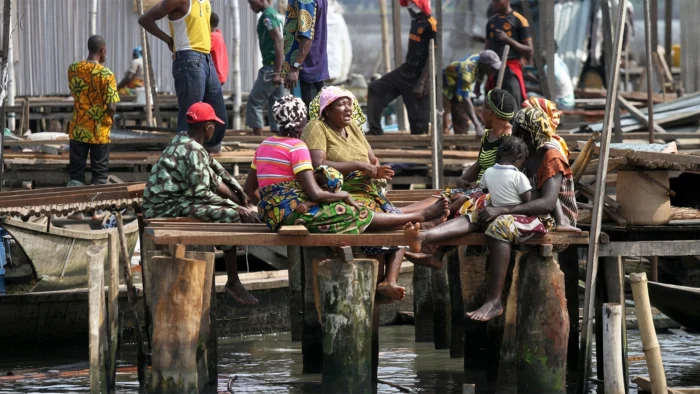
A humanitarian organisation, Mater Africa, has established an emergency medical tent in Makoko, Lagos, to provide urgent healthcare and social support services to residents following recent demolitions in the riverine settlement.
The initiative, which will run for three months, is designed to address immediate medical and protection needs in one of Lagos’ most densely populated and underserved communities. Access to healthcare in Makoko has long been limited, with residents often travelling long distances or relying on informal support systems for treatment.
Emergency Response Following Displacement
The intervention follows a recent demolition exercise in Makoko’s waterfront area, which displaced several families and heightened existing vulnerabilities. Many affected residents reportedly relocated to the dry land section of the community, further straining already scarce health resources.
Speaking at the launch of the Emergency Tent on Thursday, Coordinator of the Mater Africa Makoko Project, Chioma Okafor, said the programme is structured to deliver rapid, first-line assistance to individuals and families facing urgent health, protection and social challenges.
According to Okafor, the organisation has been operating daily in the community over the past month with minimal resources, carrying out outreach activities, basic triage and direct assistance to vulnerable households.
“This opening reflects our commitment to presence, responsibility and dignity,” she said. “Makoko is a community with extraordinary resilience. Even without large-scale external support, we remain focused on delivering essential services where they are most needed.”
Multidisciplinary Medical Support
The Emergency Tent will operate daily with a multidisciplinary team led by medical personnel. Services will include organised triage, preliminary treatment, health consultations and referrals for more complex cases.
The medical doctor overseeing the outreach, Dr. Salam Ismail Wale, explained that patients will be assessed and stabilised where necessary before being referred to partner hospitals for comprehensive care.
“Early intervention is critical in preventing complications,” he said. “Our goal is to ensure that urgent cases are promptly identified and managed, while maintaining dignity and respect for every patient.”
The facility will also serve as a coordination hub for community engagement and collaboration with local stakeholders, with activities prioritising medical triage, protection services and direct support to vulnerable families.
Community Partnership and Support
The emergency structure was made possible through the support of CMM – Centro Missionario Medicinali, additional Italian companies, a Nigerian partner company and private donors who contributed medical supplies and materials.
Mater Africa also acknowledged the role of the Makoko Children Development Foundation, including its school and orphanage home, for providing community access and logistical assistance for the setup.
Co-founder of the foundation, Oluwabusayomi Otubaga, described the initiative as a significant reminder that Makoko’s residents deserve equal access to healthcare and social services.
“Today is a reminder that Makoko matters — that every child, every mother, every father and every elder matters,” she said. “When a child is sick and cannot access care, it affects not only the child but the entire family.”
Healthcare Gaps in Makoko
Otubaga noted that the health situation in the community remains dire, particularly in the waterfront areas where there are no government-approved medical centres.
“On the waterfront and even on the land, there are no functional medical or health centres. Residents lack direct access to treatment,” she said. “In severe cases, families often rush to our foundation for help just to survive.”
She explained that over the years, the foundation has supported residents through pregnancies, illnesses and surgical needs with assistance from volunteer doctors and sponsors.
Although general hospitals and health centres operate in other parts of Lagos State, residents of Makoko waterfront reportedly struggle to access affordable or free public healthcare due to distance, cost and documentation challenges.
Call for Government Intervention
While welcoming the emergency response, community leaders used the occasion to renew calls for government intervention.
Otubaga appealed to the Lagos State Government and public health authorities to consider establishing at least a primary healthcare centre in Makoko.
“If a full hospital cannot be built immediately, let us begin with a health centre,” she said. “Let Makoko feel remembered and cared for.”
The three-month programme is expected to provide medical check-ups, distribute preliminary medications and facilitate referrals for specialised treatment. Residents have been encouraged to take advantage of the services within the intervention period.
A Temporary but Critical Lifeline
For many families affected by displacement and long-standing neglect, the Emergency Tent represents a temporary but crucial lifeline. Health experts involved in the project emphasised that early diagnosis and basic primary care can significantly reduce preventable complications, especially among children, pregnant women and the elderly.
As the intervention unfolds, stakeholders say sustained collaboration between humanitarian organisations, community groups and government agencies will be essential to ensuring long-term healthcare access in Makoko.
For now, the Emergency Tent stands as a visible effort to bridge urgent gaps — offering immediate relief while broader conversations about infrastructure, urban displacement and public health equity continue in Lagos.
