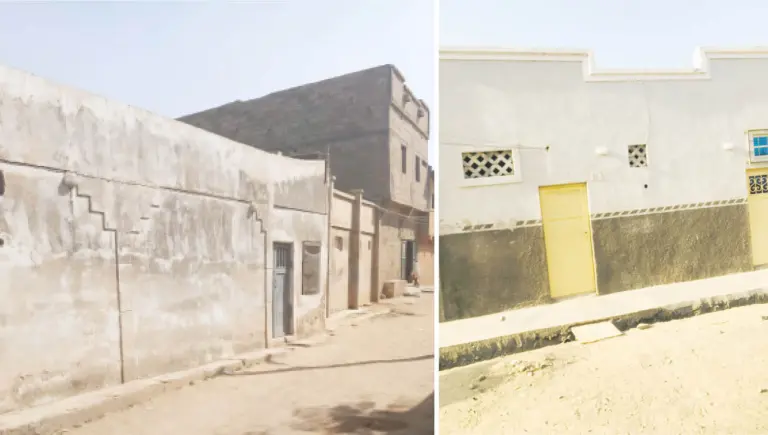
Despite rising rental costs across major Nigerian cities, parts of Kano metropolis continue to offer relatively affordable housing, particularly for low- and middle-income earners working within the city’s industrial corridor.
Sharada and Ja’in, two adjoining districts located within Kano Municipal Local Government Area, have emerged as key destinations for tenants seeking proximity to workplaces without the burden of high rent.
Together, the areas form a major industrial–residential axis in the southern part of Kano city, attracting workers, traders, artisans, and small business owners.
Sharada is widely recognised as Kano’s foremost industrial estate, hosting numerous small, medium, and large-scale manufacturing firms. The concentration of factories has created sustained housing demand, especially in neighbouring Ja’in, where workers prefer to live due to comparatively cheaper rent and easier access to industrial workplaces.
Ja’in, in particular, has experienced steady growth in property development, serving both as a rental hub and a destination for individuals looking to buy land and build homes in an expanding urban area. While Sharada itself is considered expensive and largely reserved for higher-income residents and industrial executives, Ja’in has become the preferred alternative for factory workers and civil servants.
Unmarried factory workers and young earners typically opt for single-room apartments, which rent for between ₦120,000 and ₦150,000 per annum, depending on location and property condition. The affordability, combined with relatively stable electricity and water supply, has made the area attractive to a wide range of residents.
The neighbourhood also benefits from strong road connectivity. Major routes link Ja’in through Sharada to Kofar Danagundi, Madobi Road flyover, Dorayi–BUK Road, and Yahaya Gusau Road, providing access to Kofar Gadon Kaya and other parts of ancient Kano city.
According to Baba Ladan, a local estate agent, rental prices remain among the lowest within the Kano metropolis. He said a self-contained room with kitchen and toilet typically rents for about ₦150,000 annually, while decent two-bedroom apartments go for between ₦200,000 and ₦400,000, excluding agency fees.
Ladan added that property prices in the area also remain moderate by urban standards. Two- or three-room houses sell for between ₦7 million and ₦8 million, though well-finished properties can exceed ₦10 million. He disclosed that some larger buildings, including multi-storey houses capable of accommodating multiple families, can be valued as high as ₦45 million.
“Some houses attract higher rent because they were originally built for owner occupation before being offered to tenants,” Ladan explained. “In such cases, rent can reach ₦500,000 or even ₦1 million annually, depending on the quality of finishing.”
Another estate agent, Idris Abba Sarina, described Ja’in and nearby Medile quarters as among the few remaining areas within Kano metropolis where tenants can still find relatively affordable accommodation. Though Ja’in falls under Kano Municipal LGA and Medile under Kumbotso LGA, the two areas are separated only by a railway line and share similar housing characteristics.
“When clients are searching for cheaper houses, we usually take them to Ja’in, Medile, or Danmaliki,” Sarina said. “A single room goes for about ₦150,000, while two-room apartments range from ₦200,000 to ₦500,000. Outside these areas, cheap options are rare unless tenants are willing to share apartments.”
Sarina also noted increased interest from private estate developers, who are purchasing land in the area to build residential units in response to growing housing demand.
Residents attribute the relative affordability to competition among developers engaged in build-and-sell projects. Sadiqu Yusuf, a long-time resident of Ja’in, recalled purchasing his plot in 2000 for less than ₦200,000. Today, the same land is valued at over ₦4 million due to rapid urban expansion and population growth.
Yusuf said his three-bedroom house could be rented for ₦500,000 annually, noting that even single rooms with toilet facilities now attract rents above ₦160,000.
Similarly, Abubakar Sadiq, a resident of Medile, said there is little difference between the two neighbourhoods in terms of rent and development trends. He explained that Medile’s expansion has extended towards the Western Bypass, Maikalwa, and Naibawa areas of Kumbotso LGA.
According to him, two-bedroom apartments in Medile rent for between ₦200,000 and ₦500,000, while one-bedroom apartments are scarce, often forcing tenants to settle for single rooms with shared facilities.
As Kano continues to expand, more affordable neighbourhoods are emerging, supported by private housing developments across the state. However, residents and property professionals warn that sustained population growth and industrial expansion could gradually push rents upward, even in traditionally low-cost districts.
Report adapted from Daily trust, copyedited by Housing tv Africa Editoral desk