
Although the allocation represents only a fraction of the funding required to close the country’s housing deficit—currently estimated at over 15 million units—government officials say the budget is structured to unlock private capital, accelerate housing delivery, and expand access to affordable homes.
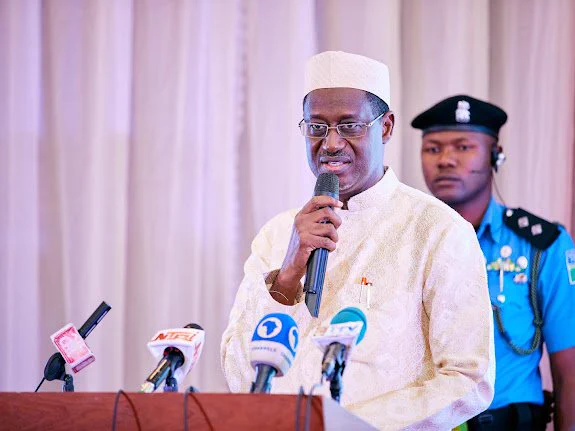
At the core of this strategy is a policy shift led by Housing Minister Arc. Ahmed Musa Dangiwa, which repositions the Ministry from a direct housing developer to a market facilitator.
A New Approach to Federal Housing Delivery
Rather than relying solely on government-funded construction, the 2026 housing budget is designed to function as a trigger for private-sector participation. The Ministry’s approach prioritises scale, cost efficiency, and sustainability by encouraging partnerships with developers, financiers, and state governments.
This framework aligns with the Federal Government’s 70 percent Capital Ceiling Rule, which mandates that capital allocations in 2026 focus largely on completing ongoing projects initiated in 2024 and 2025, instead of launching numerous new ones.
Related Posts:
How the 2026 Housing Funds Will Be Deployed
The approved allocation concentrates spending across three intervention areas:
Renewed Hope Cities and Estates
Funding is earmarked for interest-free construction of government-backed housing estates in selected states, targeting low- and middle-income earners.
Urban Renewal and Slum Upgrading
Dedicated capital will support the rehabilitation of structurally unsafe housing in ageing urban districts, improving living conditions without large-scale displacement.
National Social Housing Programme
A seed fund has been introduced to deliver 100 affordable homes in each of Nigeria’s 774 local government areas, marking a significant expansion of social housing coverage.
The Scale of the Funding Challenge
According to Housing Minister Dangiwa, Nigeria requires about ₦5.5 trillion annually to effectively address its housing deficit. When compared with the 2026 allocation, the funding shortfall remains substantial.
To close this gap, the Ministry is adopting a blended financing model that combines public funding with private investment.
Financing Strategy for 2026
Public-Private Partnerships
Private developers are expected to play a leading role in large-scale housing delivery. While homes financed directly through the federal budget are priced between ₦8 million and ₦12.5 million, PPP-driven developments—particularly in high-demand locations such as Karsana, Abuja—may reach ₦22 million, reflecting commercial financing costs.
Shelter Afrique Collaboration
The Federal Government is working with Shelter Afrique on an initial pilot phase of 5,000 housing units, supported through advisory services and developer financing.
State-Level Support
State governments are expected to provide land at no cost and deliver off-site infrastructure, including access roads, water supply, and electricity, to reduce final housing prices.
Fixed Prices for Budget-Funded Homes
To protect affordability, the Ministry has approved fixed prices for housing units financed directly from the 2026 budget under the Renewed Hope Estates scheme:
-
₦8.5 million for 1-bedroom semi-detached bungalows, accessed via NHF mortgages at 6 percent interest
-
₦11.5 million for 2-bedroom semi-detached bungalows under the Rent-to-Own scheme
-
₦12.5 million for 3-bedroom semi-detached bungalows, available through outright purchase or a 12-month installment plan
Risks That Could Affect Delivery
Despite the structured plan, several execution challenges remain:
-
Tight Timelines: The Federal Government has directed that all outstanding 2024 and 2025 capital projects be completed by March 31, 2026, creating pressure on project delivery before full fund releases begin.
-
Rising Construction Costs: Exchange rate volatility continues to affect the cost of imported building materials and specialised fittings.
-
Infrastructure Gaps: Delays by state governments in providing access infrastructure could limit occupancy and undermine estate viability.
What the Budget Signals for Stakeholders
- For low-income households, the 2026 housing budget offers improved access through NHF mortgages and Rent-to-Own schemes.
- For developers, opportunities are expanding in urban renewal and site-and-services projects.
- For investors, the focus on secondary cities and local government areas points to potential growth in peri-urban land values.
While the ₦105.9 billion allocation alone cannot resolve Nigeria’s housing deficit, it reflects a clear policy shift toward collaboration, efficiency, and market-driven housing delivery.
The outcome in 2026 will ultimately depend on execution discipline, private-sector confidence, and sustained cooperation between federal and state governments.