


Lagos Building Collapse Cases Await Final Court Judgments
Several cases involving major building collapses in Lagos State are still awaiting final court judgments, raising concerns about accountability and the enforcement of building safety regulations.
The development has renewed questions about whether developers, construction professionals and government officials responsible for building safety violations are being held accountable for incidents that have resulted in loss of lives and destruction of property.
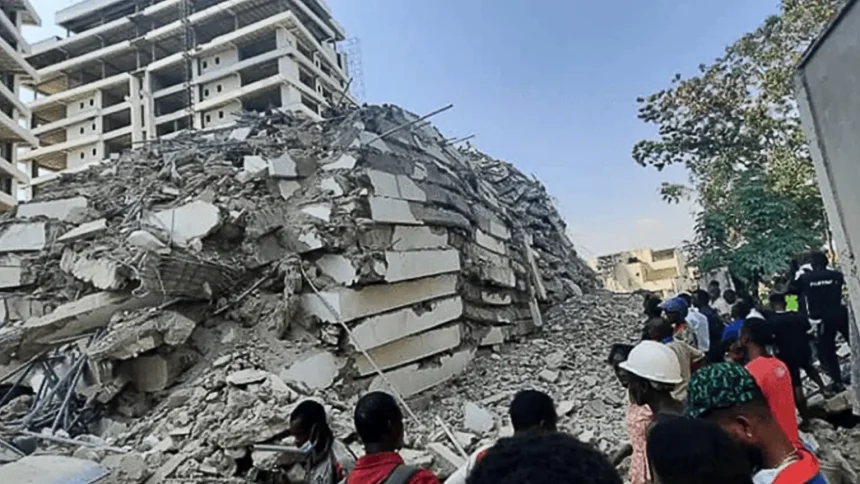
The concerns follow the fifth anniversary of the November 1, 2021 collapse of a 21-storey building on Gerrard Road, Ikoyi, which claimed 45 lives and left several families devastated.
The Ikoyi incident was one of several major building collapses recorded in Lagos over the years. In September 2014, a six-storey building belonging to the Synagogue Church of All Nations (SCOAN) collapsed, killing 116 people. In March 2016, another building under construction at Lekki Gardens collapsed, resulting in 35 deaths.
Despite investigations, criminal charges and court proceedings following some of these incidents, questions remain about the number of people successfully prosecuted and convicted.
The General Manager of the Lagos State Building Control Agency (LASBCA), Florence Omolola Gbaye, said accountability for building safety must involve everyone participating in the construction process.
Speaking on the issue, she maintained that responsibility should not rest solely on property developers but should also extend to construction professionals and government officials responsible for regulatory oversight.
“Accountability is a shared responsibility for everybody,” she said.
Gbaye explained that the agency was working to ensure that all parties involved in construction took responsibility for their actions, including professionals who compromise building standards and officials who fail to perform their regulatory duties.
When asked whether anyone had been prosecuted and convicted over previous building collapse incidents, she disclosed that some cases were still before the courts.
“There are cases in court. They are waiting for final judgment,” she said.
Following the 2014 Synagogue Church collapse, the Lagos State Government filed criminal charges against the church’s trustees, engineers and associated companies over alleged violations of building approval requirements and involuntary manslaughter.
Similarly, after the 2016 Lekki Gardens collapse, the state government charged the estate’s managing director and other individuals over alleged construction violations, including building beyond approved specifications.
The 2021 Ikoyi building collapse also exposed concerns about regulatory supervision and professional responsibility. A coroner’s inquest into the incident identified negligence, including failures by agencies responsible for approving and supervising the project, alongside design errors and inadequate quality control.
However, the filing of criminal charges and commencement of investigations do not automatically amount to convictions. The final outcomes of the cases remain important in determining whether those found responsible have been held legally accountable.
Beyond the legal proceedings, the incidents have also highlighted the responsibility of property owners and landlords to ensure that buildings remain structurally sound and safe for occupation.
Tenants, who may have limited knowledge of the structural condition of the properties they occupy, depend largely on property owners and regulatory agencies to ensure that buildings meet safety requirements.
Gbaye reiterated that accountability across the built environment was necessary to prevent further tragedies.
For Lagos residents and families affected by building collapses, the key concern remains whether ongoing investigations and court proceedings will lead to concluded prosecutions, convictions and meaningful consequences for those found responsible.