


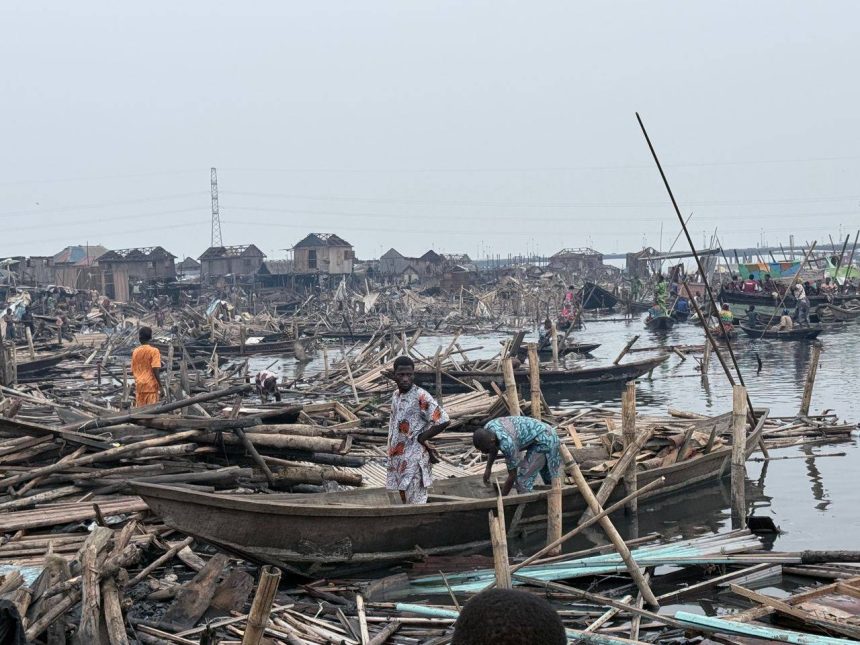
The Lagos State Government has defended the demolition of structures in Makoko and other waterfront communities, insisting that the exercise followed years of consultations, notices, and engagement with affected residents.
State officials said the removal of illegal structures was part of an urban renewal and safety initiative aimed at preventing environmental disasters, fires, and building collapse in high-risk waterfront settlements. According to the government, repeated warnings were issued to residents long before the demolition began.
Makoko, Oworonshoki, Ilaje-Otumara, Owode Onirin and Baba Ijora were among the communities affected by the exercise, which has displaced thousands of residents and sparked outrage from civil society organisations and human rights groups.
At a press briefing in Lagos, officials maintained that the affected structures were built without approval on unsafe terrain, posing serious risks to lives and public infrastructure. They added that the state could no longer ignore safety concerns, especially in densely populated waterfront areas.
However, residents and advocacy groups have rejected the government’s position, describing the demolition as inhumane and poorly handled. They accused the state of failing to provide adequate resettlement plans before pulling down homes and business premises.
Community leaders claim that despite alleged engagements, many residents were not properly informed or compensated, leaving families stranded and without shelter. Women, children and the elderly were reported to be the worst affected.
Human rights groups also raised concerns over the use of security operatives during the demolition, alleging excessive force and disregard for court orders restraining the exercise.
While the government insists the action was necessary and lawful, residents continue to demand compensation, resettlement, and a halt to further demolitions, warning that development should not come at the cost of human dignity and livelihoods.
The controversy has renewed public debate over urban renewal policies in Lagos, especially the balance between development, safety, and the rights of low-income communities.
