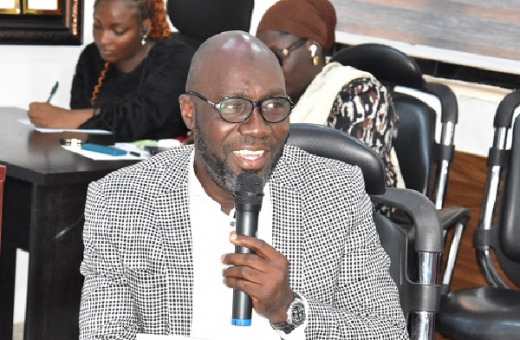
The Lagos State Government has reaffirmed its commitment to addressing the state’s housing deficit through innovation, strategic planning, and strong public-private partnerships, resulting in the delivery of more than 11,000 housing units in nearly seven years.
The Permanent Secretary of the Ministry of Housing, Abdulhafis Toriola, disclosed this while hosting postgraduate students from the Centre for Planning Studies, Lagos State University (LASU), Ojo, who were on an academic visit to the ministry.
Toriola said the housing achievements recorded under the administration of Governor Babajide Sanwo-Olu demonstrate that the housing deficit in Lagos can be effectively reduced with the right mix of policy direction, private sector collaboration, and innovative delivery models.
Represented by the Director of Administration and Human Resources, Akanji Shadare, the permanent secretary commended the students and their lecturers for seeking practical exposure to housing administration and policy implementation.
He stressed the importance of continuous collaboration between academic institutions and government agencies, urging universities to regularly share research findings, data, and innovative ideas that could support housing delivery in the state.
The academic visit, according to the ministry, was designed to expose the students to real-world housing governance, service delivery frameworks, and policy execution, while bridging the gap between theory and practice.
Speaking on housing finance, the General Manager of the Lagos Building Investment Company (LBIC), represented by the Head of Mortgage and Credit Department, Olabisi Funsho-Peters, highlighted the role of mortgage institutions in the real estate value chain.
She explained that LBIC, an accredited mortgage bank insured by the Nigeria Deposit Insurance Corporation (NDIC), provides housing-specific mortgage loans of up to 70 per cent financing, with repayment tenures extending beyond 10 years.
Also addressing the students, the Executive Director of Enterprise Services at the Lagos State Development and Property Corporation (LSDPC), Adeniyi Aromolaran, outlined the agency’s mandate in real estate development, including construction, sales, and property rental.
He clarified, however, that LSDPC does not engage in social housing, noting that its operations are driven by commercial and investment considerations.
Earlier, the Programme Coordinator of the Centre for Planning Studies, LASU, Professor Aliyu Ibrahim, said the visit was aimed at giving students firsthand insight into how housing policies, data, and investment decisions are developed and managed in Lagos State.
He identified key learning outcomes from the engagement, including understanding how housing provision is coordinated between public and private sectors, how housing investments are structured, the challenges affecting housing delivery, and how housing distribution has evolved over time in Lagos.
In his remarks, the Director of the Centre, Professor Fatai, said the visit was organised to strengthen the link between academic training and professional practice, noting that much of the housing data used in universities is sourced from the Lagos State Ministry of Housing.