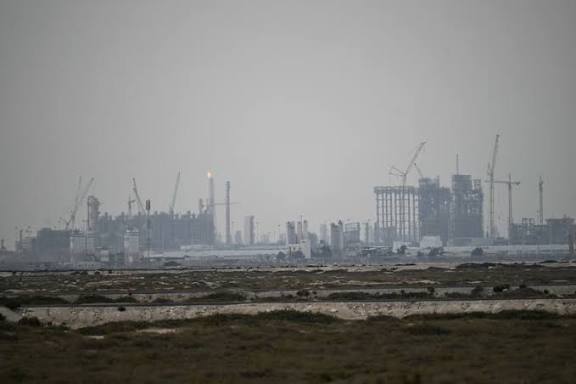
Nigeria may experience a temporary boost in liquefied natural gas earnings following a disruption in global supply triggered by security attacks on energy facilities in Qatar.
The development came after QatarEnergy, the world’s largest producer of liquefied natural gas, announced the suspension of production at major facilities after drone strikes targeted critical infrastructure in the Gulf nation.
The halt has unsettled global energy markets and pushed benchmark gas prices sharply higher across Europe and Asia, creating potential export opportunities for other LNG-producing countries including Nigeria.
Global Gas Prices Surge
Shortly after the production disruption was announced, major gas benchmarks recorded significant price increases across global markets.
European benchmark gas prices climbed sharply, with the Dutch Title Transfer Facility (TTF) contract rising by more than 25 percent to 39.40 euros per megawatt hour.
Asian LNG prices also surged as traders reacted to fears of tighter supply conditions. The widely tracked S&P Global Japan-Korea Marker rose to about $15.068 per million British thermal units, reflecting a strong demand response from Asian buyers.
Energy analysts say the sudden spike was driven by concerns that prolonged supply disruptions in Qatar could tighten global LNG availability, especially during periods of high demand.
Drone Attacks Trigger Energy Disruption
Authorities in Qatar confirmed that two drones struck strategic infrastructure near key industrial zones.
According to the country’s defence ministry, one drone hit a water storage facility linked to a power plant in Mesaieed Industrial City, while another targeted an energy installation in Ras Laffan Industrial City, a major hub for LNG processing and exports.
The attacks reportedly caused damage to infrastructure but did not result in casualties.
In response to the security incident, QatarEnergy announced a precautionary halt to LNG production and related operations while safety assessments and security reviews were conducted.
Short-Term Opportunities for Nigeria
Industry experts say the disruption could create short-term advantages for Nigeria in the global LNG market.
Nigeria is one of the world’s major exporters of liquefied natural gas through the operations of Nigeria LNG Limited, which supplies gas to several international markets.
According to energy market observers, the immediate benefit for Nigeria would come through higher global prices for LNG cargoes.
Former president of the Nigerian Liquefied Petroleum Gas Association, Dayo Adeshina, said Nigeria could secure premium pricing opportunities, particularly in Western markets.
He noted that Europe and the United States may turn to alternative suppliers as buyers search for replacement cargoes following the disruption in Qatar.
Analysts also pointed out that some spot cargoes could allow Nigerian exporters to take advantage of the current price rally.
Shipping Risks May Limit Asian Access
Despite the potential gains, energy analysts warn that Nigeria may struggle to capture significant market share in Asia due to heightened geopolitical risks affecting major shipping routes.
Key maritime corridors such as the Strait of Hormuz and the Suez Canal–Bab el-Mandeb passage have experienced growing security concerns, making some LNG shipments more complicated.
These logistical challenges could limit Nigeria’s ability to divert supplies to Asian buyers, who are among the largest consumers of LNG globally.
Contractual Obligations Remain Key
Another factor likely to limit Nigeria’s immediate gains is the structure of its LNG export agreements.
Most cargoes shipped by Nigeria LNG Limited are tied to long-term contracts with international buyers.
These agreements often restrict exporters from diverting cargoes to new markets during price spikes unless specific flexibility clauses are included in the contract.
Energy analysts say breaking existing contracts to pursue short-term profits could undermine Nigeria’s reputation in the global energy market.
Price Adjustment Clauses Offer Potential Gains
However, industry stakeholders believe Nigeria could still benefit from price adjustment mechanisms embedded in many long-term supply contracts.
Chairman of the Nigeria Council of the Society of Petroleum Engineers, Francis Nwaochei, explained that several LNG agreements contain provisions that allow price revisions when global gas benchmarks rise significantly.
Through these clauses, Nigerian exporters may receive higher revenues without breaching existing supply commitments.
Energy economists say this could provide the country with modest revenue gains while maintaining stability in contractual relationships with international buyers.
Balancing Short-Term Revenue and Market Stability
While the disruption in Qatar presents a temporary opportunity, experts caution that Nigeria must carefully balance short-term financial gains with long-term market credibility.
Maintaining reliability as a supplier remains critical for attracting future investments in the country’s gas sector.
Analysts also stress that Nigeria’s broader LNG potential will depend on expanding production capacity, improving infrastructure and resolving operational challenges that have historically limited output growth.
For now, the global LNG market remains on edge as traders monitor developments in the Middle East and assess how long the disruption at Qatar’s facilities could last.