


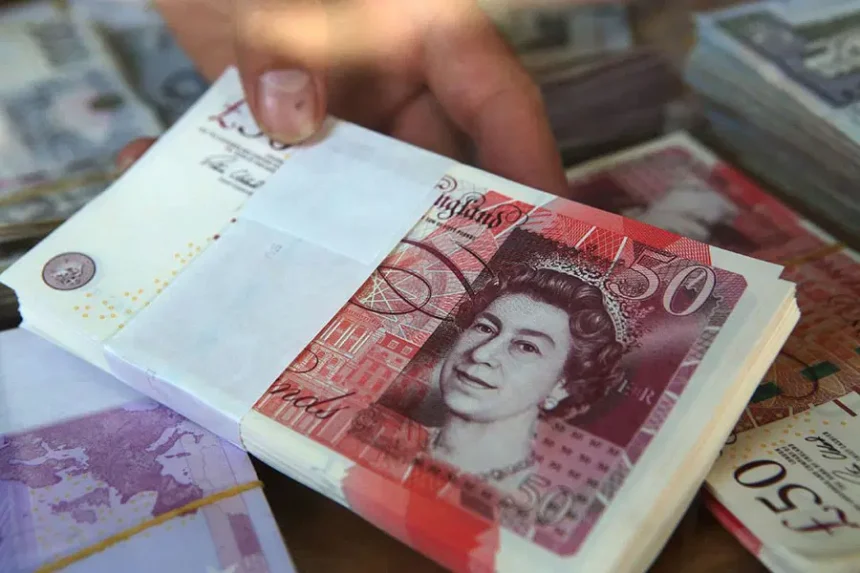
The Nigerian Naira recorded gains against the British Pound Sterling in early trading on Friday, reflecting improved stability in the foreign exchange market.
At the Nigerian Foreign Exchange Market (NFEM), the Pound opened at ₦1,827.41 before declining to ₦1,823.44 by 6:00 AM.
This movement represents a 0.67% appreciation of the Naira since the beginning of April, extending the currency’s positive momentum into the second quarter.
Policy Reforms Boost Official Market Stability
Analysts attribute the Naira’s recent strength to reforms introduced by the Central Bank of Nigeria.
Key among them is the improved transparency in the Electronic Foreign Exchange Matching System (EFEMS), alongside better management of liquidity in the forex market.
These measures have helped reduce volatility in the GBP/NGN pair and improved investor confidence in the official window.
Parallel Market Reflects Similar Trend
In the parallel market, commonly referred to as the black market, the Naira also showed resilience.
Across major cities like Lagos, Abuja, and Port Harcourt, the Pound traded between:
- ₦1,885 and ₦1,905 (selling rate)
Although a premium still exists compared to the official rate, the gap remains relatively stable.
Traders say demand for foreign exchange—especially for tuition, travel, and other invisible transactions—is increasingly being met through formal banking channels, easing pressure on the informal market.
Key Drivers Influencing the Exchange Rate
Several domestic and global factors are shaping the Pound-to-Naira movement:
1. UK Economic Signals
The Pound has faced mild pressure globally due to uncertainty around the Bank of England’s interest rate direction.
2. Nigeria’s External Reserves
Nigeria’s reserves remain relatively stable at approximately $49.48 billion, providing support for the Naira.
3. Increased Remittance Inflows
The integration of International Money Transfer Operators (IMTOs) into formal systems has improved forex liquidity, boosting supply within Nigeria’s banking sector.
Market Outlook for the Weekend
Currency analysts expect the Pound to trade within the ₦1,820 to ₦1,840 range in the official market over the weekend.
The narrowing gap between official and parallel market rates is being seen as a sign of growing confidence in Nigeria’s exchange rate unification policy.
Attention is now shifting to upcoming inflation data, which will likely influence whether the Central Bank maintains its current tight monetary stance.
The Naira’s continued appreciation against the Pound signals improving stability in Nigeria’s forex market.
While challenges remain, ongoing policy reforms and increased forex inflows are helping to sustain confidence and reduce volatility across market segments.