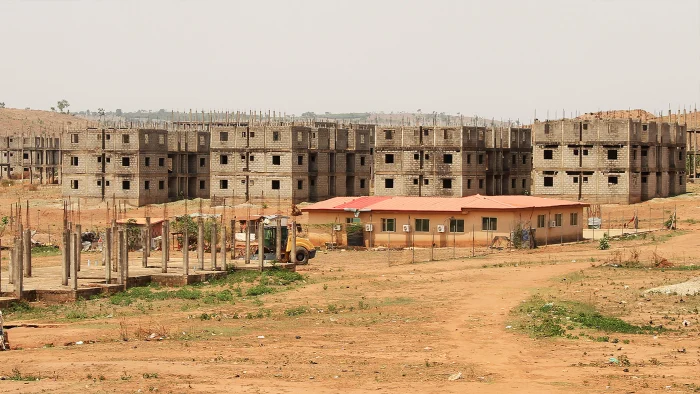
Real estate market to witness uneven growth in Nigeria as investors and developers adjust to economic realities and emerging political uncertainties ahead of the 2027 general elections.
Industry experts say different segments of the property market are likely to perform at varying levels, with some areas benefiting from infrastructure investments and urban expansion, while others may experience slower activity due to investor caution. Recent assessments indicate that the real estate sector remains a significant contributor to Nigeria’s economy, accounting for an estimated five to six per cent of gross domestic product.
Analysts believe that infrastructure-led development and increased digital integration will continue to create opportunities in selected property markets. However, uncertainty typically associated with pre-election periods could influence investment decisions and reduce transaction volumes in some segments.
Historical trends suggest that election cycles often affect investor confidence, with foreign investment inflows slowing as businesses adopt a wait-and-see approach. Experts noted that similar patterns could emerge as political activities intensify ahead of the next election cycle.
Despite these concerns, certain sectors of the market are expected to remain resilient. Demand for short-term accommodation and commercial spaces could receive a temporary boost from election-related activities, while logistics and warehousing assets are projected to maintain steady demand regardless of political developments.
Long-term projects that depend heavily on government policies may face delays if investors become concerned about potential policy changes following elections. Nevertheless, analysts say recent economic reforms and efforts to improve macroeconomic stability could help reduce investment risks and support market confidence.
The land market is also expected to remain active. Industry stakeholders project continued appreciation in land values, driven by infrastructure expansion, urban growth, and investment from Nigerians living abroad. Limited land availability in major urban centres is likely to sustain upward pressure on prices in strategic locations.
Regional differences are expected to shape market performance. The South-West is projected to remain one of the country’s most active property markets, while Abuja and Port Harcourt could see growth influenced by government activity, business investment, and local economic conditions.
Although affordability challenges, inflation, and financing constraints continue to affect the sector, experts maintain that housing demand remains strong due to rapid urbanisation and Nigeria’s significant housing deficit. As a result, the market is expected to present both opportunities and challenges for investors and developers throughout the coming year.