


By Tpl. Umar Shuaibu FNITP
The Ladi Kwali Pottery Centre in Suleja stands today not merely as a relic of Nigeria’s colonial past, but as a beacon of cultural heritage, artistic excellence, and economic opportunity.
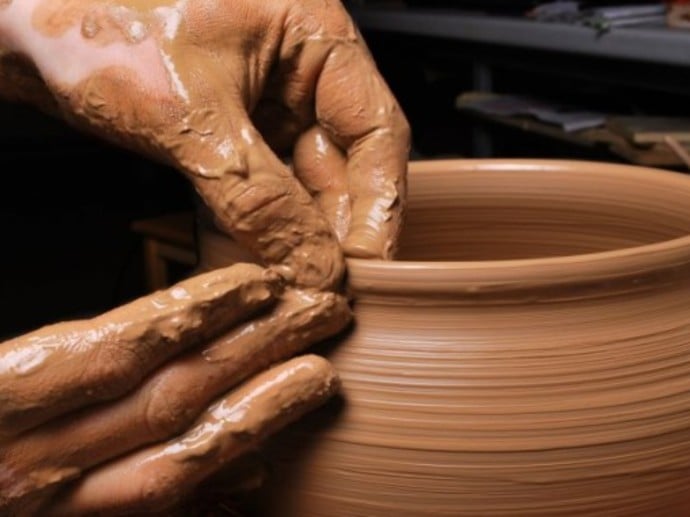
Established in 1951 as the Abuja Pottery Training Centre, the facility was intended to foster local craftsmanship and meet Nigeria’s growing demand for quality tableware.
Its original vision combined European pottery techniques with indigenous skills, laying the foundation for a home-grown industry capable of global recognition.
At the heart of this legacy is Ladi Kwali, whose ingenuity transformed the centre into a hub of international acclaim. Joining the centre in 1954 without formal training, Ladi Kwali honed her skills under the guidance of English studio potter Michael Cardew, blending traditional ornamentation with modern pottery techniques.
Over the decades, her work reached museums and galleries across Europe and the United States, earning awards and honorary degrees, while inspiring countless Nigerian artisans to elevate their craft.
Despite its early promise, the centre fell into neglect in the early 1990s, with dilapidated buildings threatening to erase decades of history. Local indigenes, recognizing its potential not only as a cultural landmark but also as a driver of tourism and local enterprise, advocated for its revival. In 2017, under the leadership of then Minister of State for Solid Minerals, Tpl. Abubakar Bawa Bwari, a World Bank-supported initiative through the Mineral Sector Support for Economic Diversification Project (MinDiver) sought to restore the centre to operational life.
The World Bank’s engagement confirmed what locals had long known: the centre is an economic and cultural asset. Its revival promises to attract tourism, generate employment, and serve as a practical training hub for emerging potters. Beyond aesthetics, it offers opportunities for surrounding universities such as FUT Minna, IBB University, and AA Kure University to integrate ceramic industrial courses, linking academic training with hands-on craftsmanship.
Yet, despite initial renovations and handover to the Niger State Government, progress stalled. Essential resources and specialized personnel remain unengaged, leaving the centre’s full potential unrealized. There is renewed optimism, however, that the Suleja Emirate Council, with proper support, could steer the centre towards achieving its twin goals of cultural preservation and economic empowerment.
Reviving the Ladi Kwali Pottery Centre is more than a heritage project—it is a platform for youth empowerment, skill development, and sustainable tourism. By transforming the centre into a dynamic cultural and economic hub, Nigeria can preserve its artistic legacy, inspire the next generation of artisans, and demonstrate how cultural treasures can drive local economies.
The story of Ladi Kwali and her pottery is a testament to Nigeria’s creative resilience, and the centre’s revival could be the spark that reconnects the nation with a world-class tradition of craftsmanship and innovation.