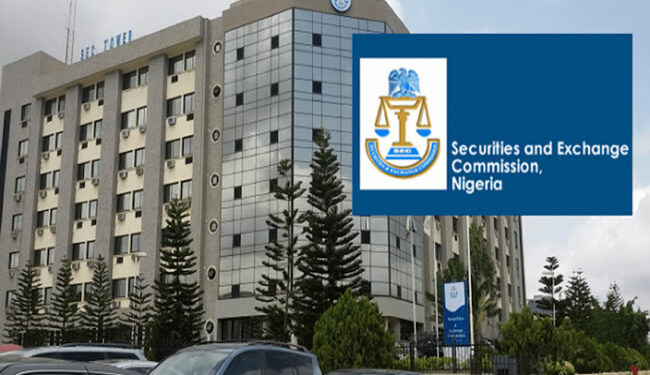
The Securities and Exchange Commission (SEC) says it is prioritising the mobilisation of long-term capital to address Nigeria’s infrastructure deficit and sectoral financing gaps, while strengthening regulatory frameworks to support sustainable economic growth.
The Director-General of the Commission, Dr Emomotimi Agama, disclosed this in his New Year message in Abuja, according to a statement issued by the SEC on Monday.
Agama said the Commission would, in 2026, intensify efforts to facilitate the issuance of infrastructure bonds, green bonds, municipal bonds and infrastructure-focused investment funds aimed at channelling patient capital into critical sectors of the economy.
According to him, the initiative is designed to attract both domestic and international long-term investors into roads, power, rail, housing and digital infrastructure, while simplifying market access for state governments and infrastructure companies.
“Our objective is to unlock disciplined, long-term capital that supports productive investments and accelerates national development,” Agama said.
He noted that the SEC would also promote the listing of agribusiness firms on the capital market and introduce tailored listing windows for agricultural cooperatives and value-chain companies.
Through commodity exchanges, agricultural investment trusts and commodities-linked financial instruments, the Commission aims to reduce risks in the agriculture sector, ensure fair pricing for farmers, strengthen food security and expand investment opportunities for Nigerians.
Agama further disclosed plans to revitalise Real Estate Investment Trusts (REITs) and introduce innovative affordable housing bonds to support mass housing delivery and create new asset classes for investors.
“These initiatives will help unlock capital for housing development and move millions of Nigerians closer to homeownership,” he said.
The SEC chief added that regulatory reforms were also underway to encourage listings by small and medium-scale enterprises, particularly in manufacturing, automotive, pharmaceutical and finished goods sectors.
By providing access to patient capital through the capital market, Agama said the Commission expects to revitalise local industries, reduce import dependence, create jobs and strengthen the global competitiveness of Made-in-Nigeria products.
He also said the capital market would play a key role in supporting Nigeria’s power sector through infrastructure bonds, green energy bonds, project-backed securities and public-private investment vehicles.
According to him, these measures would help unlock long-term financing for grid expansion, renewable energy projects, embedded power solutions and broader energy transition initiatives.
“As the new year begins, the SEC is not merely turning a page on the calendar, but embracing an opportunity to redefine the purpose and power of Nigeria’s capital market,” Agama said.
“We are building a future where the capital market becomes a central solution provider for the country’s most pressing economic and developmental challenges.”