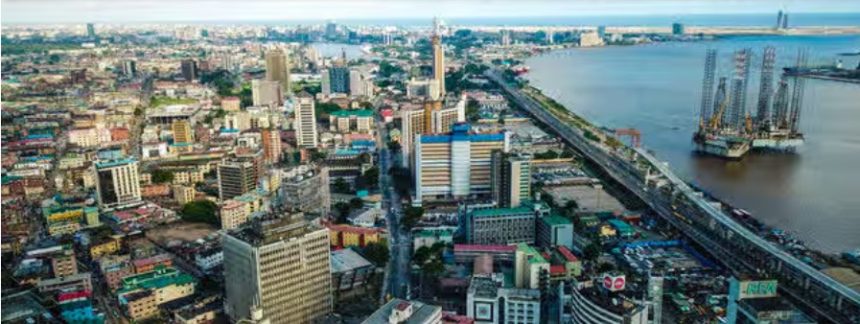
Location continues to be the most powerful factor influencing home prices in Nigeria, with neighbourhood quality, accessibility, and proximity to economic hubs shaping property values more than architectural design or building size.
Real estate experts say geography and urban context now play an even stronger role as cities expand and infrastructure gaps widen.
Location as the strongest price determinant
For decades, professionals in the sector have noted that location is the biggest driver of real estate value. In today’s volatile market—challenged by inflation, rising construction costs, and a depreciating naira—the influence of location has become even more pronounced.
In Lagos, for example, a three-bedroom apartment in Lekki Phase 1 can cost up to ten times the price of a similar unit in Abijo or Sangotedo. The same pattern exists in Abuja, where a two-bedroom apartment in Maitama can be ten times more expensive than one in Lugbe. These price gaps highlight deep differences in infrastructure, security, and access to economic opportunities.
Proximity to jobs and business districts
Homes located near major job centres or commercial hubs consistently attract higher prices. Properties in Victoria Island, Ikoyi, Lekki, and parts of Abuja’s Central Area remain in high demand among executives, expatriates, and multinational organizations.
A Lagos-based estate valuer noted:
“People will always pay more to live close to work. As traffic worsens, central locations become even more valuable.”
The same trend is seen in Abuja, where Asokoro, Wuse II, Maitama and Central Area command premium prices.
Infrastructure as a value booster
Stable infrastructure—good roads, multiple access routes, drainage systems, and public transit—can increase property value by 15–40% depending on the city.
Examples include:
-
Lekki–Epe Expressway: its completion sparked a surge in property prices from Lekki Phase 1 to Awoyaya.
-
Abuja Airport Road corridor: better roads boosted demand in Lugbe, Kuje, and Idu.
-
Ikorodu, Ajegunle & Alaba: these remain relatively low-value due to congestion and inadequate infrastructure.
Where infrastructure fails—through flooding, erosion, or bad roads—values stagnate or decline. Even new estates in Lekki Phase 2 and Ajah have seen rental values flatten due to worsening traffic and flood risks.
Security and neighbourhood perception
Security remains a top concern for Nigerian homebuyers. Areas with private security, estate gates, surveillance, street lighting, and controlled access draw higher demand. Examples include Magodo, Ikeja GRA, Omole, and in Abuja, Jabi and Gwarimpa.
Importantly, both actual security and perceived safety influence pricing. Neighbourhoods known for calmness, orderliness, and exclusivity tend to appreciate faster than those with rising crime or recurring unrest.
Amenities as demand multipliers
Access to good schools, hospitals, grocery stores, recreation centres, and utilities significantly boosts home value. Locations near reputable private schools or international institutions attract families seeking convenience.
Lagos estates near major malls in Oniru, Ikeja, and Sangotedo often outperform similar districts lacking strong amenities.
Environmental risks now shape buyer decisions
Climate change is influencing property buying behaviour. Flood-prone zones in Lekki–Eti-Osa, Isheri North, parts of Port Harcourt, and communities along the Ogun River increasingly face buyer resistance. Even well-built homes lose value if flooding is frequent.
Conversely, high-elevation areas or properties with waterfront views—Ikoyi, Banana Island, Osborne, and parts of Enugu and Jos—retain strong appeal.
Impact of government policies and urban planning
Urban planning decisions—zoning, building approvals, land titles, and development control—have a major impact on property values. Predictable planning frameworks attract investors, while inconsistent policies or sudden demolition exercises erode confidence.
Locations like Eko Atlantic, Alaro City, GRA zones in Ibadan, and New Bodija benefit from clear masterplans.
The prestige effect
Prestigious neighbourhoods such as Ikoyi, Banana Island, Asokoro, GRA zones, and Maitama carry brand value. For many buyers, the address itself is an asset, offering social status and perceived quality of life.
Neighbourhoods that attract specific professions, income groups, or cultural communities also tend to reinforce pricing patterns.
Expert insights: Location still rules the market
First Vice President of NIESV, Muhammad Bature, said market behaviour continually proves that location remains the strongest determinant of home value. He noted that:
-
Two identical buildings can have vastly different prices based solely on location.
-
In Kaduna, a four-bedroom duplex in Unguwar Rimi GRA almost doubles the price of a similar one in Rigasa due to infrastructure, security, schools, and neighbourhood perception.
-
Flood-prone areas along River Kaduna show signs of structural damage and dampness, requiring downward valuation adjustments.
Bature added that valuers now integrate environmental risks—soil stability, flood history, climate impact—into pricing across major cities.
Past FIABCI president Chudi Ubosi echoed this, stressing that even properties on the same street can differ in value depending on their exact placement, proximity to commercial hubs, and exposure to environmental risks.
Former NIESV Lagos chairman Gbenga Ismail highlighted that accessibility, road quality, traffic patterns, centrality, and security are the biggest value drivers. He emphasised the need for:
-
Better title registration,
-
Predictable taxation,
-
Urban renewal programmes,
-
Reliable infrastructure and utilities.
These, he said, boost investor confidence and neighbourhood desirability.