


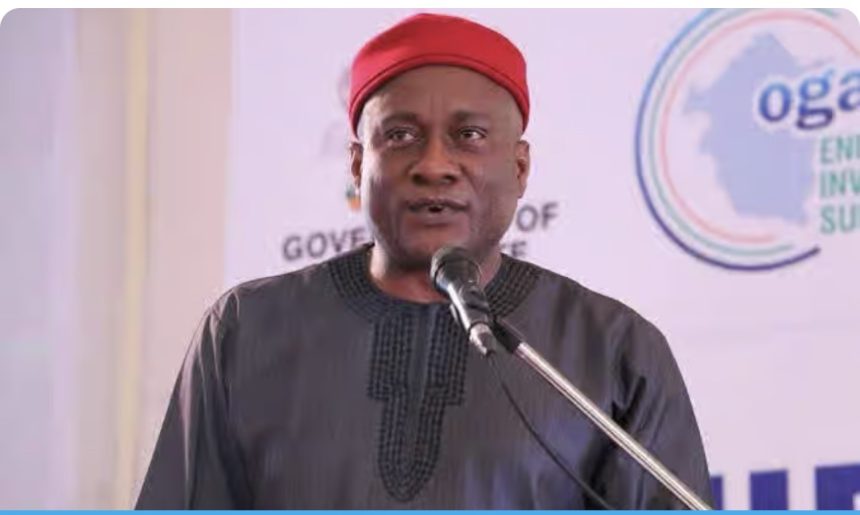
Chairman and Chief Executive Officer of Air Peace, Allen Onyema, has warned that Nigeria’s domestic aviation sector is facing a severe threat following the introduction of new tax measures that could push airfares to as high as ₦1.7 million and force airlines out of operation.
Speaking during a media interaction on Sunday, Onyema said the cumulative impact of multiple taxes, statutory levies and high borrowing costs could cripple airline operators within months if urgent corrective steps are not taken by the government.
According to him, Nigerian airlines are unfairly perceived as profiteers, despite retaining only a fraction of ticket revenue after mandatory deductions. He explained that from a ticket priced at about ₦350,000, airlines receive as little as ₦81,000, with the remainder consumed by taxes and charges imposed by various agencies.
“Airlines are heavily overburdened by taxes and levies. People think we are making excessive profits, but that is far from the truth,” Onyema said, stressing that excessive deductions continue to weaken the sector.
He cited a mandatory five per cent charge imposed by the Nigerian Civil Aviation Authority (NCAA) on every ticket sold, noting that it is only one of several overlapping levies confronting operators.
Onyema argued that the current tax structure contradicts global aviation standards as outlined by the International Civil Aviation Organisation (ICAO), which discourages governments from using aviation as a revenue-generating tool. Instead, ICAO recommends a cost-recovery model based on services rendered.
“Aviation is not supposed to be a revenue source for government. Charges should reflect the cost of services provided, not be designed to generate profit,” he said, adding that failure to follow this principle has stalled the growth of Nigeria’s airline industry.
The Air Peace boss recalled that the 2020 Finance Act provided significant relief to the aviation sector by exempting aircraft, spare parts, engines and ticket fares from Value Added Tax (VAT) and customs duties. However, he said recent tax changes have reversed those gains.
Under the new tax regime, aircraft and spare parts importation now attract 7.5 per cent VAT, a development Onyema said would sharply increase operating costs for airlines already struggling with foreign exchange challenges and high interest rates.
“If you import an aircraft worth $80 million, you are now required to pay 7.5 per cent VAT. Combine that with bank interest rates of between 30 and 35 per cent, and airline operations become unsustainable,” he said.
He warned that airlines would have no option but to pass the rising costs to passengers, leading to unprecedented increases in domestic airfares.
“With the new tax regime, economy class tickets could rise to about ₦1.7 million. If this policy is fully implemented, Nigerian airlines may not survive beyond three months,” Onyema cautioned.
He disclosed that members of the Airline Operators of Nigeria (AON) had repeatedly engaged relevant government authorities, including the National Assembly and the tax reform committee, to present their concerns.
According to him, lawmakers and government consultants acknowledged the risks after reviewing data presented by airline operators, with some expressing concern over the potential consequences for the sector and the wider economy.
Describing aviation as a critical driver of economic growth, trade and national integration, Onyema urged the Federal Government to reconsider the policy and revert to the provisions of the 2020 aviation tax framework.
He expressed confidence that the current administration, led by President Bola Tinubu, would recognize the strategic importance of the industry and take steps to prevent the collapse of indigenous airlines.
“Across the world, aviation is supported by governments because of its unique nature. We are not asking for handouts, only policies that allow the industry to survive and grow,” he said.