Nigeria’s real estate market is entering 2026 on the back of a quiet but decisive structural reset, as financing innovation, energy-conscious developments, and data-driven planning begin to replace speculation-driven growth that defined previous cycles.
Industry analysts say the shifts that gathered momentum in 2025 are no longer experimental. Instead, they are shaping how homes will be financed, built, priced, and governed in the coming year.
At the centre of this transformation is blended finance, an approach increasingly viewed as the most viable response to Nigeria’s chronic housing affordability crisis.
Blended Finance Redefines Mortgage Access
Blended finance combines lower-cost public or institutional capital with commercial lending to reduce mortgage interest rates and expand access to homeownership. In a market where mortgage penetration remains below one per cent of GDP, the model is gaining traction among policymakers, lenders, and developers.
Olugbenga Alamu, Chief Operating Officer of QShelter Limited, explained that blending subsidised government funds with pension-backed capital, private equity, and commercial loans can significantly lower borrowing costs for homebuyers.
Recent examples include the Ministry of Finance Incorporated Real Estate Investment Fund (MREIF), where mortgage rates have dropped to 9.75 per cent from an initial 12 per cent following capital blending arrangements.
The Nigeria Mortgage Refinance Company (NMRC) has also expanded the use of blended interest rates to improve liquidity in the mortgage system, a move analysts say could unlock middle-income housing demand if sustained.
Industry discussions at the Real Estate Discussions & Awards (REDA) conference in late 2025 suggested that blended finance could accelerate partnerships between government and private developers, shorten project delivery timelines, and increase first-time buyer participation in 2026.
Solar-First Estates Move from Concept to Competitive Advantage
Beyond financing, energy is emerging as a defining factor in residential development strategy.
Solar-first estates, once viewed as premium or experimental, are increasingly becoming commercially viable alternatives to conventional smart-home developments, especially amid rising energy costs and unreliable grid power.
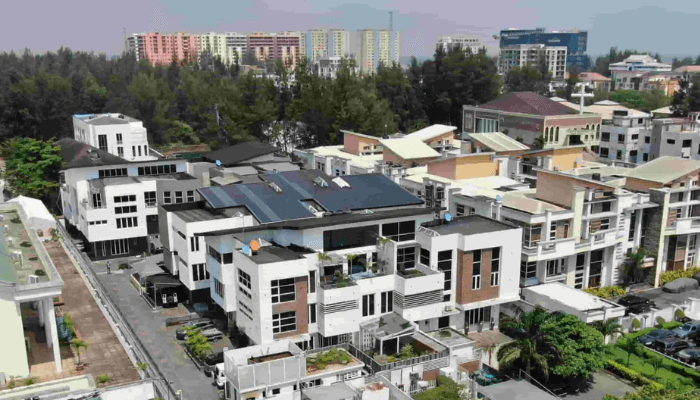
Victoria Crest Homes has been at the forefront of this shift, delivering fully solar-powered communities in Lagos, including its Citadel Views Estate. Managing Director and Chief Executive Officer, Ichechi Chinarhu Okonkwo, said the focus is on reducing long-term living costs while improving energy stability.
Developers say priorities are shifting away from costly automation features towards power-resilient communities powered entirely by renewable energy. Some new estates are now being delivered without generators, reflecting a broader industry pivot toward sustainability-driven value rather than luxury symbolism.
Data and PropTech Redefine Development Decisions
Another major shift shaping 2026 is the growing use of data and PropTech to guide development choices.
Large developers and property technology firms, including Purple Group and Novare Real Estate, say the future of the sector will be defined by how effectively developers use data already at their disposal.
From digital payment patterns and tenant behaviour to foot traffic analytics and demographic mapping, data is increasingly influencing what gets built, where, and for whom.
Industry experts warn that developers relying on outdated assumptions or intuition-driven planning may struggle to compete, as user-driven real estate becomes the dominant model across retail, residential, and mixed-use developments.
Governance, Scale, and Land Reform Take Centre Stage
As capital becomes more selective, developers are also under pressure to professionalise operations. Analysts expect many small, informal operators to evolve into structured corporate entities in 2026 to attract institutional funding, foreign investment, and government-backed financing.
Land administration reform and regulatory digitisation are also expected to play a defining role. Lagos State’s fully digital cadastral system, which has mapped over five million properties, is increasingly cited as a template for other states seeking to unlock dead capital and improve land security.
A Market Redefining Itself
Analysts say these converging shifts suggest Nigeria’s real estate market is no longer driven solely by land speculation or price appreciation but by fundamentals such as financing access, energy efficiency, data intelligence, and regulatory clarity.
If sustained, the reforms could reposition the sector as a more transparent, investable, and inclusive contributor to economic growth in 2026 and beyond.