The Lagos State Government has reaffirmed its commitment to expanding housing supply in 2026, announcing plans to deliver more residential units as part of renewed efforts to reduce the state’s estimated three-million-unit housing deficit.
The Lagos State Government says 2026 will mark an acceleration in public and private housing delivery as it intensifies efforts to address the state’s growing housing shortfall driven by rapid urbanisation and population growth.
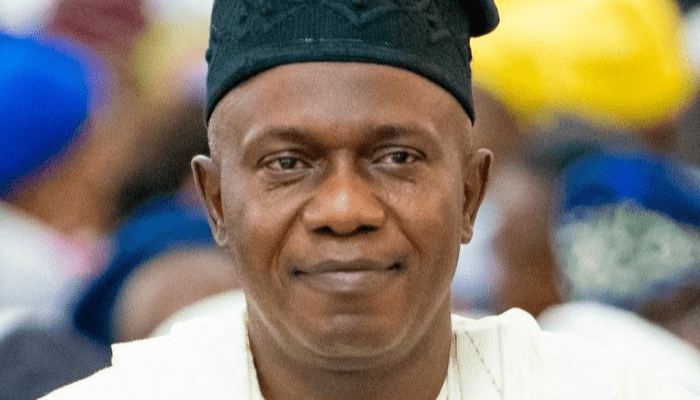
The Commissioner for Housing, Moruf Akinderu-Fatai, disclosed this while reviewing the ministry’s performance in 2025, noting that several completed housing schemes already demonstrate the administration’s resolve to boost supply across the state.
According to him, projects such as the Akinsanya Sunny Ajose Housing Scheme and the Abraham Adesanya Housing Estate (Parcels A and B) were completed and commissioned as part of ongoing interventions aimed at easing pressure on Lagos’ overcrowded housing market.
Akinderu-Fatai said the timely completion of all ongoing projects remains a priority for the government, in line with Governor Babajide Sanwo-Olu’s development agenda.
“We must redouble our efforts to ensure that projects including Sangotedo Phase II, Egan-Igando Clusters II and III, Ibeshe Phase II, as well as joint venture housing schemes, are completed and ready for commissioning,” he said.
He urged departmental heads and project teams to maintain strict quality control, effective planning, and disciplined execution across construction sites to meet delivery timelines.
The commissioner added that the government would deepen collaboration with private developers and financial institutions to scale housing delivery, noting that public-private partnerships remain critical to achieving sustainable housing outcomes under the THEMES Plus agenda.
Also speaking, Abdulhafis Toriola, Permanent Secretary of the Ministry of Housing, emphasised the role of diligence, integrity, and professionalism in ensuring project success within the public service.
Toriola revealed that the state government is intensifying efforts to address the growing number of abandoned buildings across Lagos, leveraging existing legal frameworks, including the Lagos State Real Estate Regulatory Authority (LASRERA) Law, to facilitate their completion.
He said the move would not only increase housing supply but also improve urban aesthetics, enhance safety, and reduce environmental risks.
According to Toriola, the Sanwo-Olu administration has delivered more than 12,000 housing units to beneficiaries across the state over the past six years, a figure the government aims to significantly increase in the coming years.
The ministry’s management and staff reaffirmed their commitment to expanding access to decent, safe, affordable, and sustainable housing for Lagos residents, particularly low- and middle-income earners and new urban migrants.