South Africa has taken a cautious approach to monetary policy, opting to hold its benchmark interest rate at 6.75%, amid easing inflation risks and a firmer currency. This pause, the first since September 2025, marks a shift in the central bank’s strategy as global uncertainty persists.
The South African Reserve Bank (SARB)’s Monetary Policy Committee (MPC) voted 4–2 in favor of maintaining rates, with two members advocating a 25-basis-point cut. The decision follows cumulative reductions of 100 basis points over the past year, which brought the policy rate down from 7.75% to 6.75%.
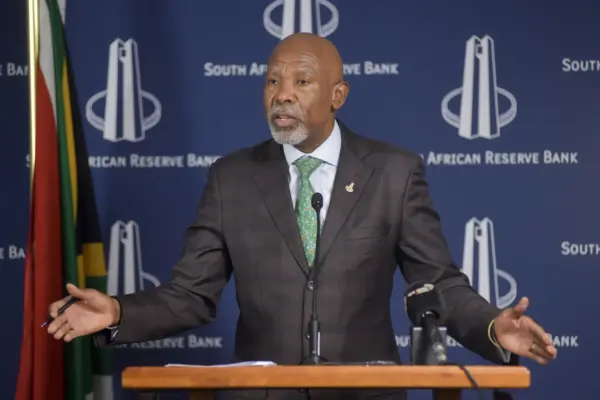
Governor Lesetja Kganyago noted that the near-term inflation forecast has softened due to a stronger rand and lower oil price assumptions. December’s 3.6% inflation print may represent the peak for the year, although food and electricity prices remain potential upside risks. The central bank also revised its 2026 inflation projection to 3.3%, edging closer to its 3% target anchor within the 3–6% target band.
“Global volatility continues to challenge our outlook,” Kganyago said, citing geopolitical tensions and oil price fluctuations as key uncertainties. He highlighted that while South Africa has paused its easing cycle, other African economies are pursuing different approaches.
For instance, Angola cut its benchmark rate by 100 basis points to 17.5% in January, reflecting improving domestic conditions and easing inflation. Ghana surprised markets with a 250-basis-point cut to 15.5%, the lowest since February 2022. Tanzania, meanwhile, held its policy rate at 5.75% to sustain economic growth.
In Nigeria, analysts anticipate a gradual shift toward rate easing at the next Monetary Policy Committee meeting in February. Last September, the central bank cut its policy rate by 50 basis points to 27%—the first reduction in five years—but has since maintained a cautious hold.
The current environment underscores a broader trend in Africa, where central banks balance domestic inflation control with global financial shocks. The SARB’s approach emphasizes careful monitoring of inflation drivers and currency movements, aiming to stabilize the economy while maintaining investor confidence.
SARB’s decision also reflects the growing complexity of monetary policy in a globally interconnected market. With renewed foreign investor interest in South Africa and neighboring countries, the central bank’s cautious stance seeks to ensure that domestic stability is not compromised by external shocks.
As 2026 progresses, policymakers across the continent are expected to navigate a delicate balance between stimulating growth, controlling inflation, and maintaining financial market stability. South Africa’s measured approach signals that monetary policy will remain responsive but prudent, prioritizing long-term economic resilience over short-term gains.