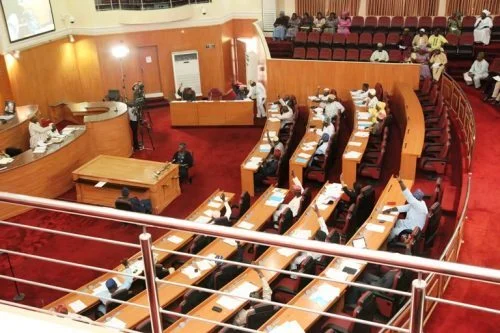
The Lagos State House of Assembly has officially halted demolitions in Makoko and Shogunle, directing a structured two-week reconciliation process to address issues arising from previous clearance operations. The move is aimed at fostering dialogue with affected residents and ensuring sustainable urban development along the Third Mainland Bridge corridor.
During a committee meeting with local leaders, Speaker Mudashiru Obasa, represented by Majority Leader Noheem Adams, reaffirmed the Assembly’s commitment to reconciliation, emphasizing the inclusion of women, youths, students, and traditional leaders in community committees. These committees are tasked with facilitating effective communication, resolving disputes, and ensuring residents comply with the new regulations.
The Assembly adopted recommendations from the Special Adviser to Governor Babajide Sanwo-Olu on E-GIS, Dr Olajide Babatunde, which include the establishment of a 250-metre setback from the Third Mainland Bridge and an additional 250-metre buffer beyond the power line corridor. All forms of development are now prohibited within these designated zones to safeguard public safety and environmental standards.
Lagos community leaders and residents have welcomed the directive, with the Chairman of Yaba Local Council Development Area, Bayo Adefuye, acknowledging the efforts of both the state and local governments. Relief materials and palliatives have already been distributed to residents affected by earlier demolitions, providing immediate support while the reconciliation process proceeds.
The Assembly emphasized that the two-week timeline is critical for ensuring a lasting resolution. Committees are expected to submit progress reports regularly, while the Lagos State Building Control Agency (LASBCA) and the E-GIS Office will continue monitoring compliance with the buffer zones.
Lagos Assembly’s halt on demolitions in Makoko and Shogunle marks a shift towards community-inclusive urban planning. The state government has reiterated that any attempts to bypass the buffer zones or engage in unauthorized construction will result in legal actions.
The decision highlights Lagos State’s commitment to environmental safety, sustainable urban development, and social cohesion, balancing infrastructure growth with community needs. Residents are urged to cooperate fully with the committees and respect regulations to ensure a smooth reconciliation process.