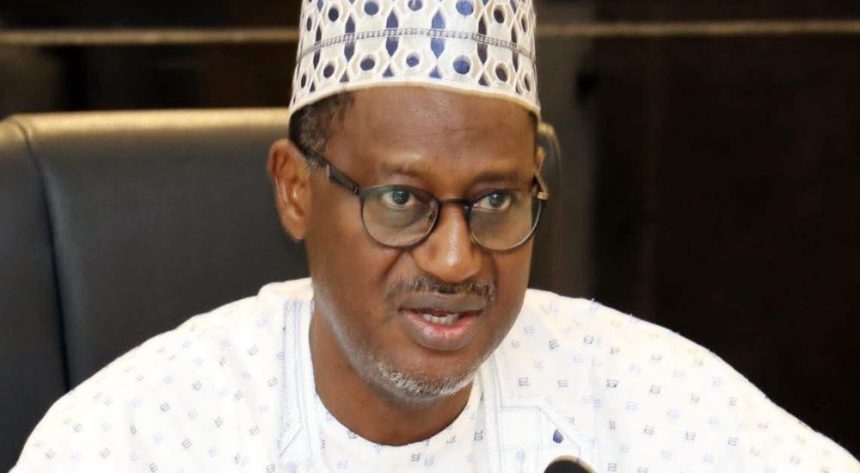
The Minister of Housing and Urban Development, Ahmed Musa Dangiwa, has disclosed that more than 1,000 officials of the ministry retired within the last two years, creating what he described as a significant human resource gap.
Dangiwa made the revelation on Thursday while receiving the chairman and members of the Board of Fellows of the Nigerian Institution of Surveyors during a courtesy visit to his office in Abuja.
The minister acknowledged that the wave of retirements has impacted the ministry’s workforce capacity, noting that urgent steps are required to strengthen institutional manpower and sustain ongoing housing and urban development reforms.
Human Resource Challenge
According to Dangiwa, the large-scale retirements have left noticeable vacancies across key departments, including technical units responsible for land administration, surveying and geospatial services.
He said the ministry is actively exploring partnerships and structured professional development initiatives to address the gap and build a stronger pipeline of skilled personnel.
“The ministry is currently experiencing a significant human resource gap due to large-scale retirements over the past two years,” Dangiwa said. “We must focus on capacity building to ensure continuity, professionalism and institutional efficiency.”
Industry observers note that Nigeria’s public sector has in recent years experienced waves of retirements due to age and service-year limits, often creating temporary capacity shortages in specialised ministries.
Partnership With Surveyors
The minister stated that the Ministry of Housing and Urban Development is prepared to deepen collaboration with the Nigerian Institution of Surveyors to develop structured training programmes tailored to the ministry’s operational needs.
He emphasised that capacity building remains the most sustainable mechanism for institutional strengthening and professional excellence, particularly for young surveyors entering the public sector.
“Capacity building is the only way to properly develop the young professionals coming on board and raise our standards and best practices,” he said. “It is critical to promote professionalism in surveying and mapping and ensure sustainable development across the country.”
Dangiwa noted that the ministry houses a substantial number of surveyors and also provides government oversight to relevant professional bodies within the built environment sector.
Role of Surveying in Housing Development
Highlighting the strategic importance of surveying, the minister explained that the core mandates of the ministry are closely linked to land administration and geospatial services.
He stressed that effective land governance, urban planning and housing development cannot be achieved without strong collaboration between policymakers and land professionals.
“Effective land administration cannot be achieved without close collaboration with surveyors and other land professionals within the ministry,” Dangiwa stated.
He further pointed out that a branch of the Office of the Surveyor-General operates within the ministry under its Cadastral Department, reinforcing the institutional linkage between surveying professionals and housing authorities.
Experts say accurate cadastral records and reliable geospatial data are fundamental to reducing land disputes, improving urban planning and enhancing investor confidence in Nigeria’s housing sector.
Institutional Reforms and Infrastructure Expansion
The minister described the existing relationship between the ministry and the Nigerian Institution of Surveyors as “strong and evolving,” adding that it must be strengthened further to support ongoing reforms and infrastructure expansion.
He linked the ministry’s reform agenda to broader national development goals, including modernising land systems, improving housing delivery and expanding infrastructure access.
Dangiwa reiterated that strengthening the construction and land management workforce is essential for meeting Nigeria’s growing housing demand and ensuring sustainable urban development.
Surveyors Seek Deeper Cooperation
Earlier in his remarks, the Chairman of the Board of Fellows of the Nigerian Institution of Surveyors, Surveyor Alabo Charlesye David Charles, said the visit aimed to enhance institutional cooperation and explore strategic areas of mutual interest.
He identified key areas for collaboration, including the development of tailored training programmes aligned with the ministry’s operational priorities and professional standards.
Charles noted that closer engagement between professional bodies and government institutions would improve service delivery and promote best practices across the surveying profession.
Outlook
As Nigeria continues to pursue ambitious housing and urban renewal programmes, stakeholders say addressing workforce shortages will be critical to sustaining progress.
With over 1,000 officials retired in two years, the Ministry of Housing and Urban Development now faces the dual challenge of maintaining operational efficiency while building the next generation of skilled professionals.
Dangiwa maintained that structured capacity development, certification standards and strategic partnerships will play a central role in closing the human resource gap and strengthening the institutional framework required to deliver affordable housing and sustainable cities nationwide.