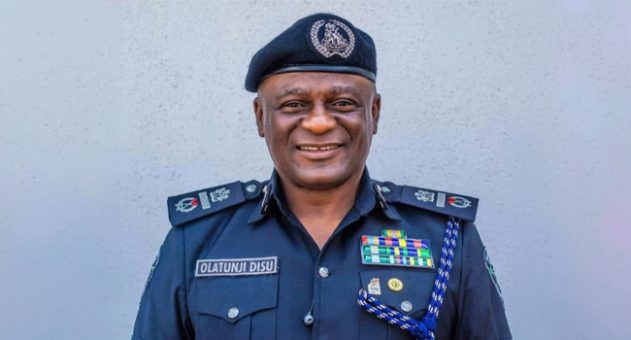
The appointment of Tunji Disu as acting Inspector-General of Police (IGP) has triggered expectations of a major shake-up within the top hierarchy of the Nigeria Police Force, with at least eight Deputy Inspectors-General (DIGs) likely to retire in line with longstanding institutional tradition.
President Bola Tinubu approved Disu’s appointment following the resignation of the former IGP, Kayode Egbetokun, who stepped down citing pressing family considerations. Egbetokun had been appointed in June 2023 for a four-year tenure scheduled to end in 2027, under the amended provisions of the Police Act.
In a statement issued by the President’s Special Adviser on Information and Strategy, Bayo Onanuga, Tinubu acknowledged receipt of Egbetokun’s resignation letter and expressed appreciation for his service to the nation.
Until his elevation, Disu served as Assistant Inspector-General of Police in charge of the Force Criminal Investigation Department (FCID) Annex, Alagbon, Lagos.
Tradition of Senior Officers Stepping Down
In Nigeria, it is customary — though not legally mandated — for senior officers to retire when a junior officer is appointed IGP. The practice is rooted in the Force’s adherence to hierarchy, seniority and institutional stability.
With Disu’s appointment, attention has turned to several serving DIGs who are senior to him and may now exit the Force.
DIGs Likely to Retire
1. Frank Mba
Mba began his policing career as an Inspector and rose steadily through the ranks. He was promoted to Assistant Superintendent of Police in 1999 and later advanced to Deputy Superintendent (2003), Superintendent (2008), Chief Superintendent (2012), Assistant Commissioner (2014), Deputy Commissioner (2018) and Commissioner of Police (2020). In March 2023, he was decorated as Assistant Inspector-General. A three-time Force Public Relations Officer, Mba also earned a United Nations Medal for service with the UN Mission in Liberia between 2006 and 2007.
2. Mohammed Gumel
Currently serving as DIG in charge of the Force Intelligence Department at Force Headquarters, Abuja, Gumel assumed office in late 2025. He is widely recognised for his advocacy of community policing and was named Best Community Policing Advocate of the Year in 2024.
3. Adebola Hamzat
Hamzat oversees the Department of Logistics and Supply. Appointed DIG in March 2025, he supervises procurement, works, housing and technical services. He previously served as AIG in charge of Zone 16 and as Commissioner of Police in Oyo State.
4. Yahaya Abubakar
Abubakar heads the Department of Finance and Administration at Force Headquarters. Promoted by the Police Service Commission in 2024, he oversees budgeting, human resources and administrative operations within the Force.
5. Basil Idegwu
Idegwu leads the Department of Research and Planning. Appointed in March 2025, he plays a key role in strategic planning and policy formulation. He holds a Ph.D. in Peace and Security Studies and has been instrumental in modernising policing frameworks.
6. Bzigu Kwazhi
As DIG in charge of Operations, Kwazhi coordinates nationwide security operations, including joint missions, riot control and election security. In 2025, he led high-level interventions in Plateau and Adamawa states.
7. Idris Abubakar
Appointed a cadet Assistant Superintendent of Police in May 1992, Abubakar holds a Ph.D. in Psychology and has occupied several senior leadership roles across the Force.
8. Adebowale Williams
Williams currently serves as DIG in charge of Information and Communication Technology. He oversees digital infrastructure and technological modernisation initiatives within the Nigeria Police Force.
Implications for the Force
Security analysts say Disu’s appointment signals a transition phase for the Nigeria Police Force, potentially ushering in new operational strategies and administrative priorities.
The likely retirement of multiple DIGs could create opportunities for further promotions and restructuring at the highest levels of the Force. Such transitions often influence operational direction, command structure and strategic focus areas, including intelligence, logistics and digital policing reforms.
While the tradition of senior officers stepping aside is not codified in law, it has historically been observed to maintain cohesion and respect for rank hierarchy.
Disu’s elevation therefore not only marks a personal career milestone but also sets the stage for significant leadership changes within the Force in the coming days.
Further announcements regarding retirements or fresh appointments are expected as the transition unfolds.