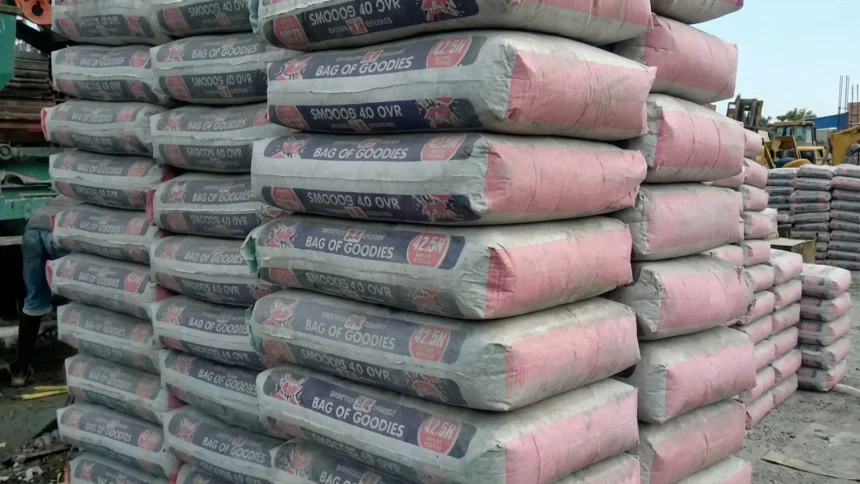
The rising price of cement is putting more pressure on Nigeria’s housing market as construction costs increase and homeownership becomes harder for many Nigerians.
The price of a 50kg bag of Dangote Cement has reportedly climbed above N15,000 in some locations. The development comes while the Federal Competition and Consumer Protection Commission investigates pricing in the cement industry.
Construction professionals have called for urgent action to improve supply, increase competition and ensure greater transparency in cement pricing.
Experts Raise Concern Over Housing Costs
Amusan Oluseyi, Principal Partner at Space Button Architecture Limited, said the recent price increases were difficult to explain given Nigeria’s large limestone deposits and cement production capacity.
He said Nigeria has an estimated cement production capacity of between 60 million and 65 million metric tonnes each year. Domestic consumption, however, stands at about 25 million to 30 million metric tonnes.
Amusan urged the FCCPC to take steps that would protect Nigerians who want to build their own homes.
He also warned that cement price volatility was affecting more than construction budgets. According to him, higher cement costs are raising the cost and value of housing while putting additional pressure on rents.
The architect also called for greater use of alternative building materials. He said the government could support research and commercial production of construction methods that rely less on cement.
He cited laterite-based materials, including Latcrete blocks developed by Nigerian architect and artist Demas Nwoko, as one possible alternative.
Supply Shortage Drives Recent Spike
Soji Adeniji, Chairman of the Lagos Chamber of Commerce and Industry’s Engineering and Construction Group, offered a different view of the latest price increase.
Adeniji said the market was facing a temporary shortage rather than a new official price from cement manufacturers.
He linked the shortage to recent maintenance work at a Dangote Cement plant and access restrictions affecting some material depots.
According to him, these challenges reduced the quantity of cement available to distributors. The limited supply then allowed some players in the distribution chain to raise prices.
Adeniji expects prices to ease once more cement reaches the market.
He also said he had not received an official notice from Dangote Cement announcing a new price. He therefore argued that the current prices in some locations should not automatically be treated as an official manufacturer price increase.
Energy and Logistics Add to Costs
John Agbezin, Public Relations Secretary of the Nigerian Institute of Quantity Surveyors, identified several factors that affect cement prices.
These include energy costs, foreign exchange movements, transportation, insecurity and multiple taxes.
Agbezin said manufacturers rely on diesel and gas to operate their plants. Rising energy costs therefore increase production expenses.
Foreign exchange pressures also affect the sector. Some imported inputs, including diesel additives and coal, are priced in foreign currency and add to manufacturers’ costs.
Transportation creates another challenge. Poor roads and insecurity can force truck drivers to take longer routes to avoid unsafe areas.
Agbezin said longer journeys can add significant costs to the final price of a bag of cement.
Infrastructure Projects Increase Demand
Agbezin also pointed to strong demand from major infrastructure projects.
He said large projects can absorb substantial quantities of cement. Suppliers may therefore struggle to meet demand from smaller construction projects and individual developers when supplies become tight.
The situation could create additional pressure for Nigerians building homes, especially those working with limited budgets.
For developers, sudden changes in cement prices can also make project planning more difficult. Higher material costs may affect construction timelines, development budgets and the final price of properties.
Calls for More Competition
Agbezin urged the FCCPC to complete its investigation into the cement industry and publish its findings.
He also called for action against cartels if the investigation establishes evidence of anti-competitive practices.
Greater transparency across the supply chain is another priority. Agbezin said manufacturers and distributors should provide clearer information about factory, wholesale and retail prices.
He also called for more competition in the cement industry. In addition to Dangote Cement, BUA and Lafarge, he said Nigeria should encourage more investment and production capacity.
More competition could give buyers greater choice and reduce the risk of supply disruptions affecting prices.
Impact on Nigeria’s Housing Crisis
The cement market matters directly to Nigeria’s housing sector because cement remains an important construction material.
When cement prices rise sharply, developers and individuals face higher building costs. Developers may pass some of these costs to buyers through higher property prices.
Higher construction costs can also affect rental housing. When it becomes more expensive to develop new properties, landlords and developers may seek higher returns to recover their investment.
The latest price surge has therefore added another challenge to Nigeria’s housing affordability problem.
While some industry operators believe the current increase may result from temporary supply shortages, sustained price volatility could make it harder for households to plan and finance home construction.
Greater supply, stronger competition, transparent pricing and lower production and logistics costs could help bring more stability to the market.
For Nigeria’s housing sector, a more predictable cement market would provide greater certainty for developers, contractors and prospective homeowners.