CFL Group Gives Lagos Land Registry Seven Days to Resolve Title Dispute
The Group Managing Director of CFL Group of Companies, Lai Omotola, has given the Lagos State Land Registry a seven-day ultimatum to address what he described as alleged falsification and manipulation of land documents, warning that affected property owners could seek N5 billion in damages through the courts.
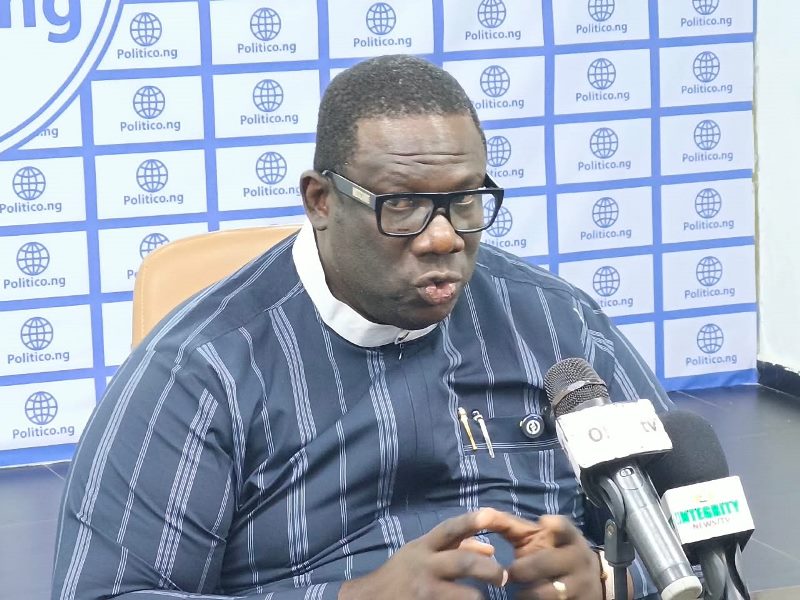
Omotola issued the ultimatum during a press conference in Lagos on Thursday, where he raised concerns over what he described as a sophisticated form of land fraud known as “Land Title Laundry.”
According to him, the alleged practice involves cloning, manipulating and introducing fraudulent land documents into official records to create seemingly legitimate ownership titles over valuable properties.
He said the practice was particularly concerning in high-value areas such as Ikoyi and Victoria Island, where land and property prices are significantly higher.
Omotola alleged that the manipulation of land titles had continued in Lagos for years and that several financial institutions had allegedly accepted fraudulent Certificates of Occupancy as collateral for loans.
He said some banks only discovered the alleged irregularities after borrowers defaulted on the loans secured with the disputed properties.
The CFL Group boss recalled that during the administration of former Lagos State Governor Akinwunmi Ambode, the state government demolished a market opposite the Government House where, according to him, forged Certificates of Occupancy were allegedly being produced.
He, however, said the alleged practice had since become more sophisticated because of the financial interests involved and the alleged participation of individuals within and outside government.
How alleged land title manipulation works
Omotola alleged that the process typically begins with the identification of abandoned or disputed properties in prime locations such as Ikoyi and Victoria Island.
He said speculators could allegedly identify the name of a deceased prominent individual and use the identity to construct a fictitious chain of ownership for a property.
According to him, forged land certificates could then be produced, sometimes with dates going back several decades, before being introduced into the official land registry system.
Omotola alleged that once such documents were entered into the registry, they could appear to be genuine official records.
He further alleged that perpetrators could subsequently declare the supposed original document lost, obtain a police affidavit and use it to process a Governor’s Consent.
He said this could create the appearance that the property had been legitimately transferred to a new owner.
Omotola stressed that a Certificate of Occupancy and a Governor’s Consent are not the same document.
He explained that a Certificate of Occupancy represents the government’s grant of a title to land, while a Governor’s Consent is the approval given by the Governor for a transaction involving an existing interest in land.
He said obtaining a Governor’s Consent did not necessarily correct defects in the underlying title.
According to him, where an investigation subsequently establishes that the underlying documents were forged or obtained through misrepresentation, the consent could be cancelled.
Victoria Island property dispute
Omotola said his concerns were also based on a dispute involving a property at 24 Adeola Odeku Street, Victoria Island, which he said was purchased by his company.
He said CFL Group acquired the property and began construction before another company allegedly arrived with police officers and sealed the premises.
The other party allegedly claimed ownership based on a Governor’s Consent.
Omotola said the opposing party claimed that the original owner of the property was Samuel Oladele Ige, who allegedly sold it to the late Alhaji Ganiyu Amusan, the father of businessman Tayo Amusan.
He said CFL Group investigated the alleged ownership history and contacted members of Samuel Ige’s family.
According to Omotola, the family said Samuel Ige died in 2012, making it impossible for him to have personally sold the property in 2015.
He also said the family told the company that Ige’s will contained no indication that he owned the property at 24 Adeola Odeku Street.
Omotola said further investigations into the claim involving Alhaji Ganiyu Amusan also raised questions because Amusan died in 1994.
He argued that this meant Amusan could not have personally purchased the property in 2015, as allegedly stated in the disputed ownership history.
Disputed affidavit and registry records
Omotola said investigators also found a police affidavit allegedly sworn by Samuel Ige in 2015 declaring that his original land certificate had been lost.
He said Ige’s first son, Niyi, disputed the authenticity of the document, alleging that the photograph and signature appearing on the affidavit did not belong to his late father.
He further alleged that a letter of objection purportedly written by Samuel Ige before the Governor’s Consent was issued was received by the Land Registry on September 1, 2015.
Omotola said this raised further questions because Ige had died three years earlier.
According to him, the Ige family subsequently petitioned the Land Registry over the disputed documents.
He said the registry found sufficient merit in the complaint to invite beneficiaries of the disputed Governor’s Consent to proceedings that could result in the deregistration of the consent.
Omotola alleged that the beneficiaries failed to appear on two occasions.
He further alleged that construction continued on the property while the beneficiaries relied on security agencies.
Landowners demand correction of records
Omotola said the affected landowners were demanding that the disputed Governor’s Consent be deregistered and that the land records be corrected to reflect what they described as the legitimate ownership of the property.
He warned that if the Lagos State Land Registry failed to take action within seven days, the affected parties would approach the courts.
The proposed legal action, according to Omotola, would include a claim for N5 billion in damages.
He insisted that the affected landowners were not beneficiaries of any corruption within the land administration system.
Rather, he said they were seeking protection for properties they had legitimately acquired and accountability in the management of land records.
Omotola called on the Lagos State Government to investigate the alleged manipulation of land documents and strengthen the state’s land registry system.
He said stronger safeguards were needed to prevent fraudulent titles from being introduced into official records and subsequently used in property transactions and financial dealings.
The allegations made by Omotola concern specific property ownership and land documentation and remain matters for the relevant authorities and, if pursued, the courts to determine.