Poor funding, rising construction costs and weak project viability are threatening efforts to recover about 250,000 housing units contained in abandoned housing projects across Nigeria, as stakeholders warn that the challenges behind the abandoned developments vary from one project to another.
The Federal Government recently disclosed that it was taking stock of abandoned housing projects nationwide as part of efforts to increase the country’s housing stock.
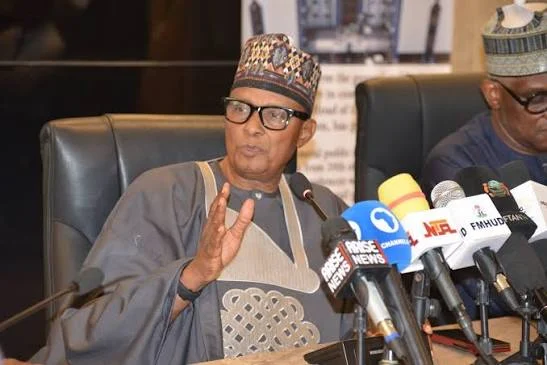
Minister of Housing and Urban Development, Dr Muttaqha Rabe Darma, said about 250,000 housing units in abandoned projects could potentially be recovered and made available to Nigerians, including civil servants.
He said the ministry was gathering data on the abandoned properties and would visit states across the country to assess the projects.
The minister made the disclosure in Abuja during the presentation of houses to 430 staff members of the Nigerian Midstream and Downstream Petroleum Regulatory Authority.
Funding remains a major challenge
Reacting to the government’s plan, estate surveyor and valuer and Principal Partner of Lekan Akinwumi & Co, Olalekan Akinwumi, said abandoned buildings were largely a financing and project viability problem rather than simply a housing problem.
He said the circumstances surrounding each abandoned development needed to be established, including who owned the property, why construction stopped and where the project was located.
According to Akinwumi, developers who lose access to funding during construction cannot be treated in the same way as those whose projects become unviable because of inflation and rising construction costs.
He also pointed out that government projects could be abandoned, meaning the problem was not limited to private property owners.
Akinwumi identified inadequate or interrupted funding as one of the major reasons projects are abandoned.
He said some developers begin construction without securing sufficient financing to take the project through to completion, leaving the development vulnerable when funding becomes unavailable.
He also noted that rising prices of cement, steel, labour and other construction inputs could turn an initially viable project into one that was no longer financially sustainable.
According to him, proper market analysis, cash-flow projections, net present value, internal rate of return and sensitivity analysis should form part of the assessment before a project begins.
Rising construction costs worsen project viability
The pressure from construction costs has become a broader challenge for Nigeria’s housing and real estate sector.
Building material prices, including cement, steel, roofing products and other inputs, have continued to affect the cost of delivering new homes. Industry reports have linked these increases to growing pressure on project budgets and housing affordability.
For projects that were originally budgeted several years ago, significant increases in material and labour costs can leave developers with funding gaps.
Where additional financing cannot be secured, construction may slow down or stop completely.
The problem can become more difficult when developers are also dealing with expensive borrowing, land costs, infrastructure expenses, energy costs and weaker purchasing power among prospective buyers.
This combination can make it difficult for developers to complete projects at the prices originally envisaged.
Government takeover of private projects questioned
Former National Chairman of the Association of Estate Agents in Nigeria, Jatto Isah, said the government could not simply take over privately owned abandoned properties.
According to Isah, where a property is privately owned, the government would have to revoke the owner’s interest in the property before taking it over.
He, however, said government intervention could be considered where there was a genuine public interest and the appropriate legal process was followed.
In such circumstances, he said, government could potentially complete abandoned developments and make the houses available to Nigerians.
Isah also identified the rising cost of building materials as a major factor behind project abandonment.
He explained that developers could begin construction with a particular budget only to discover that the cost of completing the building had risen significantly by the time the project progressed.
When additional funds are unavailable, construction may be suspended until the developer is able to raise more money.
Need to determine why projects were abandoned
The stakeholders stressed that the government’s proposed stocktaking exercise would need to go beyond simply counting abandoned buildings.
Akinwumi said the reasons for abandonment should be established on a project-by-project basis before decisions are made about recovery.
Some projects may require additional financing, while others could have ownership disputes, planning issues, poor market prospects or other factors preventing completion.
Understanding these circumstances would help determine whether a project can realistically be completed and the most appropriate financing or development structure for its recovery.
The exercise could also help distinguish between privately owned developments and government-backed housing projects.
Recovery could increase housing supply
The Federal Government’s plan is aimed at recovering existing housing stock rather than relying solely on new construction to address the country’s housing needs.
The approach could potentially bring completed or partly completed units back into the housing market if the government is able to resolve the financing, ownership, legal and technical issues affecting individual projects.
The Federal Mortgage Bank of Nigeria and the Federal Ministry of Housing and Urban Development have continued to support housing delivery through different financing and public-private partnership arrangements. For example, the government has used FMBN funding in rent-to-own housing projects delivered through partnerships with private developers.
The government is also developing new housing projects for specific groups. In August, the Federal Ministry of Housing, the Office of the Head of the Civil Service of the Federation and other partners began work on a 250-unit Renewed Hope Civil Service Estate in Gwagwalada, Abuja.
Construction sector faces wider financing pressure
The challenge affecting abandoned housing projects comes as the wider construction industry continues to raise concerns about access to finance and the rising cost of delivering projects.
The Federation of Construction Industry recently warned that inadequate and unpredictable funding, delayed payments and rising input costs were forcing contractors to suspend or reduce work on projects.
The organisation also said the prices of cement, steel, bitumen, diesel, equipment and other inputs had increased substantially, making some older contracts commercially difficult to execute at their original prices.
The Nigerian Society of Engineers has similarly highlighted the difficulty of converting project pipelines into projects that are properly financed, executed and maintained.
For the housing sector, the issues surrounding abandoned developments therefore extend beyond the physical structures themselves.
Securing sustainable financing, controlling project costs, conducting proper feasibility assessments and ensuring clear ownership and development plans will be important if the government is to recover a significant portion of the housing units identified in abandoned projects.