


The Federal Government has approved plans to develop new Eastern and Western electricity grids as part of efforts to address Nigeria’s recurring power grid collapses.
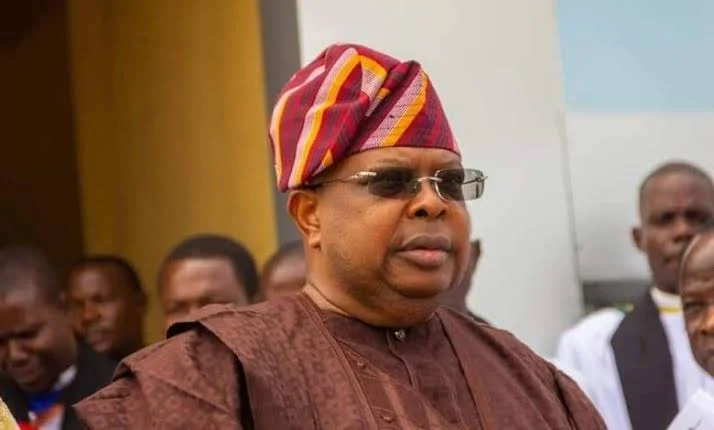
The Minister of Power, Joseph Tegbe, disclosed this at a recent HBSAN energy conference in Lagos, saying the government was preparing to begin procurement for the projects.
Tegbe said Nigerians could begin to see the benefits of the proposed infrastructure within two to three years.
He explained that the government had divided the country into three energy zones to prioritise interventions, with the Lagos and Abuja corridors accounting for a significant share of electricity demand.
“If you fix Lagos and you fix the Abuja corridors, you’ve solved more than half of the problem of Nigeria,” the minister said.
He added that improving operational efficiency alone would not resolve the challenges facing the electricity sector without expanding and strengthening the transmission grid.
FG Begins Nationwide Electricity Infrastructure Audit
Tegbe said the government had commenced a technical audit of electricity infrastructure nationwide to identify faults and determine which facilities required urgent repairs or replacement.
According to him, the exercise would help authorities direct resources towards the actual causes of transmission problems instead of investing in equipment that did not address the underlying faults.
He said the audit would examine specific weaknesses involving transformers, conductors, relays, insulators and transmission towers.
“I don’t want to fix transformer issues where I have conductor and relay problems. I don’t want to fix insulators where the challenges I actually have are towers,” he said.
The minister added that the audit was expected to be completed within a few weeks, after which the government would prioritise interventions based on the findings.
Ageing Infrastructure Behind Transmission Challenges
Tegbe attributed some of the challenges facing Nigeria’s transmission network to ageing infrastructure, noting that certain facilities had been in service for decades.
He said some transmission towers and lines dated back to the period when the Electricity Corporation of Nigeria (ECN) operated before the National Electric Power Authority (NEPA).
“This government has inherited a problem of 50 years,” he said, describing the condition of some facilities he had inspected.
The minister recalled seeing transmission infrastructure bearing the ECN logo, which he said illustrated the age of some equipment still in use.
He maintained that the proposed grid expansion, combined with the technical audit and targeted repairs, would help address longstanding weaknesses in the country’s electricity transmission system.
However, the government has yet to provide a detailed implementation schedule for the new grids beyond the anticipated two-to-three-year period for Nigerians to begin seeing benefits.