


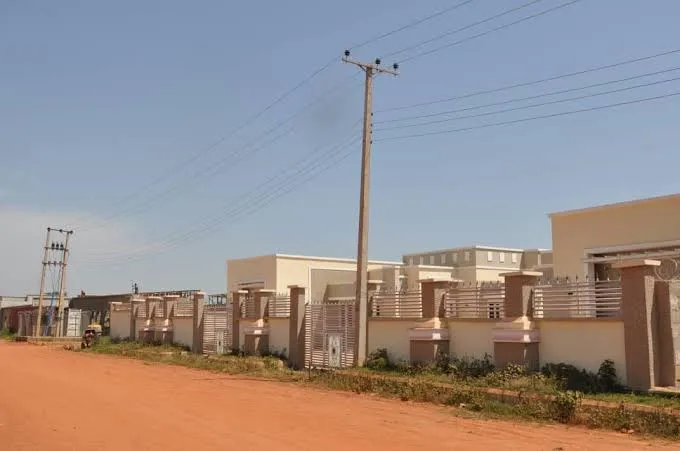
Repeated kidnappings and attacks in communities on the outskirts of Kaduna metropolis are forcing residents to abandon their homes and rent apartments in the city, driving up rents and threatening low-income homeowners’ investments.
The News Agency of Nigeria (NAN) reports that residents of communities such as Baban Saura and Danhon II in Millennium City are relocating because of fears of abduction and ransom demands.
Many affected homeowners spent years acquiring land and gradually building their houses. However, worsening insecurity has forced some to leave their properties unoccupied or put them up for sale at unfavourable prices.
Yakubu Dahiru, who relocated from Danhon II to Malali after attacks on his community, said he rented a self-contained apartment for ₦600,000.
He said some residents considered the rent relatively cheap because accommodation prices in Kaduna metropolis had increased significantly.
“The insecurity is no longer in the villages; the bandits are coming closer to us,” Dahiru said, adding that he preferred relocating to risking abduction and the financial burden of paying a ransom.
He said he had not returned home since the attack on his community last year. Fear had also made it difficult to find anyone willing to rent or guard his property.
Homeowners Forced To Sell At Lower Prices
Residents in newly developed areas across Kaduna North, Kaduna South, Chikun and Igabi Local Government Areas are increasingly leaving their homes for locations they consider safer.
For more than a decade, these settlements provided relatively affordable homeownership opportunities for low-income earners who purchased plots and developed their houses gradually.
An estate surveyor, Umar Mohammed, said the opening of the Eastern Bypass encouraged the expansion of these settlements.
He explained that market women and people engaged in menial jobs invested in the areas because land was comparatively affordable.
However, insecurity is now threatening those investments, forcing some homeowners to abandon their properties or consider selling at prices below their expectations.
Saidu Hamza, a resident of Danhon II, said he moved his family to Ilorin, Kwara State, following an attack on his community.
He said he had put his three-bedroom house, which has an adjoining two-bedroom apartment, up for sale.
“With the security situation in the area, the price I am being offered is not very encouraging, and I could not leave my family there knowing the place is unsafe,” Hamza said.
Kaduna Rents Rise As Demand Increases
The movement of residents into Kaduna metropolis has increased demand for accommodation, with estate agents reporting substantial rent increases in some neighbourhoods.
Maiunguwa Ibrahim, an estate agent operating around Kurmin Mashi, Gwamna Road and Badiko, told NAN that rents for some three-bedroom apartments along Gwamna Road had risen sharply.
According to him, apartments previously rented for between ₦1.2 million and ₦1.5 million now attract rents ranging from ₦3 million to ₦3.5 million.
Mohammed attributed the increase to a shortage of available apartments amid the influx of residents fleeing insecure communities.
The situation adds pressure to Nigeria’s existing housing challenges, particularly for households already struggling with rising accommodation costs.
The World Bank’s Nigeria Affordable Housing Project 2018 estimated the country’s housing deficit at 17 million units and projected an annual requirement of about 700,000 housing units over 20 years.
Community Layouts Face Security Challenges
Security sources told NAN that the scattered arrangement of houses in some new layouts, inadequate fencing, limited security posts and proximity to forested areas could make the communities vulnerable to attacks.
Recurring abductions in Millennium City and neighbouring settlements have heightened residents’ concerns.
The report recalled the kidnapping of two journalists in the area two years ago.
More recently, gunmen reportedly killed a man identified as Sikiru in Baban Saura and abducted his wife, Hafsat, their 14-year-old son, Abdulsalam, and six other people.
A family member told NAN that Hafsat and her son remained in captivity.
In another incident, a couple and their six-month-old daughter were abducted from Alrahus Estate in Millennium City on October 6.
The husband, Ahmed Abubakar Zakka, appealed for help in a viral video, saying the kidnappers demanded a ₦300 million ransom.
Amnesty International Nigeria has also warned of persistent threats from armed men in Millennium City. According to the organisation, some families have abandoned their homes, while others have suspended their children’s education.
Police Arrest 12 Suspects
The Kaduna State Police Command said on Monday that it had arrested 12 suspects during security operations in Millennium City and Maraban Rido.
The command identified eight of the suspects as suspected kidnappers and four as alleged informants.
It also said the Kaduna State Government had released three additional armoured personnel carriers to strengthen security operations in the affected communities.
Retired Captain Abdullahi Umar, a security commentator, urged the government to support neighbourhood watch initiatives and improve cooperation between security agencies, traditional rulers and community leaders.
He said community vigilance could complement formal security operations, particularly in settlements where deployed personnel were insufficient to cover the entire area.
Insecurity Deepens Kaduna’s Housing Crisis
The displacement of residents highlights the wider economic consequences of insecurity, extending beyond physical attacks to housing affordability, property investments and household livelihoods.
Homeowners who invested years of savings in building their properties are now facing difficult choices: remain in communities they consider unsafe, abandon their investments or sell under unfavourable conditions.
Meanwhile, families seeking safety in Kaduna metropolis face rising rents and increasing pressure on available accommodation.
The situation underscores the need for sustained security operations alongside measures to protect communities, restore residents’ confidence and prevent insecurity from further undermining housing affordability and household wealth.