


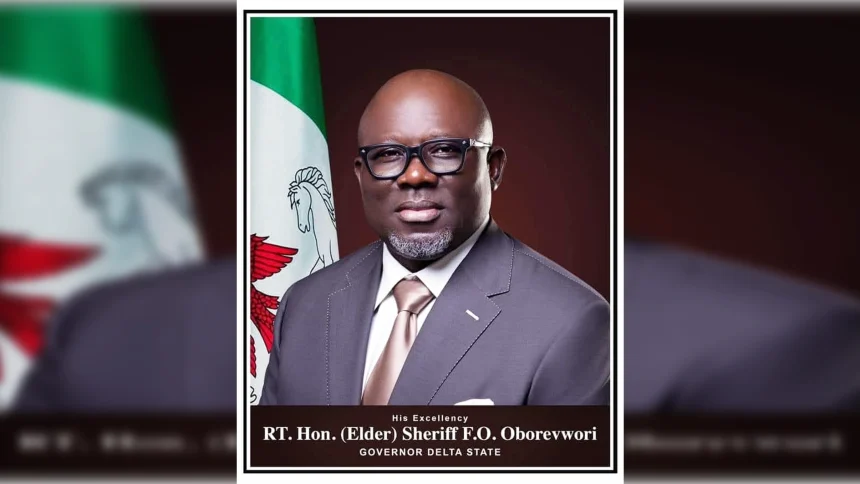
Hundreds of property owners whose buildings were allegedly demolished in Asaba, Delta State, have appealed to Governor Sheriff Oborevwori to intervene in a lingering land dispute involving Parkview Estates, Anwai, and Dennis Osadebay University.
The affected residents said the demolition, which occurred on May 14, 2024, left several families homeless and destroyed investments worth millions of naira.
The property owners, under the aegis of Parkview Estates, Anwai, alleged that the Delta State Taskforce on Recovery of Government Lands demolished their buildings despite claims that they had legally acquired the properties.
They called on Oborevwori to investigate the circumstances surrounding the exercise, compensate affected residents for their losses or facilitate the return of the disputed land to its legitimate owners.
Property Owners Recount Losses
Speaking with journalists on Tuesday, Chairman of Parkview Estates, Chief Charles Ogbobe, described the demolition as devastating, saying it destroyed years of investment and subjected families to emotional and financial hardship.
Ogbobe maintained that the disputed land, located at Anwai and popularly known as Musa Camp, was legitimately acquired from the Isieke community.
He said the Asagba of Asaba later renamed the area Ugbomanta, adding that the community possessed documents supporting its ownership claim.
According to Ogbobe, the dispute arose from competing claims between the community and the state-owned university.
He traced the land’s history to 1953, when it was allegedly leased to a colonial administrator, Reverend Prior, for 50 years.
Ogbobe said the lease expired in 2003, raising questions about the continued claims over the property.
He lamented that many affected residents continued to experience economic hardship and emotional distress following the demolition, with some struggling to rebuild their lives after losing their homes and livelihoods.
The estate chairman also alleged that the Delta State High Court had directed the parties to produce survey plans to establish and delineate the boundaries of the disputed property.
Residents Allege Demolition Before Notice Expired
The Vice Chairman of Parkview Estates, Samuel Onuwa David, alleged that the demolition took place before the expiration of a seven-day notice reportedly issued to occupants.
He said residents had attempted to obtain a court injunction to prevent the exercise, but their efforts did not stop the demolition.
David disclosed that he lost a private school and a residential building, while four additional buildings belonging to his in-laws were also demolished.
He also presented a different account of the lease history, maintaining that documents available to the affected property owners indicated that the lease to the university expired in 1991.
“We are appealing to the governor, as a father, to come to our aid. Let him compensate us for the houses that were demolished and or give us back our land,” he pleaded.
Another affected property owner, Christian Nwaolisa, said he had returned from Northern Nigeria to settle in his home state but lost his residence in the demolition.
Nwaolisa expressed disappointment, claiming that he obtained a Certificate of Occupancy and building approval from the relevant authorities before constructing his property.
Similarly, Chuks Okei said he purchased his plot from the Isieke community, conducted a survey and obtained government building approval before beginning construction in 2020.
The affected property owners urged the governor to establish the facts surrounding the disputed land, determine the circumstances under which the demolition was authorised and ensure justice for those affected.
Delta Government Insists Land Belongs To State
However, the Delta State Commissioner for Lands and Surveys, Emanusi Ibiodeh, rejected the property owners’ claims, insisting that the demolished buildings stood on land belonging to the state government.
Ibiodeh said the government demolished the properties because their owners had trespassed on government land.
He added that the government had formally gazetted the land, although it had not immediately put the property to use.
According to the commissioner, the period during which the land remained undeveloped apparently led some individuals to believe it was available for private acquisition and development.
He said people subsequently acquired portions of the land and began constructing buildings, prompting the government to intervene and recover the property.
The dispute centres on conflicting claims over land ownership, the history and validity of earlier lease arrangements, and the circumstances surrounding the demolition.
The property owners are seeking government intervention and compensation, while the state government maintains that it acted to recover public land.