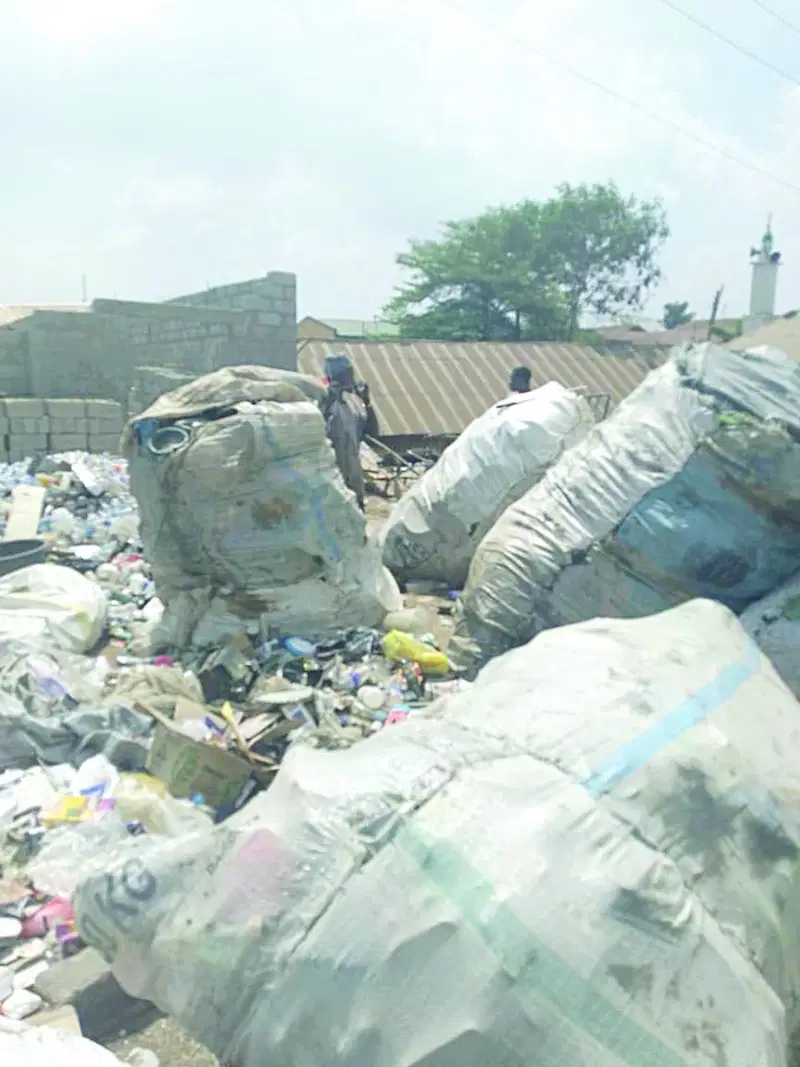
Residents of satellite communities around Abuja are raising alarm over worsening environmental conditions caused by uncontrolled refuse dumps, describing daily life as “hellish” due to persistent stench and health risks.
Across densely populated areas such as Karu, Nyanya, Kurudu, and neighbouring Mararaba, heaps of uncollected waste now dominate roadsides and residential spaces.
From early morning until late at night, the smell of decomposing refuse lingers in the air, seeping into homes and affecting residents’ daily lives.
Daily Life in a Polluted Environment
Many of the affected residents are low- to middle-income earners who cannot afford housing in the city centre, forcing them to settle in poorly serviced outskirts.
In these communities, makeshift dumpsites have become a permanent feature. Waste ranging from rotting food to plastics and medical debris spills onto roads, attracting flies, animals, and scavengers.
Residents say illegal dumping, often carried out at night by waste handlers, has worsened the situation due to weak enforcement.
Health Risks on the Rise
Health concerns are mounting as exposure to unmanaged waste increases.
Medical experts warn that toxic gases such as methane and carbon monoxide from decomposing refuse can lead to respiratory illnesses, including asthma and bronchitis.
In addition, stagnant water around dumpsites has created breeding grounds for mosquitoes, contributing to malaria outbreaks, while contamination risks have heightened cases of typhoid and diarrhoea.
Children and the elderly are particularly vulnerable, with many residents reporting recurring illnesses and rising healthcare costs.
Livelihoods Under Threat
Beyond health implications, the crisis is taking a toll on economic activities in affected areas.
Small business owners, including traders, mechanics, and food vendors, report declining patronage as customers avoid environments plagued by foul odours and flies.
For many, the waste crisis has become both a public health emergency and an economic burden.
Government Responsibility and Gaps
The Abuja Environmental Protection Board stated that its mandate is limited to the Federal Capital City, excluding satellite towns where the problem is most severe.
This clarification has exposed a broader coordination gap between agencies responsible for waste management in the capital region.
However, residents argue that institutional boundaries should not come at the expense of public health and safety.
Calls for Urgent Intervention
Affected communities are calling for immediate government action, including improved waste collection systems, stricter enforcement against illegal dumping, and the creation of designated disposal sites.
There are also demands for better collaboration among relevant authorities to address what many describe as a looming environmental disaster.
Meanwhile, Nyesom Wike has reportedly threatened sanctions against contractors responsible for poor refuse evacuation, signaling possible enforcement measures.