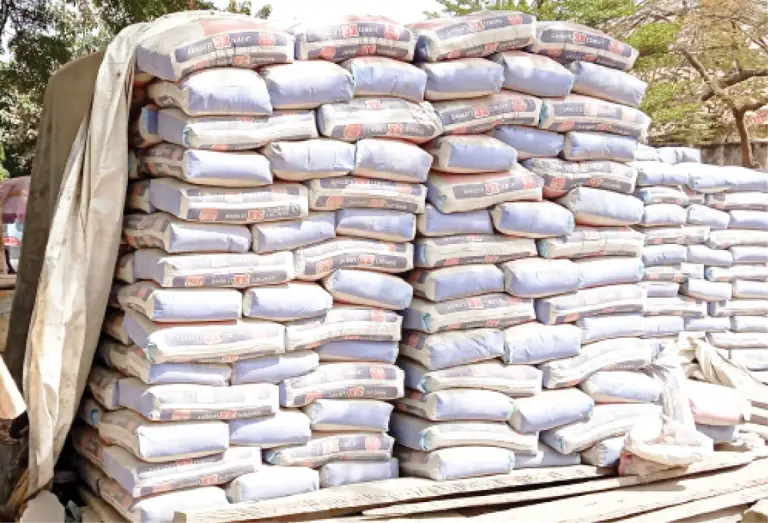
Consumers and construction stakeholders across Nigeria are grappling with fresh increases in cement prices, with a 50kg bag now selling between ₦10,500 and ₦11,000 in most states, and as high as ₦11,500 in parts of Lagos.
Market checks across Kwara, Abuja, Kano, Kaduna, Jigawa and Lagos indicate that ₦10,500 has effectively become the new floor price, cutting across major brands including Dangote Cement Plc, BUA Cement Plc and Lafarge Africa Plc.
In Ilorin and other parts of Kwara State, cement that sold between ₦9,300 and ₦9,700 in January now averages ₦10,500 to ₦10,700. Dealers say the adjustment reflects higher logistics and production-related expenses, though many consumers argue the pace of increases is becoming unsustainable.
Abuja markets such as Utako recorded prices of ₦10,800 to ₦11,200 per bag depending on brand and location. While bulk buyers purchasing truckloads can secure slight discounts around ₦10,500 per bag, smaller builders say such options are beyond their reach.
In Lagos, retail prices have climbed even higher. A 50kg bag that sold for about ₦9,000 in December 2025 rose to ₦10,000 in January 2026 and now trades at up to ₦11,500 in some areas. Retailers in Ojo and Badagry attributed the sharp spike to dealer and middlemen markups, claiming ex-factory prices have not increased proportionately.
Dealers in Kano confirmed that manufacturers now supply cement at ₦10,450 to ₦10,550 per bag, depending on brand. After transportation and handling costs, retail prices typically settle between ₦10,800 and ₦11,000. The development has triggered a ripple effect in the building materials market, with block makers raising prices. In Kano, a nine-inch block that previously sold for ₦750 now costs ₦800.
In Kaduna and Jigawa, prices hover around ₦10,800 to ₦11,000, while some dealers in Zaria reported limited availability at ₦10,200, offering marginal relief.
Beyond domestic concerns, cross-border price comparisons have intensified public debate. Some dealers allege Nigerian cement sells for the equivalent of about ₦7,500 per bag in Niamey, Niger Republic, fueling frustration among local buyers. Industry analysts, however, note that export pricing structures often reflect different tax regimes, exchange rates, incentives and logistics costs.
Stakeholders warn that the sustained increase could dampen construction activity nationwide. A modest two-bedroom bungalow can require several hundred bags of cement from foundation to roofing stage, meaning a ₦1,000 rise per bag may add hundreds of thousands of naira to total project costs.
A former president of the Nigerian Institute of Builders expressed concern that rising cement prices, combined with weak purchasing power, could slow housing delivery and infrastructure development. He called for government engagement with manufacturers to examine cost drivers and explore measures to stabilise prices.
Meanwhile, an official from a major cement manufacturer, speaking anonymously, linked the increase to imported inputs priced in dollars, expressing optimism that prices may moderate if the naira strengthens further.
For now, builders, contractors and households are adjusting to a market where ₦11,000 is increasingly common, reinforcing concerns about housing affordability and the broader impact on Nigeria’s construction sector.