


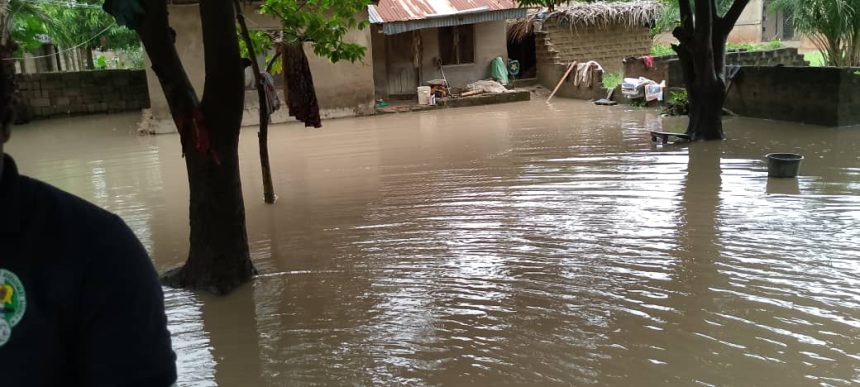
Environmental and public health experts have warned that Nigeria may face increased flood risks to housing and critical infrastructure in 2026 as climate change continues to disrupt traditional rainfall patterns.
The warning follows reports of off-season rainfall recorded in parts of Lagos, Ogun, and other states in January and early February 2026 — a period usually characterised by dry weather. Experts say the development is an early signal of more intense and unpredictable rains later in the year, with serious implications for homes, drainage systems, and urban planning.
Speaking on the emerging trend, the Director of Environmental Service at the Lagos State Primary Healthcare Board, Ahoton James, said the unusual rainfall points to growing climate instability that could worsen flooding across residential communities.
According to him, climate change has weakened Nigeria’s ability to predict weather conditions accurately, allowing rainfall to occur outside its traditional season.
Rainfall now falls at unexpected times
James explained that changes in global temperature have altered long-standing climate cycles, making rainfall less predictable and more intense.
He noted that the harmattan period expected in December 2025 and January 2026 was largely absent, while rainfall occurred during months that were previously dry.
“Rain can now fall at any time. The harmattan we experienced only lasted for a few hours before disappearing. These are clear signs that climate change is already affecting us,” he said.
He added that heavier rainfall during unusual periods increases the risk of flash floods, especially in densely populated areas with weak drainage systems.
Housing and infrastructure at risk
Experts warned that the expected rainfall pattern poses a major threat to housing, particularly in low-lying communities, informal settlements, and flood-prone urban areas.
James said prolonged and intense rainfall could overwhelm drainage channels, weaken building foundations, and lead to property losses if proactive measures are not taken.
“With unusual rains, we should also expect unusual heat. Both extremes can happen together, and that combination puts pressure on housing structures and urban infrastructure,” he said.
He noted that flooding is no longer a question of “if” but “when,” urging governments and individuals to prioritise preparedness and resilience.
Unpredictable weather complicates planning
James also highlighted how unpredictable weather patterns have affected forecasting by the Nigerian Meteorological Agency, NiMET, noting that weather outcomes often differ from predictions due to rapid climate shifts.
He said early rainfall and rising temperatures are warning signs that should prompt immediate action from authorities responsible for housing, environment, and disaster management.
“These signs are already here. The heavy rains we experienced early this year are early warnings that we must prepare for more severe flooding,” he added.
Public health implications
A public health physician, Prof Adebayo Onajole, warned that flooding linked to unusual rainfall could trigger disease outbreaks and worsen living conditions in affected communities.
According to him, increased rainfall creates stagnant water bodies that promote the spread of waterborne and vector-borne diseases, while rising temperatures accelerate disease transmission.
“When rainfall increases, disease occurrence usually rises. Flooding also damages homes, displaces families, and creates overcrowded shelters, which further threatens public health,” Onajole said.
He urged the government to integrate climate risks into housing and urban development policies to protect lives and property.
Call for improved drainage and preparedness
The President of the Africa Environmental Health Organisation, Afolabi Abiodun, called on governments at all levels to strengthen emergency response systems and invest in drainage infrastructure to reduce flood risks.
He stressed the need for improved maintenance of drainage channels, rivers, and waterways, noting that blocked drains worsen flooding during heavy rainfall.
“Flooding has become more frequent, and response has often been inadequate. What we need is preparedness, clear emergency plans, proactive infrastructure maintenance, and timely intervention,” Abiodun said.
He also urged residents to stop dumping waste in drainage channels, warning that human activities often worsen flood disasters.
As climate change continues to reshape Nigeria’s weather patterns, experts say safeguarding housing and infrastructure will require coordinated action, improved urban planning, and early preparedness to reduce the impact of looming floods.
