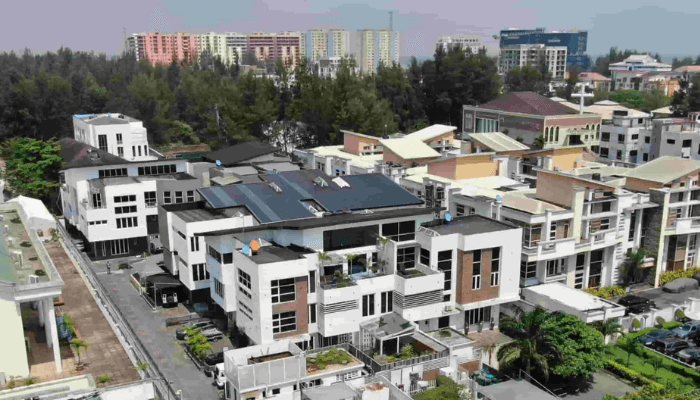
Nigeria’s real estate market is shaping up as one of the most attractive investment destinations in 2026, with analysts projecting steady growth driven by urbanisation, technology adoption, and rising housing demand.
The property sector is currently valuedvalued at about $2.61 trillion, positioning it as a long-term wealth creation opportunity for investors willing to take a patient and structured approach.
Industry analysts say investors can enter the market with relatively modest capital and still achieve returns of between 10 and 15 percent, particularly through land banking, rental income, and fractional property ownership.
Demand data shows Lagos remains the dominant market, accounting for over 60 percent of land demand, while rental demand stands at more than 46 percent, reflecting strong pressure from population growth and housing shortages.
Emerging locations such as Ogun State are also gaining attention, offering lower entry costs and yields estimated at up to 18 percent, especially for land investments in fast-growing corridors.
For investors with limited capital, property experts point to fractional ownership and crowdfunding platforms, which allow individuals to invest in high-value properties with smaller amounts. Rental housing in Abuja continues to offer stable returns of about 8 percent, while short-let apartments in tourism-driven areas can deliver yields of up to 18 percent.
Experts advise first-time investors to focus on low-risk strategies, including verifying land titles, using registered developers, and diversifying across land, rental properties, and digital real estate platforms.
Sustainability and technology are expected to play a major role in shaping market performance this year. Industry leaders project that green building practices and proptech solutions could drive sector growth by about 10 percent, while reducing costs and improving transparency.
Property analysts also expect cities such as Enugu and Port Harcourt to see increased development in eco-friendly housing and solar-powered estates, offering returns of between 8 and 12 percent amid Nigeria’s widening housing deficit.
Technology-driven solutions such as digital title registration and blockchain-based property records are forecast to reduce transaction delays and fraud, while increased diaspora remittances are expected to sustain demand for high-end residential developments in areas like Lekki and Abuja.
Official economic data further underscores the sector’s importance. Recent GDP figures show that real estate now contributes over 13 percent to Nigeria’s economy, ranking among the country’s top-performing sectors and reinforcing its central role in urban development and investment growth.