


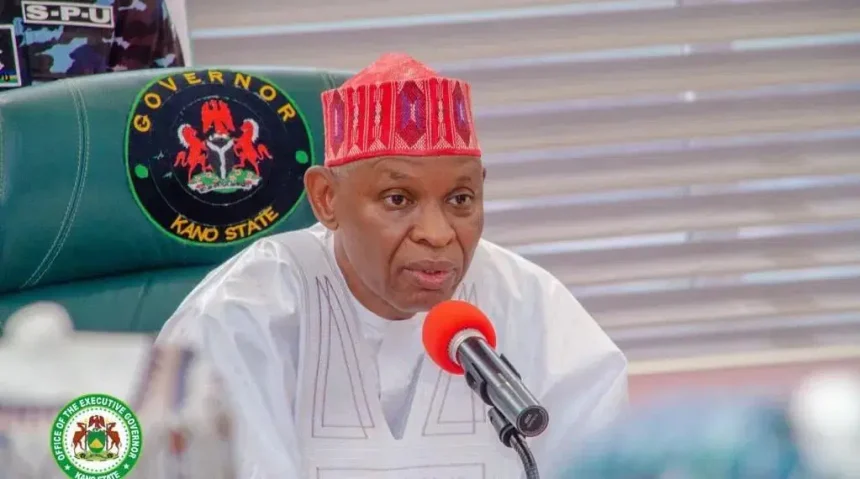
The Kano State Government says it has committed N996.29bn to 1,557 projects across the state’s 44 local government areas.
The spending covers almost three years of Governor Abba Kabir Yusuf’s administration. It includes housing, roads, urban infrastructure and other development projects.
The Commissioner for Public Procurement, Projects Monitoring and Evaluation, Nura Maaji Sumaila, disclosed the figures on Sunday.
He spoke during an international press briefing on project delivery, procurement compliance and government spending.
867 Projects Completed
Sumaila said the state has completed 867 projects, which represents 55.68 per cent of the total.
Another 654 projects, or about 42 per cent, remain under construction. The state has also moved 26 projects to the award stage.
Ten additional projects have reached the planning stage and are ready for award.
The figures show the size of Kano’s current public investment programme. They also highlight the state’s focus on infrastructure and development across both urban and rural communities.
Kano Tracks Project Payments
The commissioner said projects worth N695.20bn had received Certificates of No Objection.
The ministry had also vetted payment certificates worth N444.75bn.
The approved certificates represent 69.78 per cent of the total contract value. Vetted payments account for 44.64 per cent.
Sumaila said the ministry would continue to monitor projects. The goal is to ensure that public spending delivers value to residents.
Rural Areas Receive N287.90bn
Kano has spread its project investments across metropolitan and rural areas.
According to the commissioner, the eight metropolitan local government areas have 598 projects worth N299.36bn.
The state’s 36 rural LGAs account for 653 projects valued at N287.90bn.
Rural development therefore forms a major part of the state’s investment plan. The projects cover infrastructure and other developments across communities outside the metropolitan areas.
The state also has 37 cross-cutting projects worth N159.50bn. These projects cover more than one local government area.
Another 269 statewide and other projects account for N249.54bn.
Housing Projects Take Centre Stage
Housing represents one of the largest components of the investment programme.
The commissioner listed the N113.19bn mass housing project at Rijiyar Gwangwan in Dawakin Kudu among the major projects.
He also identified the N22bn Rural Model City housing project. The project covers all 36 rural local government areas.
Other major investments include the N24.77bn Katsina Road expansion. The project covers parts of Fagge and Dala.
The state is also implementing N21.90bn in Modern Cities infrastructure across Dawakin Kudu, Dawakin Tofa and Kumbotso.
Another major project is the N27.74bn Madobi-Yako-Kafin Maiyaki/Kiru Road project.
Infrastructure Supports Housing Growth
The scale of Kano’s spending has implications for the housing and construction sectors.
Housing developments need roads, transport links, electricity and other basic infrastructure. Better connections can also improve access to new residential communities.
The Rural Model City and mass housing projects show the link between housing development and wider infrastructure planning.
Road projects can also support the growth of communities around new housing developments. They can improve movement between residential areas, commercial centres and other parts of the state.
Focus on Project Monitoring
Sumaila said the government must assess projects based on their size and reach.
Some major projects serve several communities and local government areas. Counting them as separate projects in each LGA could therefore create inaccurate figures.
The commissioner said the state’s monitoring system aims to provide a clearer picture of project delivery and public spending.
Kano’s N996.29bn project programme places housing, roads and infrastructure at the centre of its development plans. The completion of these projects will remain important to the state’s efforts to expand urban infrastructure and improve development across its metropolitan and rural communities.
