


Kenya’s annual inflation rate eased to 4.3 per cent in February 2026, down slightly from 4.4 per cent recorded in January, according to new data released by the Kenya National Bureau of Statistics (KNBS).
The marginal decline in price growth provides additional room for the Central Bank of Kenya (CBK) to consider further interest rate reductions as it seeks to balance inflation control with economic growth.
The figures were published in the KNBS Consumer Price Index (CPI) and Inflation Report on Friday.
Inflation Remains Within Target Range
The latest data shows that the general price level in February 2026 was 4.3 per cent higher than in February 2025, reflecting a continued moderation in price pressures across key sectors of the economy.
Kenya’s inflation rate remains comfortably within the CBK’s target range of 2.5 to 7.5 per cent. The central bank has consistently maintained that keeping inflation within this band supports price stability while fostering sustainable economic expansion.
Since August 2024, the CBK has reduced borrowing costs in 10 consecutive Monetary Policy Committee (MPC) meetings, citing subdued inflation and the need to stimulate lending and private sector activity.
Food Prices Drive Annual Inflation
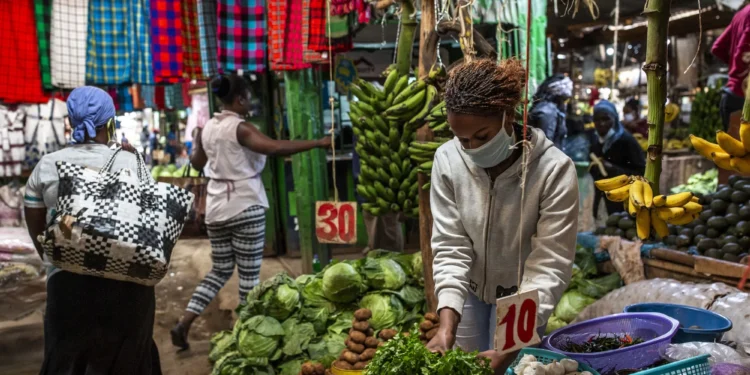
According to the KNBS report, prices in the Food and Non-Alcoholic Beverages category rose by 7.3 per cent year-on-year in February, remaining the largest contributor to headline inflation.
Transport costs increased by 4.0 per cent, while Housing, Water, Electricity, Gas, and other fuels recorded a 1.8 per cent annual rise.
Together, these three divisions account for more than 57 per cent of the total weight across the 13 major expenditure categories used to compute the CPI, underscoring their significant influence on overall inflation trends.
Mixed Monthly Food Price Movements
On a month-on-month basis, selected food commodities recorded mixed price movements between January and February 2026.
KNBS reported that the price of sugar declined from KSh 174.17 to KSh 166.56 per kilogramme. Mangoes also recorded a drop, falling from KSh 149.09 to KSh 144.37 per kilogramme, while tomato prices edged down slightly from KSh 87.98 to KSh 87.90 per kilogramme.
The moderation in prices of key food staples helped offset increases in other items, contributing to the overall easing of inflation during the month under review.
Core Inflation Falls to 2.1%
Core inflation — which excludes volatile components such as fresh food and fuel — also declined, easing to 2.1 per cent in February.
This measure tracks underlying price pressures in areas such as manufactured food products, healthcare services, education and information and communication technology (ICT).
The steady decline in core inflation signals subdued underlying demand pressures in the economy, suggesting that recent monetary policy adjustments have not triggered excessive price increases.
Economists often monitor core inflation closely as it provides a clearer picture of long-term price trends, stripped of short-term volatility caused by seasonal food supply fluctuations or global energy price shocks.
Implications for Monetary Policy
The continued moderation in both headline and core inflation strengthens the case for further monetary easing by the Central Bank of Kenya.
Lower inflation provides policymakers with flexibility to either maintain current rates or implement additional cuts to support credit growth and broader economic activity.
With inflation holding below the 5 per cent mark for several months, analysts say the CBK may prioritise stimulating investment and consumption, particularly as global economic conditions remain uncertain.
Regional Comparison
Kenya’s latest inflation reading aligns with a broader trend of easing price pressures across parts of Africa.
In South Africa, annual inflation slowed to 3.5 per cent in January, reflecting similar moderation in food and fuel costs.
Meanwhile, Nigeria also recorded a slight improvement in January, with headline inflation easing to 15.10 per cent from 15.15 per cent in December, according to data from the country’s statistics office.
In response to easing price pressures, the Central Bank of Nigeria (CBN) reduced its Monetary Policy Rate by 50 basis points to 26.5 per cent in February 2026.
Outlook
The latest CPI report suggests that Kenya is experiencing manageable inflation levels, supported by moderating food prices and contained underlying demand pressures.
If current trends persist, the Central Bank of Kenya may have additional scope to ease policy further in the coming months, reinforcing efforts to stimulate economic growth while maintaining price stability.
However, analysts caution that inflation risks remain, particularly from potential global commodity price volatility, exchange rate pressures or adverse weather conditions that could disrupt food supply.
For now, February’s data offers policymakers reassurance that inflation remains under control — providing a measured opportunity to support economic momentum without undermining price stability.
