


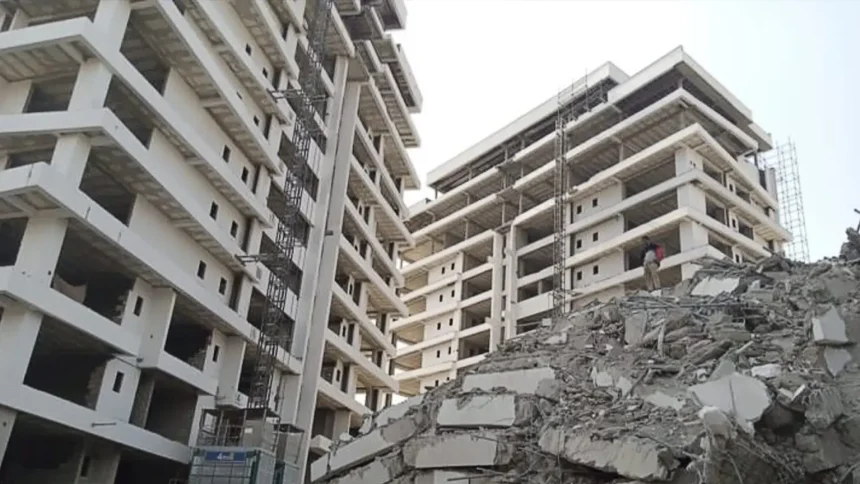
A new study has identified substandard building materials, unsuitable foundations and swampy ground conditions as major causes of building collapse in Lagos State.
The research was conducted by the Thrivescape Initiative, TSI, under its project titled “Mapping Community-led Innovation for Resilient Construction in Lagos State.” The project was supported by the Lloyd’s Register Foundation.
The findings were presented at a validation meeting where stakeholders reviewed the research, identified gaps and contributed to recommendations aimed at improving building safety through community participation and local innovation.
The study identified ageing buildings, lack of maintenance, alterations to existing structures and overloading as other factors contributing to building failures.
It also identified quackery and compromises in regulatory processes as contributing factors to the continued incidence of building collapse in the state.
The researchers said building collapse had continued to result in deaths, destruction of property and displacement of residents, stressing the need for stronger cooperation between government institutions, professionals and communities.
Six Lagos areas examined
The research examined six areas of Lagos State that have recorded high incidences of building collapse.
They are Lagos Island, Lagos Mainland, Kosofe, Alimosho, Amuwo-Odofin and Shomolu.
Using a multi-stage sampling method, the researchers assessed community experiences and perspectives on construction practices, regulatory processes and ways of improving resilience within the built environment.
The study found that members of the public were willing to work with government and relevant agencies to prevent building collapse.
It also highlighted initiatives such as the Certified Structural Integrity Programme, CSIP, as examples of efforts aimed at improving building safety.
Researchers seek stronger community involvement
Prof. Gbemiga Faniran, a lecturer and town planner who led the research, said preventing building collapse should not be left entirely to government agencies.
He called for stronger partnerships between government and communities, noting that residents, professionals, developers, community leaders and religious leaders all have roles to play in improving construction safety.
Faniran also advocated greater public education on building safety and called for grassroots surveillance to identify distressed structures before they collapse.
He proposed the development of a multilingual guide to help residents recognise warning signs such as cracks and other indications of structural distress.
He also suggested creating a mobile application or toll-free reporting platform that would allow residents to anonymously report buildings showing signs of distress, including tilting, cracking and other structural problems.
According to him, authorities should move beyond a purely top-down approach and incorporate information and warnings from communities into building-safety decisions.
Calls for better regulation
The Team Lead of FSI, Tosin Aniramu-Joseph, described building collapse as preventable and urged professionals and regulatory institutions to align their activities with Sustainable Development Goal 11, which promotes safe, resilient and sustainable cities and communities.
She said practitioners including town planners, architects, builders and engineers, as well as community representatives, had responsibilities in preventing avoidable deaths and property losses.
Aniramu-Joseph also opposed demolition, displacement and forced evictions as primary responses to building problems, arguing that greater emphasis should be placed on prevention.
She called on statutory agencies, including the Lagos State Physical Planning Permit Authority, LASPPPA, to review building approval costs and improve public trust.
She also warned against treating the Ministry of Physical Planning and Urban Development primarily as a revenue-generating institution, saying this could affect how residents interact with the agency and undermine its regulatory responsibilities.
Residents can report distressed buildings
Responding to the recommendations, the Permanent Secretary of the Lagos State Emergency Management Agency, LASEMA, Dr Olufemi Oke-Osanyintolu, said residents could report distressed buildings and other emergencies through the state’s toll-free emergency lines.
He identified 767 and 112 as the emergency numbers available to residents for reporting incidents including building collapse, fire and road accidents.
The emphasis on early reporting comes amid renewed calls from built-environment professionals for residents and property owners to report structural problems before they develop into emergencies.
At a separate building-safety conference in Lagos, experts highlighted warning signs including structural cracks, settlement, tilting, spalling concrete, flooding and persistent water damage. They also called for regular inspections, competent professional supervision and stronger enforcement of building regulations.
Quality materials and foundations remain critical
The latest findings reinforce longstanding concerns within Nigeria’s construction sector about the quality of materials and the conditions on which buildings are constructed.
The Standards Organisation of Nigeria has previously identified poor structural design, inadequate soil testing, poor construction practices, unapproved construction, poor drainage, unprofessional practices and the use of substandard materials among factors associated with building collapse.
More recent research has similarly identified substandard construction materials and failures in geotechnical investigations among the leading factors associated with structural failures in Nigeria.
The issues are particularly important in areas with difficult ground conditions, where foundation designs need to be based on appropriate soil and geotechnical investigations rather than assumptions about neighbouring properties.
Prevention rather than reaction
The TSI study recommends a stronger preventive approach involving community surveillance, improved technical skills among artisans, protected whistleblowing channels, easier access to professional expertise and faster regulatory responses.
Stakeholders at the validation meeting also called for thorough building inspections and greater adherence to professional standards.
The recommendations are aimed at reducing the risk of building failures before they occur, rather than relying mainly on investigations and emergency responses after a collapse.
- With Lagos continuing to experience rapid urban development and increasing demand for housing and other buildings, researchers and built-environment professionals say stronger cooperation among communities, developers, professionals and regulatory authorities will be necessary to improve building safety across the state.