


The Federal Government has expressed serious concern over escalating vandalism of critical public infrastructure, particularly along the Lagos–Calabar Coastal Highway and major bridges in Lagos.
The surge in destruction threatens the longevity of newly constructed roads and bridges nationwide.
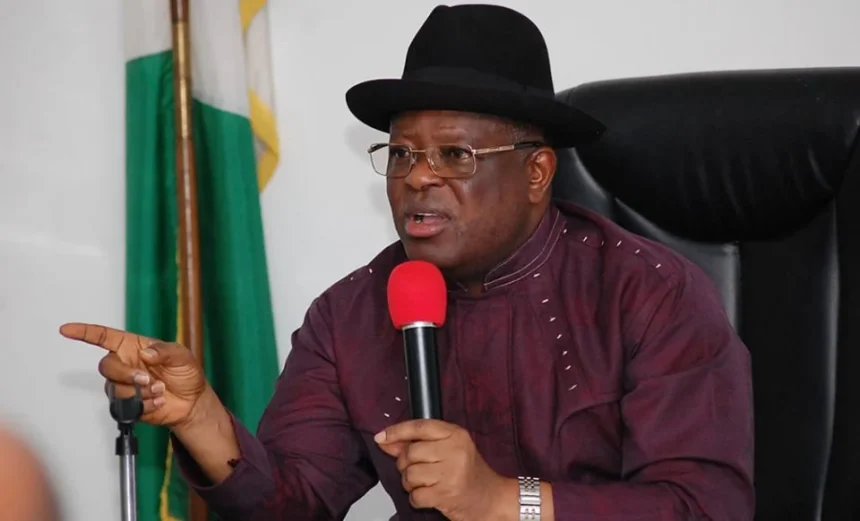
Minister of Works, David Umahi, who spoke at a press briefing on Thursday, linked the problem to deliberate sabotage and improper waste disposal, which has blocked drainage channels and caused flooding along the highway.
“The coastal highway has become a hotspot for vandalism despite increased security. Protective installations like barbed wires have been repeatedly stolen, and ongoing construction is being disrupted by illegal access to restricted areas,” Umahi said.
The minister revealed that the width of the coastal highway is 12 metres, with 9 metres completed, but protective coverings and wire bars have been damaged by vandals. He commended Lagos State authorities and the police for deploying operatives, yet emphasized the fight remains “daily and ongoing.”
Flooding and Drainage Challenges
Umahi attributed recent flooding to blocked underground drainage systems, noting that citizens frequently dump refuse into manholes, preventing water from flowing and worsening flood risks.
“The public has a duty to protect these assets. We are working to keep the coastal highway functional, but citizens must also cooperate,” he said.
Bridge Safety Concerns
Beyond the highway, the minister raised alarms about major bridges, including the Third Mainland Bridge and Carter Bridge, citing structural weaknesses exacerbated by illegal sand mining. Carter Bridge, he noted, may require eventual demolition, though temporary measures are planned to maintain functionality for up to three years.
Umahi also reported nationwide vandalism, including theft of expansion joints, concrete barriers, and electrical installations on highways and flyovers. He praised the installation of CCTV cameras on the Third Mainland Bridge, which aided in tracking and apprehending vandals.
Government Response and Warnings
The minister reiterated the use of reinforced concrete technology in new road construction, ensuring durability of 50–100 years, and cautioned against parking heavy vehicles on bridges, which are not designed for static loads.
“Repeated vandalism drains public resources and slows development. Protecting infrastructure is a collective responsibility,” Umahi stressed.
The Lagos–Calabar Coastal Highway, a 700-kilometre flagship federal project, is intended to enhance trade, tourism, and regional connectivity from Lagos to Calabar, Cross River State.
