


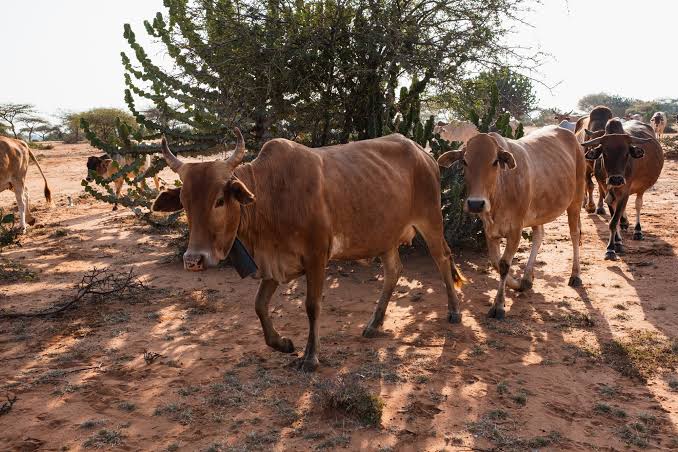
The Middle Belt Forum (MBF) has rejected the Federal Government’s renewed cattle ranching policy. The group says the plan could create fresh disputes over land in the Middle Belt.
The forum raised concerns about proposed ranching sites in Adamawa, Plateau, Southern Kaduna, Benue, Taraba and the Federal Capital Territory.
In a statement signed by its National Spokesman, Luka Binniyat, the MBF said the government should not allocate community land without the consent of the people who own or occupy it.
MBF raises land ownership concerns
The forum said many communities in the Middle Belt have faced years of attacks, killings and displacement.
It argued that the government should first help displaced residents return to their ancestral homes. It also called for better security in affected communities.
The MBF questioned the decision to set aside more land for cattle settlements while some communities remain displaced.
The group said large areas of Middle Belt land have already been abandoned or occupied because of insecurity. It warned that another round of land allocation could increase tensions.
The forum also criticised the Minister of Livestock Development, Alhaji Idi Mukhtar Maiha, over the proposed ranching programme.
Group questions choice of states
The MBF said the government should consider other parts of northern Nigeria for the programme.
It pointed to Jigawa, Kano, Sokoto, Bauchi, Zamfara and Northern Kebbi. According to the group, these areas have large areas of unused land.
The forum also questioned a change in the states selected for the proposed pilot programme.
It said Kano State appeared on the list announced by the minister in January 2026. The government later replaced Kano with Nasarawa State.
The MBF said the change raised concerns about the purpose and direction of the programme.
It also opposed the Wase ranching model in Plateau State. The minister has presented the model as an example of the ranching approach.
The forum claimed that some farmers and Plateau indigenes oppose the model. It also alleged that some political and traditional figures support it because they could benefit from land allocations.
Ranching policy and community consent
The MBF said the government must consult communities before using their land for ranching.
It called for clear security measures and proper discussions with landowners. The group warned that imposing a ranching programme could worsen existing tensions.
The issue also raises wider questions about land management in Nigeria.
Ranching requires land, roads, water supply, veterinary services and other infrastructure. Government agencies must therefore consider how such projects will affect existing communities and land users.
Clear land ownership records can also help reduce disputes. Proper planning can protect property rights while allowing new infrastructure and agricultural projects to grow.
Impact on housing and real estate
The dispute has implications beyond livestock development.
Land remains central to housing, real estate and infrastructure projects. Changes in land use can affect property owners, developers, investors and communities.
Unclear ownership can also discourage investment. It can delay housing projects and create disputes over development rights.
For this reason, land acquisition should follow clear legal procedures. Governments also need to engage affected communities before major land-use decisions.
MBF calls for policy suspension
The Middle Belt Forum called on President Bola Tinubu to suspend the proposed ranching policy in the region.
It also urged communities to use lawful and constitutional means to challenge any alleged unlawful acquisition of their land.
The group asked National Assembly members from affected states to question the Minister of Livestock Development. It said lawmakers should protect the interests of their constituents.
The MBF also warned state governors against allocating community land without the consent of local residents.
The forum said such decisions could have political consequences ahead of the 2027 presidential election.
The dispute shows the challenge of balancing livestock development with land rights and community interests. For Nigeria’s housing and real estate sectors, the issue also highlights the need for clear land records, proper planning and transparent land acquisition processes.
Any ranching programme that moves forward will need to address land ownership, community consent, security and infrastructure. These factors will be important to reducing conflict and supporting sustainable development.