


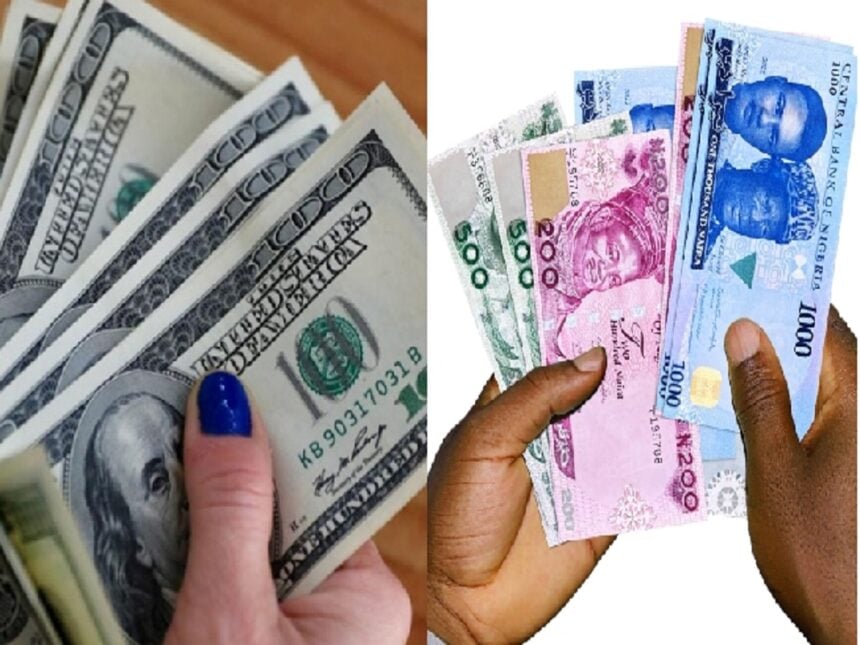
The Nigerian naira continued its gradual decline against the United States dollar on Wednesday, 25 February 2026, closing at N1,359.5 per dollar in the official Nigerian Foreign Exchange Market (NFEM).
Data released by the Central Bank of Nigeria (CBN) revealed that the naira opened trading at N1,356.11 per dollar and ended the session slightly weaker, reflecting ongoing pressures on the currency amid domestic and global economic challenges.
This movement indicates a marginal depreciation compared with Tuesday’s NFEM rates, where the naira opened at N1,355.37 and closed at N1,359.00. Analysts describe this as a manageable shift, highlighting that timely interventions by the CBN could stabilize the naira in the coming weeks.
The parallel, or black-market, rate shows a sharper divergence from the official market. Bureau de Change operators in major commercial centres—including Lagos, Abuja, Port Harcourt, and Kano—reported buying and selling rates of N1,370 and N1,390 per dollar, respectively. The higher rates in the unofficial market reflect persistent dollar demand and supply constraints, which continue to exert pressure on local businesses and consumers.
Financial experts note that the widening gap between official and parallel market rates underscores structural challenges within Nigeria’s forex market. These include limited dollar inflows, reliance on imports for critical goods, and the volatility of global oil prices, which remain a major driver of Nigeria’s foreign exchange reserves.
“The naira’s stability is influenced by multiple factors—external reserves, trade balance, and market confidence. The recent slight depreciation in the official market is manageable, but the parallel market shows the real strain felt by businesses and households demanding dollars for transactions,” said a Lagos-based forex analyst who preferred anonymity.
Despite these pressures, there is cautious optimism that the CBN’s interventions—such as forex auctions and policy adjustments—could restore confidence in the official market. Historical trends suggest that these measures can curb excessive volatility when applied consistently and transparently.
Businesses and importers are feeling the impact of the currency gap, particularly those relying on foreign inputs. Small and medium-sized enterprises (SMEs) report that the disparity between official and parallel market rates has increased operational costs, forcing some to raise prices or delay imports.
“Every week, we monitor the naira’s movement closely. The gap between the official rate and what we pay in the parallel market affects our cost projections and pricing strategy,” said Adeola Johnson, a Lagos-based trader. “Until there is a closer alignment, businesses will continue to bear the burden of currency fluctuations.”
Economists point out that sustained naira depreciation in the parallel market could have broader economic consequences, including inflationary pressures, reduced purchasing power, and strain on foreign debt servicing. Conversely, a stable naira would encourage investment, support consumer confidence, and bolster Nigeria’s economic recovery trajectory.
The CBN has repeatedly emphasized the importance of a market-friendly approach to forex management. Analysts believe that consistent policy measures, transparent interventions, and promotion of local production to reduce import dependency could gradually ease the parallel market premium and enhance the naira’s resilience.
In summary, while the naira’s official-market depreciation to N1,359.5 per dollar is moderate, the parallel market reflects deeper pressures caused by high dollar demand and supply constraints. Stakeholders—including the CBN, businesses, and consumers—must remain vigilant, with a coordinated approach to stabilize the currency and protect economic growth.
Market Summary:
- NFEM (Official) — N1,359.5 /$
- Parallel Market — N1,370 – N1,390
