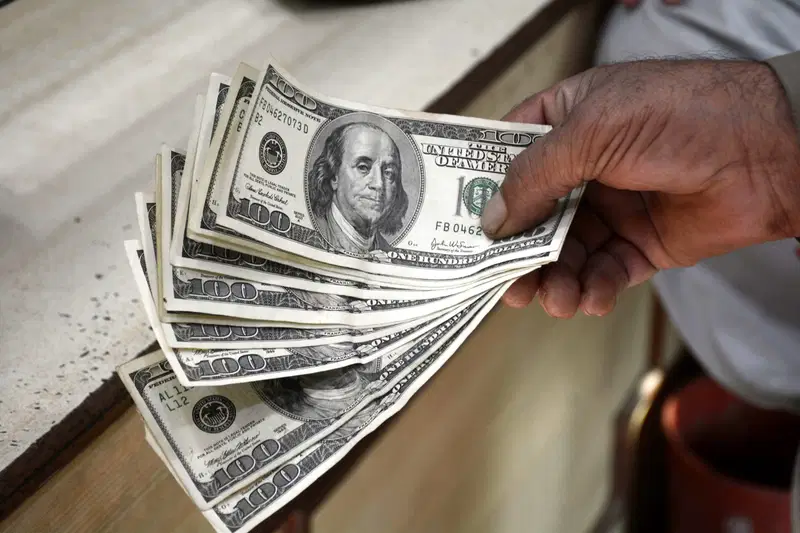
The Nigerian Naira maintained stability against the US Dollar on Thursday, February 26, 2026, following the Central Bank of Nigeria’s (CBN) recent stabilization measures.
Investors and traders are cautiously optimistic as the currency continues to trade within a narrow range, reflecting confidence in the apex bank’s intervention and growing macroeconomic stability.
In the official Nigerian Foreign Exchange Market (NFEM), the Naira opened trading at 1,351.12 per dollar. Mid-morning activity saw the rate dip slightly to 1,347.99, before settling near 1,350.13 by midday.
Analysts note that this stability follows Wednesday’s market close and is influenced by the CBN’s 50-basis-point cut in the Monetary Policy Rate (MPR), now at 26.50%.
Market liquidity remains robust, supported by the CBN’s proactive management of excess bank liquidity and a steady supply of dollars for essential imports.
The official mean rate for the week has settled at approximately 1,349, signaling greater transparency and a reduction in speculative pressures in the foreign exchange market.
Parallel Market Performance
In the parallel market, the Naira also showed signs of stability, exchanging between 1,355 and 1,365 per dollar.
The spread between the official and parallel rates has narrowed to less than 1.5%, reflecting improved market convergence. Informal traders in major hubs such as Lagos and Abuja attribute this to the CBN’s policy of allowing Bureau De Change (BDC) operators regular access to foreign currency, which has helped meet demand and curb speculative activity.
Key Drivers Behind Naira Stability
Several macroeconomic factors have contributed to the Naira’s stability:
- Interest Rate Adjustment: The reduction of the MPR to 26.50% indicates the CBN’s confidence in the ongoing disinflationary trend. While lower interest rates can sometimes weaken a currency, the market has interpreted this move as a signal of confidence in sustainable economic growth.
- Strong Foreign Reserves: Nigeria’s external reserves climbed to $50.45 billion, the highest level in 13 years, providing nearly 10 months of import cover. This buffer helps protect the Naira against external shocks and enhances investor confidence.
- Disinflation Trend: Headline inflation eased to 15.10% in January 2026, marking ten consecutive months of decline. This consistent drop in price growth has strengthened the real value of the Naira, making it more attractive to both domestic and foreign investors.
- Economic Expansion: With a projected GDP growth rate of 4.68% for 2026, market sentiment has improved. Investors are increasingly confident that fiscal reforms, particularly in energy and agriculture, will support long-term currency stability.
Market Outlook
Financial analysts expect the Naira to maintain its range between 1,345 and 1,355 against the dollar for the remainder of the week. Continued vigilance from the CBN, coupled with structural reforms in key economic sectors, is likely to sustain the current equilibrium. The narrowing gap between the official and parallel market rates also suggests reduced pressure from speculative activities, a positive sign for both traders and policymakers.
Experts have highlighted that the stabilization measures are timely, given the historical volatility in the foreign exchange market. The combination of high foreign reserves, declining inflation, and careful liquidity management positions Nigeria to withstand external shocks and maintain investor confidence.
What This Means for Nigerians
- Businesses and Importers: Improved exchange rate stability provides greater predictability for importing goods and planning foreign transactions.
- Consumers: Stable currency reduces the risk of sudden price hikes on imported goods, helping protect household purchasing power.
- Investors: Narrow spreads and transparency in the market create an environment conducive to both domestic and foreign investment.
Conclusion
The Naira’s steady performance against the dollar on February 26 reflects a combination of proactive monetary policy, rising foreign reserves, and positive macroeconomic trends.
As the CBN continues its stabilization program, and with the government pursuing reforms in energy and agriculture, analysts remain cautiously optimistic that the currency will retain its stability, supporting broader economic growth and investor confidence.