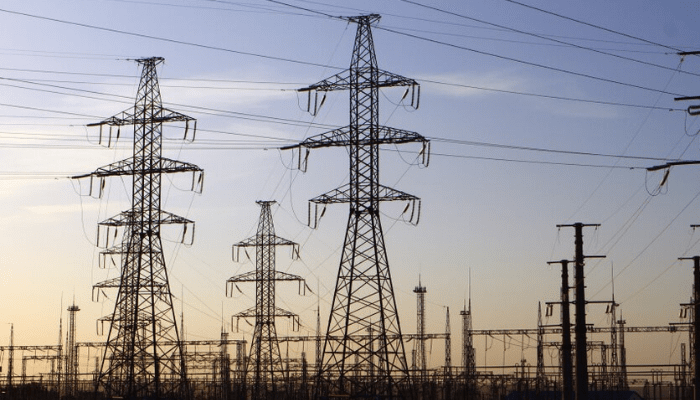
More than a decade after the privatisation of Nigeria’s power sector, the country is still grappling with unreliable electricity supply despite an estimated N7 trillion spent under four different administrations.
Since the handover of the Power Holding Company of Nigeria assets to private investors in 2013, successive governments have injected trillions of naira into the sector in a bid to stabilise generation, transmission and distribution. Yet, Nigerians continue to experience frequent blackouts, grid collapses and erratic supply.
Within the first month of 2026 alone, the national grid collapsed twice, plunging major cities across the country into darkness and raising fresh concerns about the effectiveness of ongoing reforms.
Although Nigeria’s electricity challenges predate democracy, expectations were high after the return to civilian rule in 1999 that liberalisation would attract investment and improve supply. That optimism, however, has largely faded.
Following the Electric Power Sector Reform Act of 2005, the former National Electric Power Authority was restructured into the Power Holding Company of Nigeria, comprising six generation companies, one transmission company and 11 distribution companies. These entities were eventually sold to private investors in 2013.
Since then, all administrations have identified electricity as critical to economic growth. Former President Olusegun Obasanjo’s government promised an end to outages, but power generation at times dropped to as low as 1,800 megawatts, with obsolete equipment crippling transmission and distribution.
Under President Goodluck Jonathan, the government estimated that Nigeria would need about $900 billion over 30 years to fix its energy sector. His administration also oversaw the privatisation process, which was later criticised for weak regulation and poor investor capacity.
The Muhammadu Buhari administration secured over $6 billion in loans to upgrade transmission infrastructure and improve generation. It also pursued the Siemens power project, designed to expand capacity to 25,000 megawatts by 2025. Years later, the project has achieved only a fraction of its target.
President Bola Ahmed Tinubu, during his campaign, pledged to prioritise stable electricity supply. His administration is currently supervising a $500 million World Bank-backed Nigeria Distribution Sector Recovery Programme aimed at improving DisCos’ performance and metering.
Despite these efforts, the sector remains burdened by debt. Generation companies are demanding over N4 trillion from the government, citing unpaid subsidies and legacy obligations from privatisation.
Experts say one of the core problems is incomplete privatisation. The federal and state governments still jointly own about 40 per cent of distribution companies and retain full ownership of the Transmission Company of Nigeria, leaving room for political interference and recurring subsidies.
Consumer protection advocate Kunle Olubiyo said government involvement has turned the sector into a “cash cow,” unlike telecommunications, which was fully privatised and thrives without subsidies. He argued that corruption and weak accountability mean even massive investment would not yield results.
Energy consultant Bode Fadipe also blamed policy inconsistency and weak political will, especially on electricity pricing and metering. He said some investors exploit government bailouts while failing to upgrade infrastructure.
The transmission segment is widely regarded as the weakest link in the value chain. Experts note that outdated infrastructure, gas supply constraints and lack of automation continue to expose the grid to collapse.
The Electricity Act 2023 has further shifted responsibility to states, granting them powers to regulate electricity markets within their territories. While some experts support involving states in subsidy payments through FAAC deductions, others argue it violates constitutional provisions and unfairly burdens states with limited grid access.
For ordinary Nigerians, the consequences are immediate. Small business owners report losses during outages, while households rely on generators, power banks and alternative energy sources to cope with unreliable supply.
Former Transmission Company of Nigeria Managing Director, Aliyu Tambuwal, said grid stability depends on adequate spinning reserves, disciplined load management and investment in thermal and gas infrastructure.
Energy law expert Yemi Oke added that Nigeria must adopt modern grid monitoring technologies, expand off-grid and mini-grid solutions, and reduce reliance on an ageing national grid.
Analysts warn that without decisive reforms, transparent governance and strong political commitment, Nigeria risks repeating the same cycle of spending trillions while remaining in darkness.