


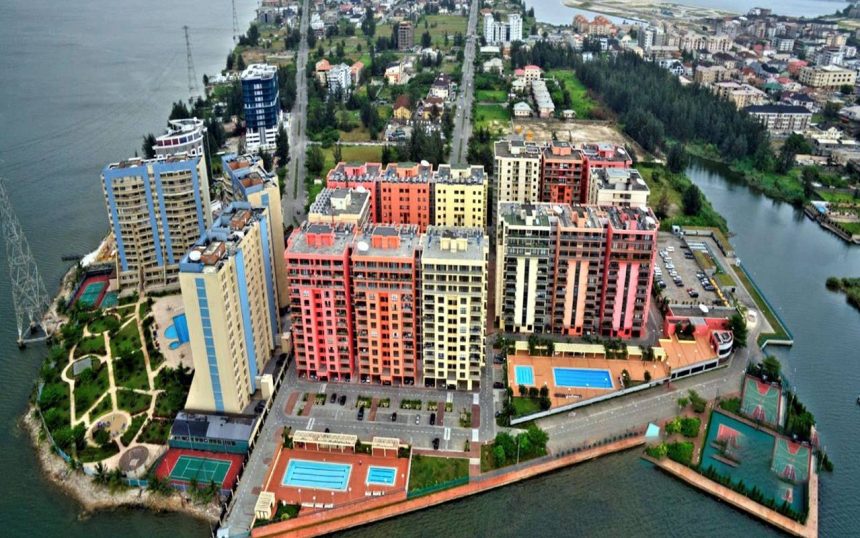
Nigeria’s luxury residential property market is expected to maintain steady growth in 2026, driven by strong diaspora inflows, rising wealth concentration, lifestyle-driven demand and a persistent shortage of prime properties, despite ongoing macroeconomic and structural constraints.
Market analysts and industry executives say the high-end segment remains one of the most resilient parts of Nigeria’s real estate ecosystem, largely insulated from the affordability pressures and mortgage limitations weighing down the broader housing market.
While inflation, high construction costs and limited access to long-term financing continue to challenge developers, luxury real estate is increasingly positioned as a store of value, capital hedge and lifestyle asset rather than a consumption-driven purchase.
As currency volatility moderates and investor confidence gradually stabilises, premium properties in key urban centres are attracting buyers focused on wealth preservation, rental income and long-term appreciation.
Diaspora capital anchors luxury demand
Diaspora remittances, estimated at over $20 billion annually, remain a central driver of luxury housing demand. A growing share of this capital is being channelled into high-end residential developments, particularly in Lagos and Abuja, where buyers prioritise security, prestige and asset stability.
For many Nigerians abroad, luxury real estate offers a tangible hedge against global economic uncertainty, rising taxes and tighter housing regulations in Western markets. Premium Nigerian properties are viewed as competitively priced, capable of delivering strong rental yields while offering emotional and cultural ties to home.
Beyond diaspora investors, demand is also sustained by Nigeria’s expanding pool of high-net-worth individuals (HNWIs), whose wealth is tied to sectors such as energy, finance, technology, telecommunications and international trade. Expatriates working with multinational corporations, diplomatic missions and international organisations further underpin the market through long-term rentals and outright purchases.
Lagos, Abuja dominate prime markets
Lagos continues to lead Nigeria’s luxury real estate landscape, with Ikoyi, Victoria Island and Banana Island retaining their status as the most sought-after addresses. These locations benefit from proximity to commercial hubs, waterfront appeal and relatively superior infrastructure.
Industry estimates suggest that luxury property prices in these prime districts could record moderate annual appreciation of between five and eight per cent in 2026, supported by limited land availability and consistent demand.
Vertical development has become increasingly dominant in Ikoyi, as developers respond to land scarcity by delivering high-rise luxury apartments and mixed-use towers. These developments cater to affluent buyers seeking premium amenities, enhanced security and proximity to business districts.
Abuja remains another major luxury hub, particularly in Maitama, Asokoro and Wuse II, where demand is driven by political office holders, senior public servants, diplomats and corporate executives.
Meanwhile, emerging corridors along the Lekki–Epe axis, including Ibeju-Lekki and parts of Epe, are attracting growing interest from developers and early-stage investors positioning for medium- to long-term capital growth.
Infrastructure projects such as the Lekki Deep Sea Port, the Dangote Refinery, improved road networks and expanding industrial activity have strengthened investor confidence in the corridor’s long-term prospects.
Luxury redefined by lifestyle and innovation
The definition of luxury housing in Nigeria is evolving beyond sheer size and location. Buyers are increasingly prioritising functionality, efficiency and lifestyle integration.
Smart-home systems, energy-efficient designs, concierge services, private gyms, recreational facilities and professionally managed estates are now standard expectations rather than premium extras. Reliable power supply, water systems and integrated security have become baseline requirements.
Mixed-use developments combining residential, retail, leisure and office spaces are gaining traction, reflecting demand for convenience and integrated living. Waterfront apartments and high-end short-let properties are also attracting investors seeking rental income from corporate tenants and visiting diaspora Nigerians.
Globally aligned design trends — including fully furnished interiors, minimal renovation risk, advanced automation and indoor-outdoor living concepts — are increasingly shaping Nigeria’s luxury developments.
Premium property as inflation hedge
Luxury real estate continues to attract investors seeking protection against inflation and currency risks. Market observers note that capital in the high-end segment is highly mobile, often shifting across geographies rather than exiting the property market entirely.
In Lagos, Abuja and Port Harcourt, industry data indicates that over 1,000 luxury apartments are currently under construction, with Lagos accounting for the majority of activity.
Annual rents for mid- to high-end luxury apartments range from ₦25 million to ₦180 million for two- and three-bedroom units, depending on location and amenities. One-bedroom luxury apartments typically sell for ₦90 million to ₦100 million, while two-bedroom units average around ₦250 million.
Three-bedroom duplexes with pools and boys’ quarters often start from ₦1.5 billion, while four-bedroom luxury apartments in Lagos and Abuja are projected to cost between ₦100 million and over ₦2.2 billion, reflecting rising construction costs, taxes and regulatory charges.
Structural constraints remain
Despite positive projections, the outlook is not without risks. High construction costs driven by imported materials, exchange-rate exposure and energy prices continue to squeeze developers’ margins and slow project delivery timelines.
Mortgage penetration remains weak, forcing most luxury developments to rely on equity funding or off-plan sales. Transparency, quality assurance and delivery risk remain concerns, particularly for diaspora buyers who cannot physically monitor projects.
Industry experts warn that mislabelling mid-range properties as “luxury” without meeting international standards could erode buyer confidence over time.
Chief Executive Officer of Northcourt Real Estate, Ayo Ibaru, said the luxury segment operates on a different demand logic from the broader housing market.
“The luxury market sits on a level of its own. Buyers here are driven by quality, not the same affordability pressures affecting the mid-market,” he said.
Former President of FIABCI-Nigeria, Gladstone Opara, added that innovation, smart technology and green design are redefining competition in the segment, as buyers increasingly benchmark Nigerian developments against global standards.
However, he cautioned that high interest rates and limited access to affordable financing remain key bottlenecks, often pushing costs onto end users.
