


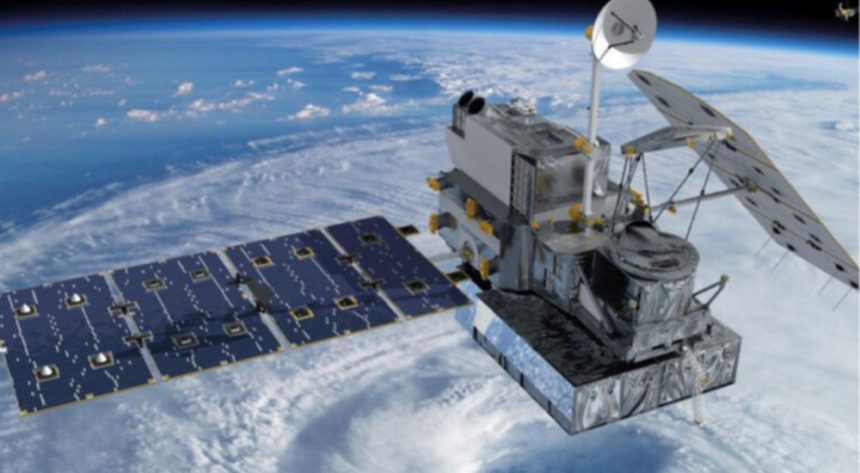
Nigeria’s communications satellite, , has reportedly been controlled from China for the past seven years after the ground control station in was damaged by a thunderstorm in 2019.
Investigations revealed that the damaged control facility forced to rely on the satellite’s manufacturer, , to manage the spacecraft from its control centre in .
Satellite almost lost in orbit
Sources familiar with the development said the satellite nearly drifted out of its assigned orbital position in 2019 before the Chinese firm intervened to stabilise operations.
The Abuja ground station had served as the primary control centre for the satellite but was severely damaged by a thunderstorm, leaving it unable to issue commands required to keep the satellite in its designated 42.5-degree orbital slot.
As a result, the Kashi station — originally built as a backup facility — became the main control centre for the satellite.
According to insiders, the intervention prevented the satellite from drifting in orbit, which could have resulted in a collision with other satellites.
Debt piles up to $11.4m
Under a management contract signed with the Chinese company, Nigeria agreed to pay about $1.6 million annually for satellite control services.
However, the payments have reportedly not been made since 2019, leading to an accumulated debt of $11.44 million.
In a letter signed by , Director of Marketing for Africa at , the company issued a 30-day ultimatum to the Nigerian satellite operator to settle the debt.
The company warned that failure to pay could lead to the suspension of satellite services.
“If full payment or an acceptable guarantee is not provided within this 30-day window, CGWIC will suspend service on the active transponders of the NIGCOMSAT-1R satellite,” the company stated in the letter.
It also cautioned that it would not be responsible for any service outages or financial losses resulting from such a shutdown.
Budget constraints blamed
In an earlier correspondence with the Chinese firm, former Managing Director of , , attributed the delay in repairing the Abuja ground station to funding challenges.
She explained that the station suffered major damage during a thunderstorm and that efforts to repair it were further complicated by the COVID-19 pandemic and budget constraints.
Satellite nearing end of lifespan
Nigeria’s first communications satellite, , was launched in 2007 but was de-orbited in 2008 following a power failure.
It was later replaced by in 2011, also built by the Chinese manufacturer.
The satellite has an estimated 15-year lifespan, meaning it is expected to be decommissioned by 2027.
Concerns over Nigeria’s space programme
The development has raised concerns about Nigeria’s satellite management capacity and the sustainability of its space programme.
Analysts warn that if the Chinese firm suspends operations, businesses relying on the satellite’s communication services could face disruptions and potentially pursue legal action against the satellite operator.
When contacted, the Managing Director of , , declined to comment on the matter.
